Scotland
 UK
UK Ireland
 London

Scotland's first Marine Bill has been introduced to the Scottish Parliament.
Rural Affairs and Environment Secretary Richard Lochhead said the bill is set to deliver more opportunities to boost the economy while improving conservation measures.
It follows calls from environmental groups, the marine industry and coastal communities for more effective, joined up management of Scotland's unique seas.
Key measures include: a new marine planning framework so that increasing use of the seas for energy, fishing, aquaculture, recreation and other purposes is well managed, the new planning system will create a more stable environment for investment and new Marine Planning Partnerships will involve local agencies, communities and stakeholders to ensure a strong local voice.
There will be a simpler licensing system will reduce the administrative burden and cut bureaucracy reducing business costs in key growth areas such as renewable energy, improved marine nature and historic conservation to safeguard and protect Scotland's unique habitats, wildlife and marine archaeology and wrecks.

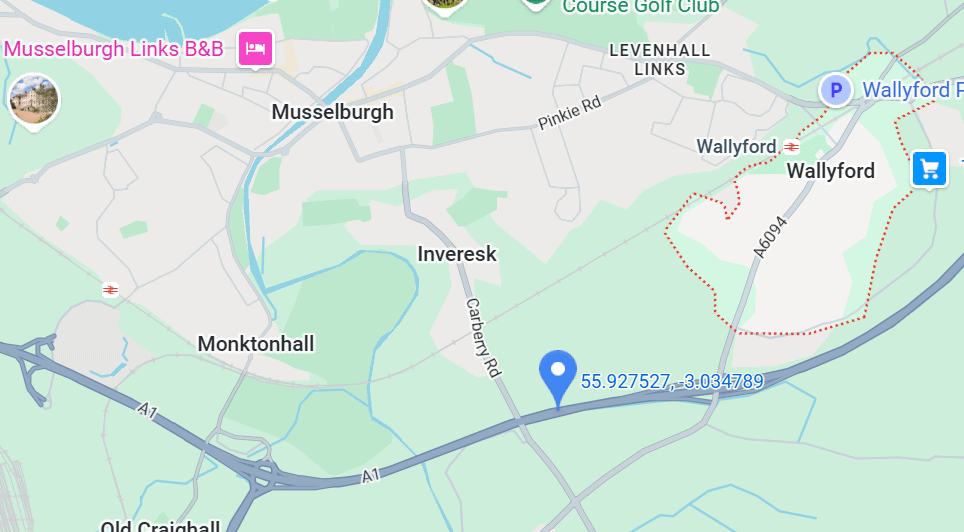
Speaking at Edinburgh's Newhaven Harbour today, Mr Lochhead said: "Today marks an exciting milestone. Our seas support tens of thousands of jobs, generate billions of pounds for our economy, put food on our tables and are set to play an increasing role in powering our nation through wind and wave power.
"We are introducing the framework to help deliver a new future for Scotland's seas. Our Marine Bill aims to maximise economic growth while ensuring future generations can still enjoy this world class environment."
Lloyd Austin, Head of Conservation Policy for RSPB Scotland, said: "Scotland's seas and coasts are arguably our most precious natural resource, and with this new Bill, we could become a world-beater in conserving the marine environment. Our seas bring us jobs and prosperity from our marine industries and our amazing wildlife, from puffins to dolphins, which attract tens of thousands of visitors each year.
"To achieve a sustainable future for these industries, the Marine Bill must protect Scotland's jewel in the crown by putting the environment first in any decisions about how we manage our seas. A Marine Bill which fails to protect wildlife will also fail our coastal towns and businesses."
Scotland's seas generate more than £2.2bn of marine-industry (excluding oil and gas) and provide 50,000 jobs in Scotland. They support approximately 6,500 species of plants and animals (44,000 if microbial species are included). The value of landings by Scottish fishing vessels is £348m.
(GK/JM)