Scotland
 UK
UK Ireland
 London

Buchan Offshore Wind has welcomed Aberdeenshire Council’s decision to grant planning consent for its onshore infrastructure, describing it as a significant milestone for one of Scotland’s most important floating offshore wind developments.
Councillors on the local authority's Infrastructure Services Committee approved Planning Permission in Principle on Thursday 14 May for the onshore electrical works needed to link the multi‑billion‑pound project to the national transmission network at the existing Peterhead substation.
The consent covers a landfall on the Aberdeenshire coastline at Rattray Head and an underground cable route of roughly 20 kilometres running south to a new project substation situated close to Peterhead Substation.
Located around 75 kilometres north‑east of Fraserburgh, the floating wind farm is planned to have a capacity close to 1GW. Once operational, it is expected to provide secure, home‑grown electricity for about one million households, supporting the UK's long‑term energy security.
Project Director Clare Lavelle said: "We welcome this timely determination by Aberdeenshire Council, which represents another significant step forward for Buchan Offshore Wind. Securing consent for our onshore infrastructure reflects the careful design work and extensive engagement undertaken to reduce environmental impacts while enabling this major renewable energy project to connect to the grid.

"This project has the potential to be an anchor for large scale manufacturing in Scotland, supporting thousands of new jobs and unlocking substantial investment in the supply chain, while delivering home-grown energy at scale for years to come."
The developers have set an ambitious programme with a strong commitment to Scottish manufacturing. They forecast more than £900 million of investment into Scotland's manufacturing sector and supply chain, supporting around 2,900 jobs at peak construction, nearly 300 long‑term roles during operations and maintenance, and delivering over £2 billion in lifetime economic value to Scotland.
These benefits are anticipated across Aberdeenshire, the north‑east and the Highlands, with ports and harbours in the region expected to play key roles during construction and through the project's operational life.
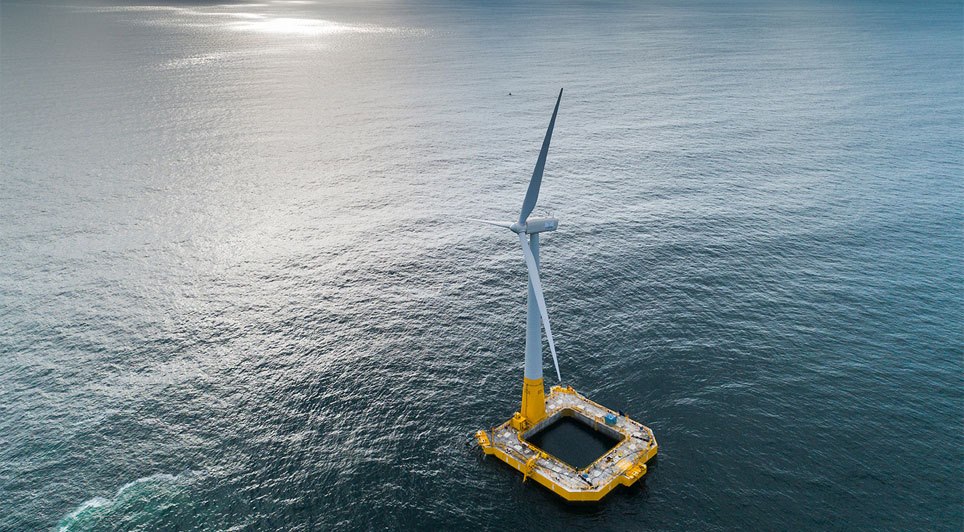
Buchan Offshore Wind has identified BW Ideol's patented Damping Pool® floating substructure as its preferred foundation technology. BW Ideol holds an exclusivity agreement with the Ardersier Energy Transition Facility on the Moray Firth and is actively progressing plans for a new facility to enable serial production of floating concrete foundations at the former oil and gas fabrication yard on the Moray Firth.
An offshore consent application for the wind farm was submitted to the Scottish Government in August 2025, with a decision expected later this year.
"Securing timely offshore and onshore consents is critical to unlocking the significant inward investment this transformative project will generate. By paving the way for the manufacture of Scotland's first concrete floating foundations the project will contribute to the wider development of industrial capability and the Scottish floating offshore wind supply chain.
"We will continue to work constructively with the Scottish Government to achieve determination for our offshore consent application, allowing us to move further towards realising the significant economic benefits that our project will bring to Scotland and the rest of the UK," Clare Lavelle concluded.
The onshore proposals were informed by detailed site selection work, comprehensive environmental assessments and an extensive three‑year programme of engagement with communities, landowners and stakeholders. All onshore cables will be buried, with land reinstated once construction is finished.
During development, the project team staged nine public consultation events in Peterhead, Fraserburgh and nearby communities, gathering feedback from residents, landowners, businesses and local organisations to shape the final design and reflect regional priorities.
With onshore consent secured, the team will move into the next phases of development and consenting while continuing engagement as plans progress. The project is targeting a grid connection in the early 2030s.