Scotland
 UK
UK Ireland
 London

An upskilling programme in welding has been created to respond to a forecast 47% jump in demand for welders across the engineering construction industry (ECI) by 2030. The Engineering Construction Industry Training Board's (ECITB) Labour Forecasting Tool indicates the ECI may require more than 2,150 welders by the end of the decade, up from 1,470 in 2025.
To ease the shortfall, the ECITB has launched a six-week Multi-position Fillet Welding (MMA) programme aimed at people with limited or basic welding experience. Delivered through a blend of theory and hands-on training, it develops knowledge and practical skills and is now being opened up to training providers across Great Britain after a successful trial.
ECITB Chief Executive Andrew Hockey said: "Attracting, upskilling and retaining an agile, diverse and competent workforce in sufficient numbers to meet projected growth in demand is a big priority of our Leading Industry Learning strategy 2026-30.
"Upskilling programmes like this help address industry skills shortages and allow workers to move between nascent and traditional industries.
"While this programme has a particular focus on supporting workforce requirements within the nuclear sector, it also has strong cross-sector relevance and is suitable for a wide range of engineering construction environments.
"With trades like welding vital to build the infrastructure needed to deliver major projects in the ECI – and with our Workforce Census stating that 24% of welders are over 60 – this programme will support industry's growing demand for job-ready welders."

The course provides a structured pathway from foundation skills to multi-position MMA welding and readiness for technical testing. It combines classroom learning with practical development, progressing complexity and focusing on technique, control, consistency and quality in line with industry expectations. It also suits career changers moving into welding roles and those needing structured preparation before formal welder tests. Progress is assessed via a course workbook, a multiple-choice knowledge test and a practical observation and assessment.
Training providers interested in delivering the programme are invited to contact: [email protected]
The launch forms part of wider ECITB efforts to strengthen craft skills such as welding through industry-aligned training standards, regulated qualifications, technical training and competence tests, alongside ECITB Scholarships for aspiring welders. In September, the ECITB Awarding Organisation introduced a new Level 2 Diploma in Introduction to Welding in Engineering Construction Operations in England to help prepare candidates for welding careers in the ECI.
Andrew added: "We need to ensure provision reflects both current and future workforce demand, supporting competence development, verification and progression across the industry's different sectors.
"We recognise that solving skills shortages in trades like welding will require a collaborative approach, which is why we are working closely with industry partners across our major industrial cluster hot spots.
"The ECITB's Regional Skills Hub funding scheme was set up in 2023 to help address skills shortages by supporting projects focused on enhancing training and skills provision in these regions.
"Training provider CATCH was first to benefit after being awarded £300,000 from the ECITB to help upgrade its existing welding and pipefitting facilities near Grimsby as part of a broader Humber Skills Plan to increase training output by 1000% by 2029.
"Forth Valley College in central Scotland received £259,000 from the ECITB to support the purchase of augmented reality (AR) welding simulators and to run training courses.
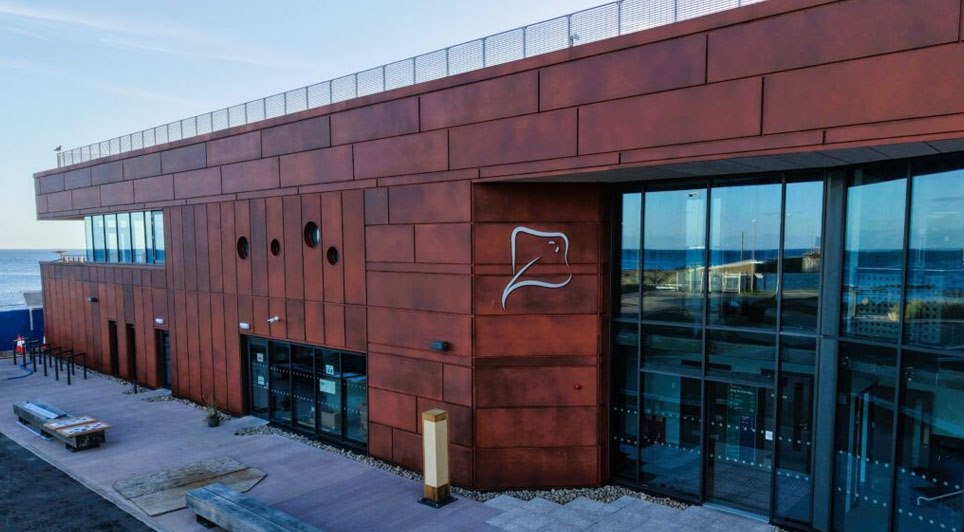
"Most recently, Scotland's largest Energy Transition Skills Hub was opened at North East Scotland College (NESCol) in Aberdeen in September. The hub benefitted from £400,000 of ECITB investment for the equipping and fitting of a modern welding academy within the facility to help meet the growing demand for welders in the region."