Scotland
 UK
UK Ireland
 London

DM Hall, one of Scotland's largest independent firms of Chartered Surveyors, has launched a new in-house drone surveying service across its nationwide Building Surveying teams. This initiative is part of the firm's commitment to advancing technological capabilities within the construction and property inspection sector.
The new service, which is now live, is considered a significant advancement in terms of safety, accuracy, and time efficiency for large and complex property surveys. DM Hall has invested in a comprehensive training programme, with six members of its Glasgow-based Building Surveying team already trained to Civil Aviation Authority (CAA) standards. The firm is now extending this training rollout to its teams in Edinburgh, Perth, Aberdeen, and the North of England.
This new technical capability allows the firm to provide clients with more accurate and detailed advice on potential acquisitions, as well as necessary repairs and maintenance. The service will primarily focus on commercial property, but will also be available to residential clients requiring detailed surveys of inaccessible areas.

Martin Elsby, a Partner in the firm's Building Surveying team in Glasgow who has been directing the project, said: "This initiative will help us maintain and improve service delivery in a safe and efficient manner and keep us ahead of the technical changes which are happening at pace across the profession."
He confirmed that surveyors were trained in the key principles of drone flying, with a substantial emphasis placed on unmanned aerial vehicle [UAV] safety around elements such as roads and pylons, as well as awareness of privacy issues.
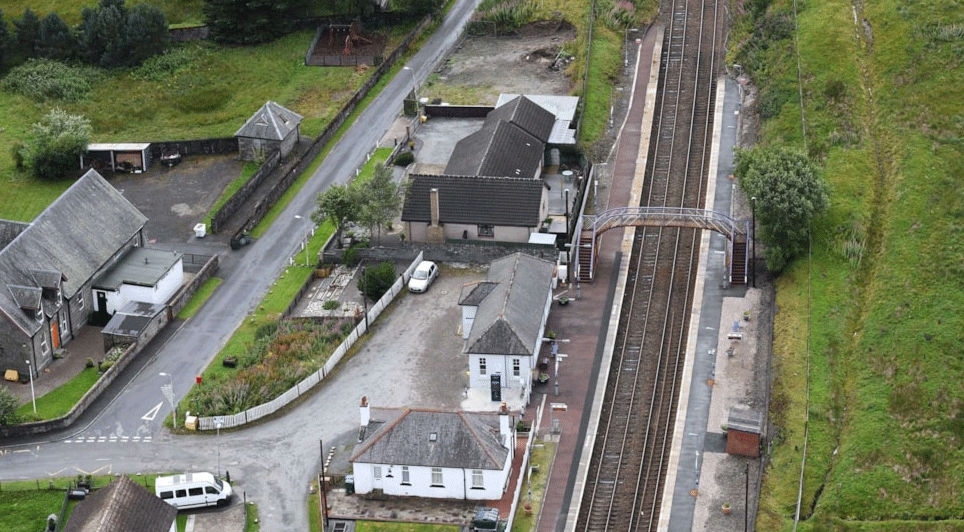
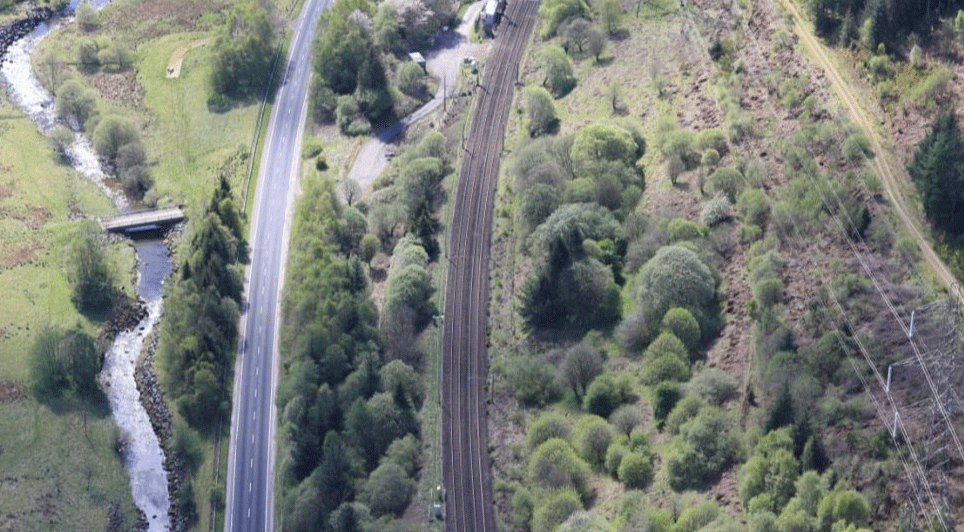
DM Hall will initially use the DJI Mini Pro, a lightweight camera drone capable of capturing high-definition images and accurate data. Drone use allows surveyors to identify potential challenges and issues with a building early on, enabling clients to address them before they become costly problems. The firm has already successfully used the new technology to survey a commercial property in the north of Glasgow suffering substantial water ingress, and an industrial site in the Central Belt to locate defects not visible from ground level.
Mr Elsby added that bringing the service in-house will facilitate faster turnaround times on instructions, contribute to efficiency and cost savings, and reduce the firm's reliance on outside contractors. He noted that the drones can operate internally and externally, making them ideal for less accessible structures like churches or large factories.