Scotland
 UK
UK Ireland
 London

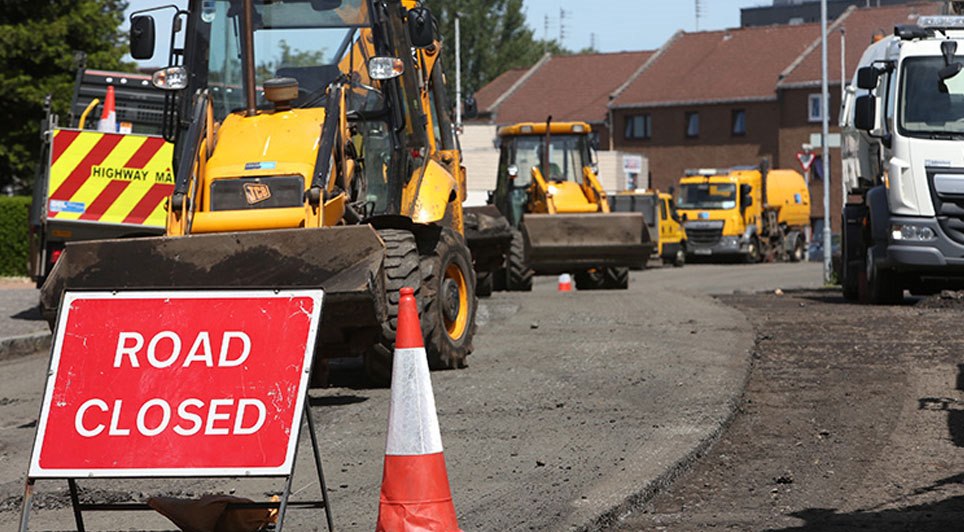
North Lanarkshire Council and its partner Amey have launched a pioneering trial on Chapelknowe Road in Motherwell, making it the first road in the UK to test a new asphalt technology that incorporates recycled plastic to reduce the material's bitumen content.
The initiative is part of the Live Labs 2 programme, a £30 million, three-year, UK-wide project focused on decarbonising the local highway network.
The trial involved incorporating half a tonne of EcoFlakes, a product from German company Ecopals, into a traditional Hot Rolled Asphalt mix used to resurface a section of the road. The technology replaces traditional oil-based polymers with recycled plastic, which is anticipated to help reduce carbon emissions from the resurfacing process by up to 20%.

Unlike previous plastic additives, which were physical elements, EcoFlakes are homogenously mixed into the bitumen at the asphalt plant, acting as a polymer modifier. This process changes the properties of the bitumen, slowing down the road's ageing and enhancing its durability.
The trial is the latest project under the Centre of Excellence for Decarbonising Roads (CEDR), which North Lanarkshire Council, in partnership with Amey, leads for the north campus of the Live Labs 2 programme.
Councillor Helen Loughran, Convener of the Environment and Climate Change Committee, praised the council's leadership:
"I'm proud that North Lanarkshire Council is leading the way on this important work. As the only council in Scotland to be involved with Live Labs 2 we really are blazing a trail for others to follow.
"This is a fantastic example of how local authorities can lead the way in tackling climate change. By trialling cutting edge new materials like EcoFlakes and biochar, we're showing that sustainable infrastructure is not only possible but practical."
Another recent trial in North Lanarkshire tested the use of biochar (a material that acts as a 'carbon sink' by absorbing and storing carbon) in surfacing a section of Crofthead Crescent in Bellshill. These trials follow an earlier 'supersite' trial completed in Shotts to compare innovative surfacing materials against traditional ones. All materials are now undergoing a five-year monitoring period to assess their carbon footprint, durability, and lifecycle costs.