Scotland
 UK
UK Ireland
 London

A new report has quantified the immense scale of economic opportunity facing the Highlands and Islands, identifying 251 planned "regional transformational opportunities" (RTOs) with a potential total investment value of up to £100.35 billion.
These projects could create around 16,000 jobs at the peak of construction and development, and a further 18,000 operational jobs by 2040.
The study, commissioned by Highlands and Islands Enterprise (HIE) in partnership with the Highlands and Islands Regional Economic Partnership (HIREP) and carried out by research specialists ekosgen, is being discussed at the Convention of the Highlands and Islands meeting in Strathpeffer today (Monday, 12 May 2025).
The report describes the scale of opportunity as "unprecedented" for the Highlands and Islands, potentially surpassing previous significant economic periods such as the post-war hydro development and the peak of oil and gas exploration. The research aims to understand the breadth of these high-potential opportunities and inform planning and decision-making by HIREP partners to maximise regional benefits.
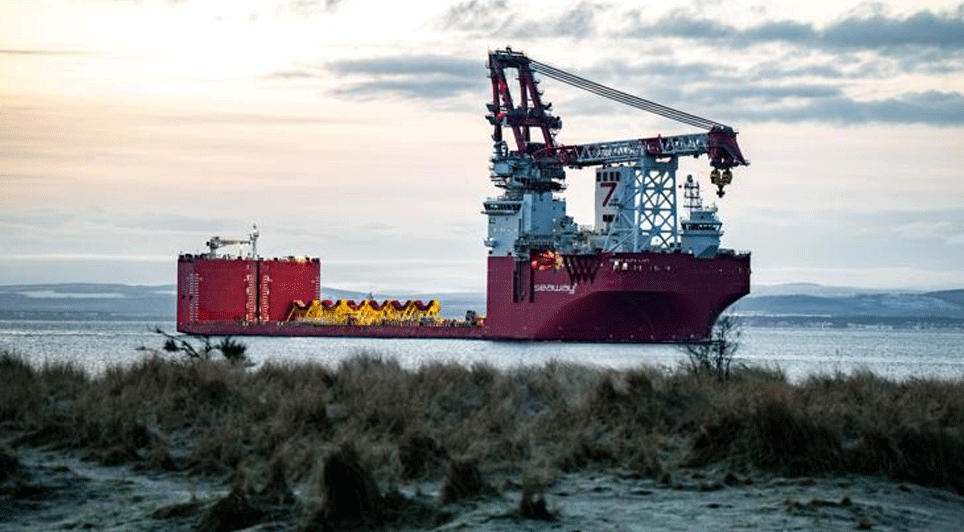
Renewable energy projects – including offshore and onshore wind, pumped storage hydro, green hydrogen, and marine energy – account for approximately three-quarters of the total RTO investment value. Other significant sectors include space, marine biotech, life sciences, natural capital, and critical infrastructure developments such as electricity grid upgrades, improvements to ports and harbours, and the creation of research and innovation facilities.

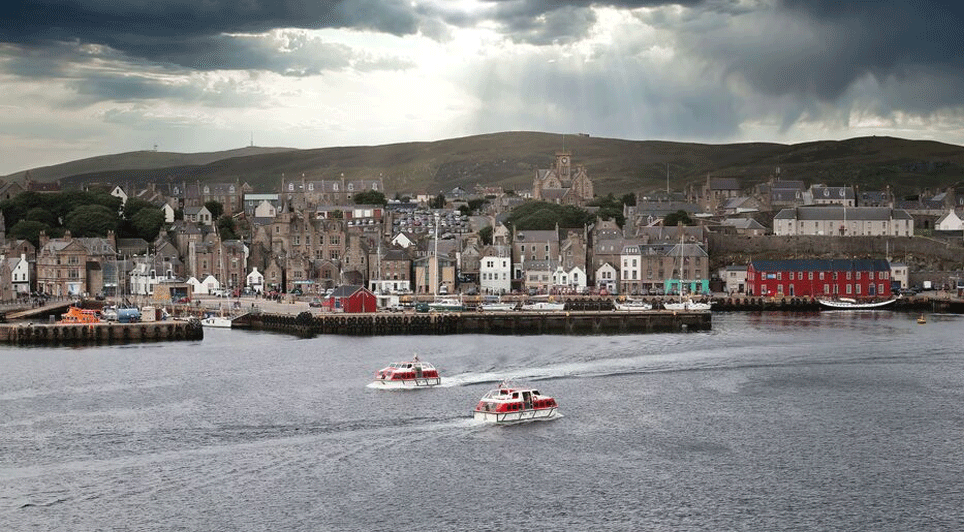
These projects are generally well dispersed across the region’s local authority areas, with clusters of initiatives in Shetland and Orkney, Caithness and Sutherland, Lewis, Argyll and Kintyre, as well as Moray, the Inner Moray Firth, and down the Great Glen. The RTOs are largely driven by the private sector, with some public sector co-investment and support through Growth Deals.
The study did not include growth projects in other key industries like tourism, food and drink, and creative industries, nor did it feature public sector investments in infrastructure like roads, schools, and hospitals, all of which would be additional to the RTO figures.
The authors highlight that overcoming barriers to growth will be crucial, and the findings will inform policies around population attraction and retention, skills development, housing provision, and transport. A collaborative, holistic, and place-based approach, implemented "at pace," is described as critical.
Stuart Black, HIE chief executive, stated: "It would be difficult to overstate the importance of this research and its implications for the role that this region has in Scotland’s economic future. The Highlands and Islands will be the engine room for growth for the Scottish economy in the years ahead."
Cllr Raymond Bremner, chair of HIREP, welcomed the report: "We stand on the brink of a once-in-a-generation opportunity for economic transformation. Investing in our workforce is essential, prioritising upskilling and reskilling... Addressing the challenges ahead demands an unwavering commitment to collaboration."
Deputy First Minister Kate Forbes added: "The Scottish Government’s Programme for Government 2025 puts a clear focus on attracting investment as a key driver to creating jobs and growing our regional and national economies. The skills, talent and natural resources running across the Highlands and Islands are well known but this report sets out the true scale of the opportunities that lie ahead. The challenge now is to capitalise on this promise."