Scotland
 UK
UK Ireland
 London

SSEN Transmission is continuing with permitted ground investigation activities along the proposed routes for its three new onshore overhead line projects, which form a critical part of its £20 billion ‘Pathway to 2030' programme. This work is essential for gathering detailed information to ensure readiness for full construction, should the projects receive consent.
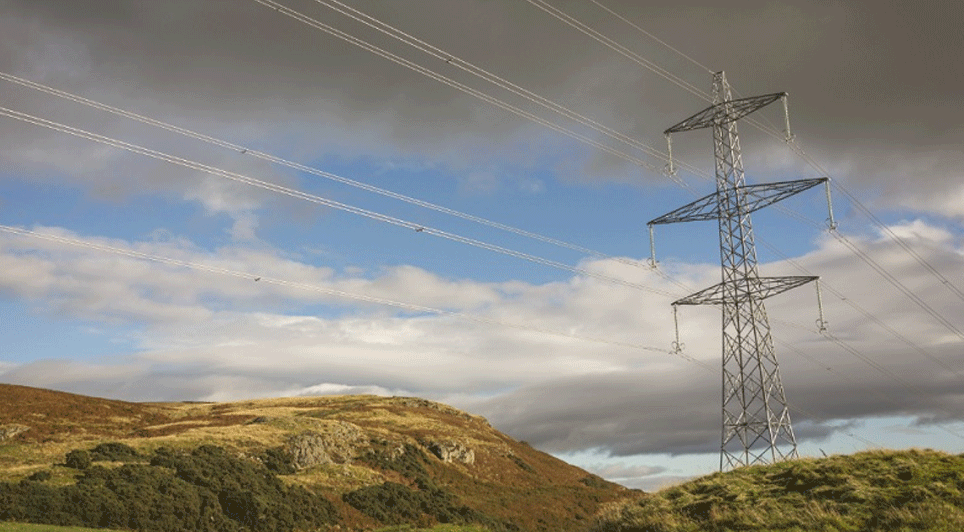
The three proposed 400kV overhead line projects, for which consent applications are due to be submitted later this year following extensive planning and consultation, are vital for enhancing energy security and transporting clean power across Great Britain, thereby supporting Scotland and the UK's renewable energy targets.
For several months, project teams and contractors have been conducting walkover surveys and ground investigation works. These activities, which are ongoing, aim to thoroughly assess ground conditions to inform construction methodologies if the projects are approved. The wider ‘Pathway to 2030' programme also includes upgrades to existing overhead lines and the development of new 400kV substations and HVDC converter stations, with ground investigation activity being undertaken across all these elements.

Ground investigation for overhead lines, carried out under Permitted Development rights, typically involves drilling boreholes and excavating trial pits. This allows engineers to understand the soil and rock properties beneath potential steel tower locations and assess their suitability for supporting the structures and associated access tracks. In some instances, tree felling is also necessary to ensure safe access for these investigations, with all intrusive activity kept to a minimum.
Kelly Scott, one of SSEN Transmission's Lead Community Liaison Managers, stated: “Ground investigations are a necessary step in the development of any new infrastructure, and the results will help our teams and contractors to be ready to start construction on our projects, should they get the green light."
She added: "As our ground investigation activity continues, local community members can expect to see our teams active on the ground, and while most of the work is expected to cause very little local disruption, we would like to thank the local community for their patience while the work is carried out. Where slightly more intrusive assessments are needed, we will work to keep local disruption and environmental impacts to a minimum."
Ms Scott also highlighted the environmental oversight: "As we progress through the works, the SSEN Transmission project team will continue to oversee the work being carried out by various contractors, who also employ ecologists and archaeologists in an extra effort to ensure that work doesn't have an impact on local wildlife or archaeological assets."
This phase of ground investigation activity is expected to continue throughout the remainder of 2025 and into 2026. With the public consultation period for these projects now concluded, SSEN Transmission project teams are finalising planning applications for submission to Scottish Ministers later this year.