Scotland
 UK
UK Ireland
 London

SSE Renewables has unveiled plans to convert the UK's largest conventional hydro power plant – 152.5MW Sloy Power Station – into a new pumped hydro storage facility to bolster energy security and help provide the large-scale and flexible renewable energy back-up needed in a future UK net zero power system.
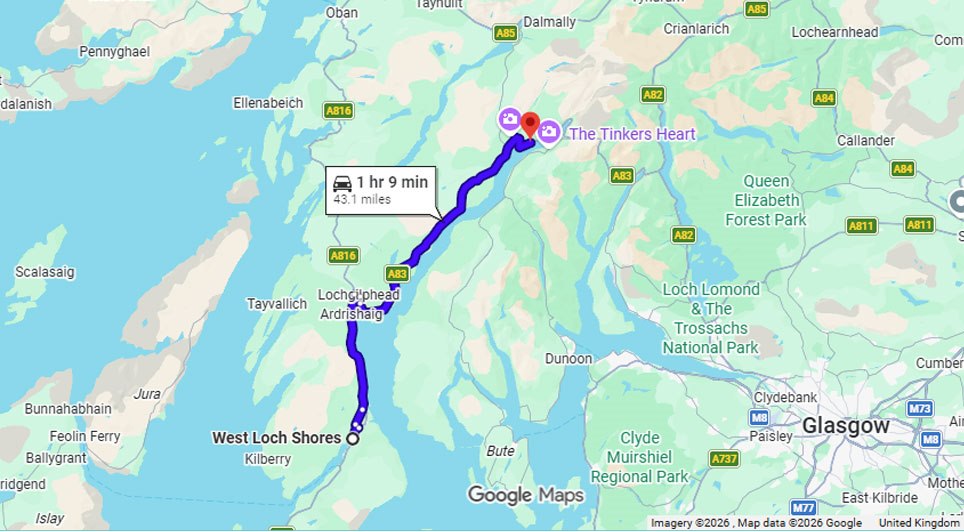
The announcement was made during a visit by Scotland's First Minister Humza Yousaf to SSE's iconic power station on the shores of Loch Lomond in Argyll and Bute, central Scotland.
The visit marks the 80th Anniversary of the 1943 Hydro Electric Development (Scotland) Act, which brought hydro-electric power to the Scottish Glens eight decades years ago.
Now, 80 years later, SSE Renewables is announcing plans to convert its existing conventional 152.5MW Sloy hydro power station to pumped storage. As Britain transitions to a net zero power system, the development of additional pumped hydro storage projects will be crucial for energy security back-up and for balancing a renewables-led energy system during periods when the wind doesn't blow and the sun doesn't shine.
Subject to final design, the converted Sloy scheme would be capable of delivering up to 25GWh of long-duration electricity storage capacity. At the flick of a switch, the converted Sloy scheme could provide firm, flexible renewable energy for up to 160 hours non-stop, enough to power around 90,000 homes for up to one week.
SSE's decision to announce plans for additional new pumped hydro storage capacity at its existing Sloy Power Station comes as the leading low-carbon energy infrastructure company awaits the UK Government's decision on how it intends to support the deployment of long-duration electricity storage, as set out in last year's 'British Energy Security Strategy'.

Humza Yousaf, First Minister said: "Scotland has vast natural resources which have helped us to become world leaders in renewable energy.
"Facilities like the Sloy Power Station continue to play a significant role in energy supply, providing flexible services to the grid and help to ensure a continued, resilient and secure electricity supply, by helping to balance our intermittent renewable electricity generation."
The First Minister continued: "Hydro power was the country's original source of renewable energy and it has the potential to play a significantly greater role in the transition to net zero – both on a small-scale in co-operation with local communities and on a larger scale, to help to ensure a continued resilient and secure electricity supply.
"We continue to call for the UK Government to provide an appropriate market mechanism for hydro power and other long duration energy storage technologies, to ensure this potential is fully realised."
Finlay McCutcheon, Director of Onshore Europe, SSE Renewables said: "We're delighted to announce new redevelopment plans for our landmark Sloy Power Station, especially as we mark the 80th Anniversary of Hydro Power's contribution to homegrown power supply in Scotland and Britain.
"In converting our existing Sloy conventional hydro power plant to a pumped hydro storage facility, we can provide the additional large-scale, long-duration electricity storage we need as part of the country's future energy mix. With up to 25GWh of storage capacity, the scheme would be capable of powering 90,000 homes for an entire week, so bolstering our energy security and providing the balancing flexibility we need in a renewables-led energy system.
"The development of pumping capability at Sloy also complements our development plans for our other pumped hydro storage project at Coire Glas. Taken together and if approved for delivery, Coire Glas and Sloy can treble Britain's current flexible electricity storage capacity. That's why it's crucial the UK Government urgently confirms its intention on exactly how they will help facilitate the deployment of pumped hydro storage projects as part of our future energy mix."
SSE's pumped storage plans for Sloy join those for a new pumped hydro storage scheme at Coire Glas between Fort William and Inverness, a potential £1.5bn-plus investment in what could be Britain's biggest pumped hydro storage scheme in 40 years.
Pumped hydro storage would benefit from certainty as to how they would derive revenues, which is expected to be addressed in the UK Government's upcoming decision on supports for long-duration electricity storage. This could include the introduction by the UK Government of a 'revenue stabilisation mechanism' in the form of an adapted 'cap and floor' scheme to support investment in long-duration storage, effectively without subsidy. This would also be alongside broader consideration of how the electricity market, including the Capacity Market and Flexibility Markets, value the contribution of low-carbon, flexible assets such as pumped storage.