Scotland
 UK
UK Ireland
 London

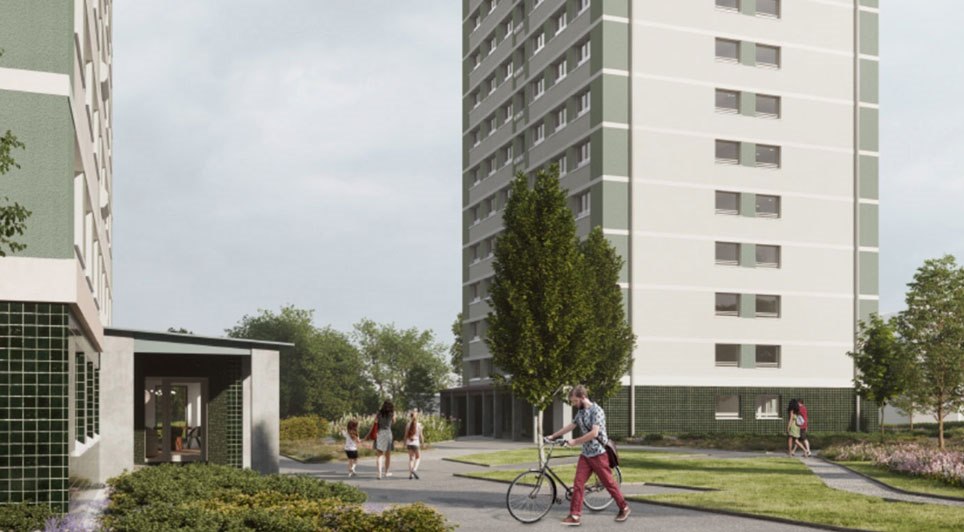
Residents in the Canongate area of the Old Town will benefit from a range of conservation and energy efficiency improvements to reduce energy consumption and carbon emissions by over 50%.
Led by Edinburgh World Heritage in partnership with the City of Edinburgh Council, the work has recently been completed on a block of post-war tenements following funding from Scottish Power Energy Networks' Green Economy Fund and the Scottish Government’s Energy Efficient Scotland programme.
Whilst supporting Edinburgh's goal to become a net zero emissions city by 2030, and contributing to the Scottish Government's plans to meet climate change targets by 2045, this project will also improve living conditions within the 12 flats and 2 commercial units.
Following the work, which began in March 2020 with John Gilbert Architects and Redpath Construction, Edinburgh World Heritage has reported an anticipated drop of 28 tons of carbon emissions per year, the equivalent to planting almost 3,000 trees, for the Category B-listed tenements as well as improved living conditions for residents. The charity said that work to reinstate the original window scheme, including balcony windows, to Sir Basil Spence's original specifications, has also enhanced the architectural integrity of the building.

Energy efficiency measures included the installation of double-glazed windows, insulation in the attic, the roof and within cavity walls, installation of LED lighting, upgrades to heating systems and improvements to the ventilation. The conservation work included repairs to concrete balconies and the exterior stairwell, which had significantly deteriorated over the years, the restoration of Spence’s original painting scheme to the exterior of the building, as well as the reinstatement of original windows.
Property owners and tenants were supported by Edinburgh World Heritage's Conservation Funding Programme (funded by Historic Environment Scotland), which provided expertise, advice and support throughout the project. In total, the project cost £1,201,800, with key contributions from the Scottish Government’s Energy Efficient Scotland programme, SP Energy Networks’ Green Economy Fund, and property owners.
Edinburgh World Heritage also engaged with tenants and property owners of surrounding buildings, who participated in training opportunities, including workshops on maintenance and ways to make their homes more energy efficient. Additionally, more than 50 local companies with more than 120 employees were employed over the project’s three-and-a-half-year life cycle. Staff were able to learn new skills in energy efficiency solutions for historic buildings as well as specialist conservation techniques.
Through the implementation of this pilot project, Edinburgh World Heritage now believes that a number of key principles have been established, which will help other projects involving listed buildings to carry out sensitive and appropriate energy efficiency and conservation works.
SP Energy Networks provided the funding towards the Canongate project through its £20m Green Economy Fund. The fund supports initiatives that will benefit the people of Scotland and support Scotland's ambitious green energy plans and local economic growth.