Scotland
 UK
UK Ireland
 London

Scottish Ministers have called on the UK Government to waive VAT for companies removing combustible cladding from their buildings in response to the Grenfell Tower tragedy.
In a letter to the Financial Secretary to the Treasury, Mel Stride, Housing Minister Kevin Stewart said companies that are removing aluminium composite material (ACM) cladding on high-rise building should be exempt from paying VAT.
"The Grenfell Tower fire was a tragedy and we have to learn lessons on how to better protect people in their own homes," he said.
"We are continuing to review our building regulations to ensure that the appropriate fire protections are in place, but to maintain public faith the UK Government should not be in a position to make money on the back of repairs to keep people safe.
"For those living in high rise buildings with this type of cladding it has been a period of incredible upheaval and uncertainty as they wait for all the necessary partners to agree a way forward. I want to thank them for their patience, as well as all of those involved across councils, construction firms, residents organisations and others who have worked together to resolve the issues that became apparent in the wake of the Grenfell Tower fire."

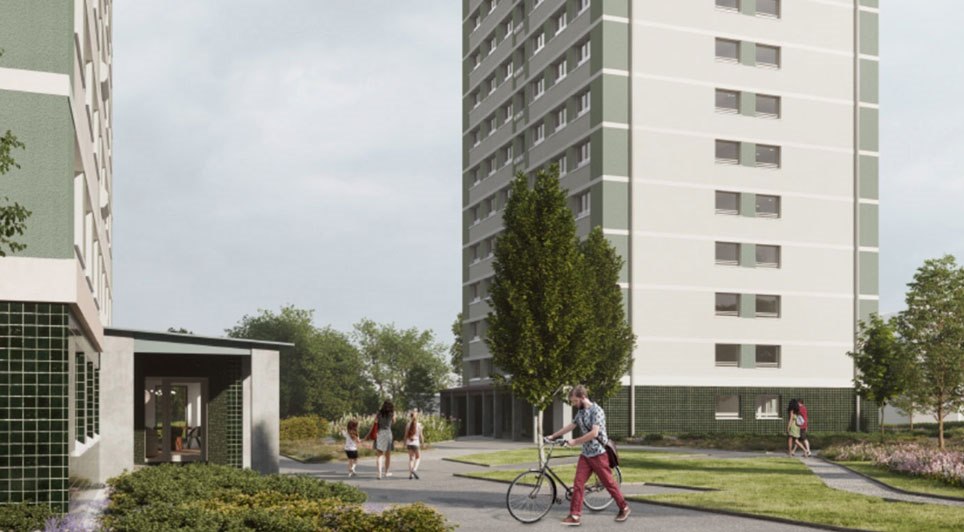
Despite welcoming news that the UK Government will fund replacement cladding for social high rise domestic buildings, Minister Stewart said that funding will not be extended to owners of private high rise buildings.
"This means that in order to make their homes safe, individual owners will need to fund the full cost of replacing unsafe combustible cladding," he said.
"These costs run into millions of pounds and are made considerably higher as VAT is payable on this category of repair works. Hundreds of buildings and thousands of individuals across the UK are affected by this.
"The exemption of VAT on repair and renovation works is an issue that the Scottish Government has raised previously with HM Treasury and which has not yet been resolved. The very stark reality of the consequences of the Grenfell Tower fire and the enormous amount of repair and refurbishment required to remove affected cladding systems has highlighted this issue once more.
"It perturbs me that we find ourselves in a situation where repair work directly linked to the replacement of ACM cladding, in order to ensure the long term fire safety of residents, will ultimately result in additional revenue to HM Treasury."
(LM)