Scotland
 UK
UK Ireland
 London

Scottish Water has completed a major upgrade project of the Katrine Aqueduct.
The work included the upgrade of two 26-mile long aqueducts take water from Loch Katrine to water treatment works that serve 1.3m people in areas within Glasgow and the Central Belt.
The £7m capital maintenance project, which has improved the security of the water supply to customers, is the biggest upgrade carried out on the aqueducts since they were built in Victorian times more than 150 years ago.
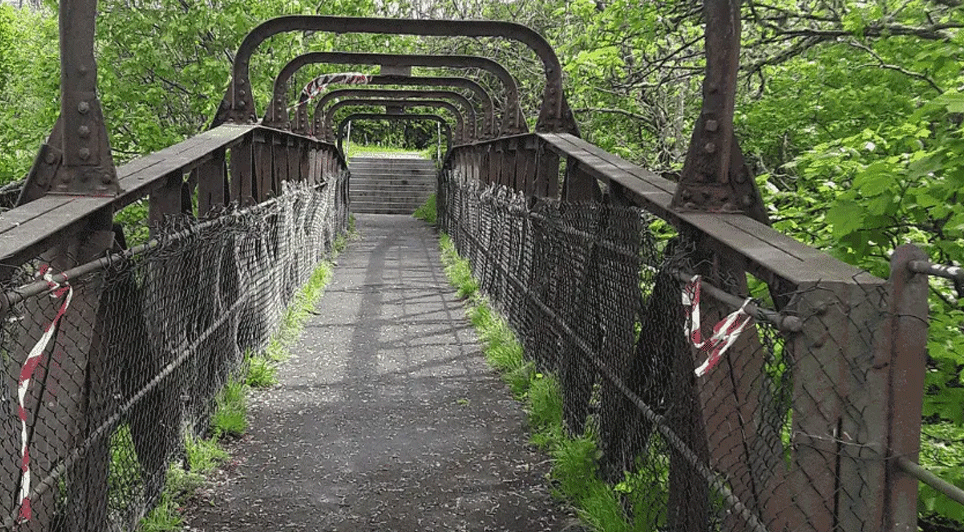
The investment in a vital part of the company's water infrastructure also involved improvements to miles of tunnels and 21 bridges along the route of the aqueducts, which convey raw water by gravity from Loch Katrine in the Trossachs to the Glasgow area.
The two aqueducts are essential for normal operation of the Milngavie and Balmore water treatment works (WTW), just north of Glasgow, which produce around 550m litres of water every day.

John Rae, Scottish Water's General Manager of Water Operations, explained: "These aqueducts, which were part of a scheme opened by Queen Victoria in 1859, were a feat of engineering of their day and remain an outstanding example of sustainable civil engineering public works construction, which have stood the test of time.
"But, despite some improvement work over the years, they required substantial capital maintenance to ensure they continue to operate efficiently.
"This investment by Scottish Water will help ensure we continue to provide a first-class service to a massive number of customers for many years to come."
The capital maintenance work, which started last September, was carried out for Scottish Water by contractors George Leslie Ltd. It included structural repairs of tunnels and bridges, improvements to the lining of tunnels and repairs and refurbishments of control valves.
Work on a bridge over the Endrick Water, a site designated as a Special Area of Conservation by Scottish Natural Heritage for its population of Atlantic salmon and lamprey, required special protective measures to prevent silting of the watercourse.
Over the combined length of the aqueducts, there are more than 30 historic listed structures and planning permission for the repair work was conditional on full consultation with Historic Scotland.
(JP/CD)