Scotland
 UK
 Ireland
 London


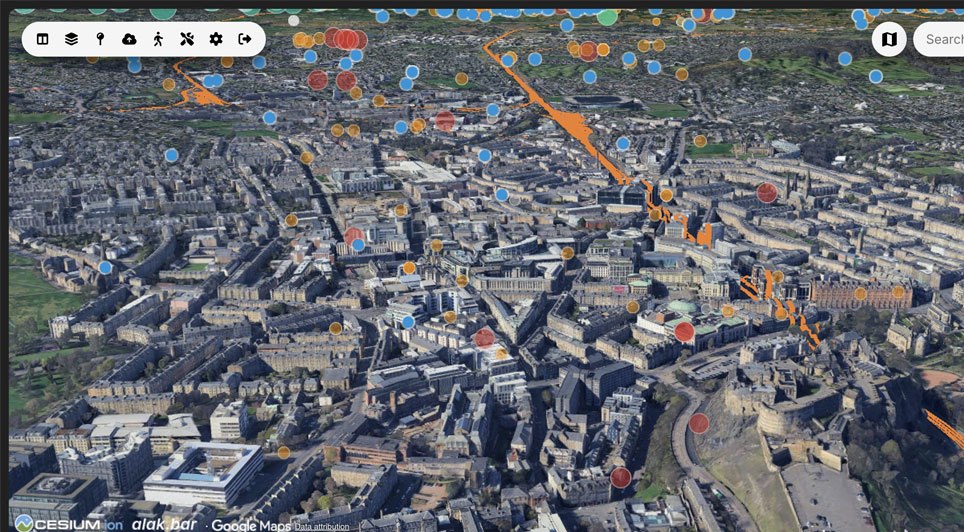
Researchers at the University of Glasgow have helped devise a new secondary-school qualification that creates an additional route into engineering across Scotland. Scotland's Infrastructure Pathway, unveiled last week at Panmure House in Edinburgh, immerses pupils in real-world infrastructure via an interactive 3D digital model.
Developed by Heriot-Watt University and Midlothian Council using software from global infrastructure engineering firm Bentley Systems, the initiative arrives as Scotland targets £11.1bn of infrastructure investment. According to the Construction Industry Training Board, the construction sector will require around 2,590 extra workers each year to 2030 to meet demand.
Piloted in four Midlothian schools with the University of Edinburgh and Heriot-Watt University, and in association with the University of Glasgow, the programme aims to reach about 40 schools next year. It leads to the National Progression Award (NPA) in Built Environment within a Global Infrastructure, accredited at SCQF Level 6 (the same level as a B Higher) and informally known as Global Infrastructure and the Built Environment (GIBE). The qualification is accepted for engineering degree entry, including at the University of Glasgow.
The James Watt School of Engineering's Dr Daniel Mitchell led Glasgow's input to the Pathway. He is also a research associate on the Digital Twinning for Transport Decarbonisation (TransiT) project, whose mission to use digital twins to shape sustainable futures aligns closely with GIBE. A short video overview is available at youtube.com/shorts/MvuLEDG7tg0.
Dr Mitchell said: "Scotland's Infrastructure Pathway is now in its second year of deployment, with the curriculum being piloted across 30 schools this academic year. At a time when more than one million young people aged 16-24 across the UK are not in education, employment or training, initiatives like GIBE are helping to tackle this challenge by connecting learning directly to real-world careers.

"By giving pupils hands-on experience of infrastructure, engineering and digital technologies, Scotland is taking a proactive approach to building the skilled workforce needed for the future and we are two years ahead of the UK in addressing this.
"TransiT stakeholders have already been engaging with GIBE given its mission to help inspire, educate and train the next generation of innovators who will shape sustainable futures."
Alex MacLaren, Associate Professor of Architecture at Heriot-Watt University, said: "The Infrastructure Pathway is the result of three years of work by educators and industry leaders, side by side, to create something Scotland has never had before: a single, connected route from the primary classroom through secondary school, college, university and apprenticeships, and into employment.
"We believe it is the first initiative of its kind anywhere in the world. It was created by education and industry, for education and industry.
"At its heart is a new qualification, widely accepted by Scotland's universities, which has pupils working directly with universities and industry partners on real infrastructure projects.
"Delivering a net zero economy, resilient communities and world-leading digital systems will need thousands of skilled people in engineering, construction, data, AI and environmental science, yet many young people have never been shown these careers. This pathway changes that.
"And because the curriculum is designed to evolve with industry, it will prepare young people for the world of work they will face in the future, not just the one that exists today."
Central to the Pathway is a digital twin: a 3D model of real buildings, streets and energy networks that functions like an interactive map. Engineers use digital twins to design and manage assets from roads to wind turbine layouts. The model, originally created to visualise energy data for Heriot-Watt's campus decarbonisation, is built using Bentley Systems' Cesium software.
Pupils can interrogate their school site to view classroom temperatures, track Scotland's famously named gritter fleet such as 'Snow Place Like Home etc' via Transport Scotland data, and experiment with live datasets on wind, energy, water and sensors. The practical, visual approach aims to engage learners who may not flourish in traditional maths and science lessons, opening pathways to graduate apprenticeships or conventional university programmes.
While industry-grade tools and hardware can be costly, the Pathway runs in a standard web browser on Chromebooks and iPads already used in schools, and Bentley's technology is free for education. Over an academic year, pupils collaborate with universities and industry partners, including Mott MacDonald and SSE, on authentic project scenarios. The qualification is recognised by the University of Glasgow as equivalent to a Higher for Engineering programme applications.
David Robertson, Director – University & Education Partnerships at Bentley Education, said: "What makes the Infrastructure Pathway special is that it puts real industry technology into pupils' hands on the devices they already have, and connects what they learn directly to the careers that exist across Scotland's infrastructure sector.
"Scotland is the ideal place to show what's possible when education and industry work together at a national scale and this is a special project that will help increase education to talented students."
Following the launch on Monday 19 October, partners hosted events for schools and employers in Edinburgh and at Glasgow's Mazumdar-Shaw Advanced Research Centre. Further sessions are scheduled in Aberdeen on Thursday 29 October and Dundee on Friday 30 October.