Scotland
 UK
 Ireland
 London


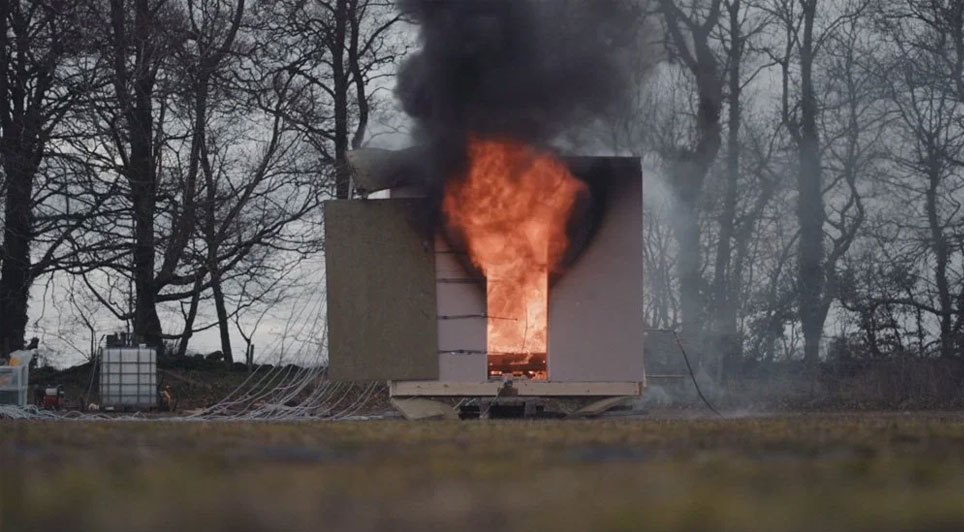
A new research collaboration led by BE-ST and the University of Edinburgh offers one of the clearest overviews yet of how industry stakeholders view fire safety in mass timber buildings, and what must change to enable broader use across the UK.
Funded by Built by Nature, the project was launched in response to the UK Government's 2023 Timber in Construction Roadmap, which called for a stronger evidence base on safe timber deployment in modern construction.
The study convened industry practitioners, academics, insurers, government representatives and fire specialists to assess the current pace of mass timber adoption, with a particular focus on fire performance, regulation and confidence across the supply chain.
The findings paint a nuanced picture: timber's environmental benefits are widely recognised and specialist technical confidence is rising, yet significant barriers continue to hold back mainstream delivery.
Client confidence emerges as the defining factor. The report concludes that client motivation and "buy-in" most strongly determine whether projects proceed in mass timber. Many schemes stall because clients perceive additional risk around fire safety, insurance and regulatory scrutiny.
Stakeholders suggest that reducing perceived risk is now paramount. Many engineers and technical specialists directly involved with mass timber believe core fire engineering challenges are already addressable. They argue success depends on appointing suitably experienced teams and embedding robust design, detailing and verification from the outset.

A major obstacle is a lack of publicly available fire testing data for mass timber details and systems—particularly evidence showing how specific assemblies perform in fire resistance tests and in real fires. This gap often triggers delays, extra cost and uncertainty during approvals and insurance negotiations.
Currently, the sector leans heavily on proprietary tests and a small pool of specialist consultants. While their expertise is valued, many voiced concern about over-reliance on privately held information.
To tackle this, the report recommends creating a comprehensive, independent and publicly accessible database of fire testing evidence spanning timber products, systems and construction details. Participants stressed that impartiality is essential if such a resource is to earn broad trust.
On guidance and regulation, stakeholders frequently cite the Structural Timber Association's Volume 6 guidance and the Mass Timber Insurance Playbook as practical and influential. However, unlike statutory documents such as Approved Document B in England, these resources carry no formal regulatory authority, so they help inform decisions but cannot fully resolve uncertainty for approvers, insurers or clients.
The research also underlines the complexity of the UK's regulatory landscape. While government policy papers, including the Timber in Construction Roadmap, increasingly support timber for its contributions to net zero, reduced embodied carbon and green growth, building regulations remain material agnostic—placing the onus on project teams to demonstrate safety.
A key recommendation is to develop a small number of fully tested, prescriptive benchmark designs in timber. Full-scale testing of agreed exemplars could create a shared evidence base to inform future regulatory guidance and reduce uncertainty for project teams, clients and insurers.
Almost all stakeholder groups called for significantly greater investment in mass timber education and training—on-site and off-site—to build a stronger pipeline of qualified designers, contractors, regulators, installers and fire engineers, though opinions varied on the exact format and delivery of that training.
Overall, the report suggests the UK mass timber sector is entering a new, evidence-led phase. With technical understanding advancing, wider adoption now hinges on building confidence across a broader set of decision-makers.
More publicly available test data, clearer guidance, stronger education pathways and closer insurer engagement could collectively reduce uncertainty and support safer, more consistent project delivery.
BE-ST and its partners emphasise that the goal is not simply to advocate for timber, but to enable evidence-based decision-making. The full report and supporting roadmaps set out practical steps to move from uncertainty to shared proof.