Scotland
 UK
UK Ireland
 London

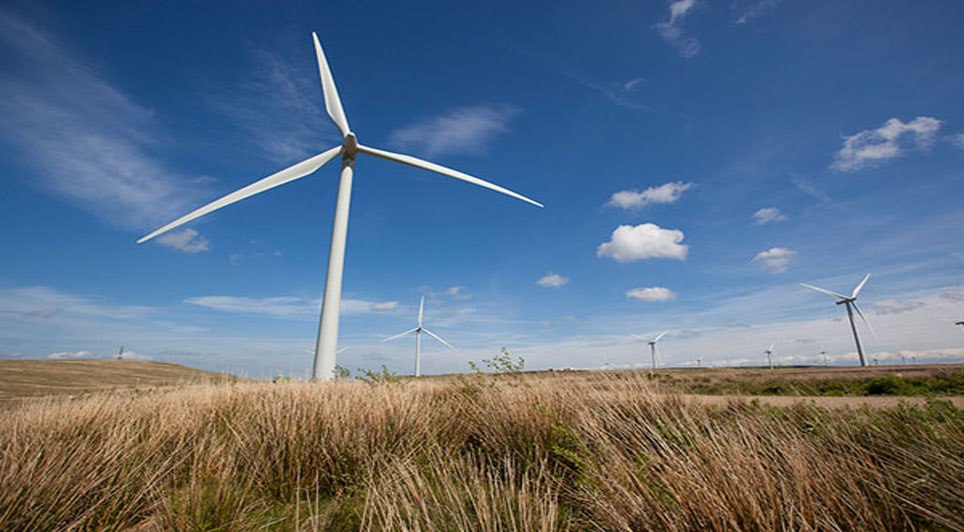
New analysis from RenewableUK and Scottish Renewables indicates that delivering the UK Government's 29GW onshore wind target by 2030 would save UK billpayers around £3 billion a year compared with producing the same volume of electricity from new gas-fired power stations.
Separate research by the Energy and Climate Intelligence Unit suggests the wholesale power price in 2025 would have been 31% higher without wind generation, had the UK relied more heavily on costlier gas instead.
The UK currently has 16.4GW of onshore wind in operation, meeting about 12% of annual electricity demand. Scotland accounts for 10.7GW, and the Scottish Onshore Wind Sector Deal, signed in 2023, aims for 20GW of operational capacity by 2030. In England and Wales, ministers want capacity to rise from 4.2GW to 8.6GW by 2030. However, analysis by Aurora Energy Research finds projects with grid connection offers amount to only about half the capacity required to reach 29GW nationally (10.4GW in Scotland and 2.6GW in England and Wales).
Tara Singh, CEO of RenewableUK, said: "Hitting the UK's onshore wind target by 2030, which will bring billions in benefits to all parts of the country, can only be achieved if we can get new projects connected to the grid faster and enable older turbines to be replaced by much more powerful new ones, which enjoys a high level of public support.
"As onshore wind is one of our cheapest forms of new power, and one of the fastest to build, this will cut bills and strengthen the UK's energy security by delivering more homegrown power at the lowest cost. It also creates opportunities for us to grow our supply chain, creating jobs and boosting our economy further."
Angela Hepworth, CEO of Scottish Renewables, added: "Scotland will be fundamental to delivering the UK's future energy system. We already have a mature onshore wind sector supporting thousands of jobs, local supply chains and communities, with a significant opportunity to build on that success.

"Maximising Scotland's onshore wind opportunity means bringing forward new projects while repowering our existing fleet with more efficient technology. Doing both can deliver more home-grown, affordable electricity while extending the jobs, investment and community benefits that have grown alongside the sector.
"But ambition must be matched by delivery. Planning, grid connections, transmission charging and routes to market need to work together to give investors confidence and turn Scotland's onshore wind potential into lasting value for billpayers."
The findings are being published at the Onshore Wind Conference 2026, co-hosted by RenewableUK and Scottish Renewables, taking place in Edinburgh on 1–2 September.
Michael Shanks MP, Minister for Energy, said: "Onshore wind is a vital part of how we bring down energy bills and reduce our exposure to volatile fossil fuel markets. It's also an industrial opportunity creating good jobs across the country.
"That's why we've lifted the ban on onshore wind in England, backed new projects across GB and consulted on how we make community benefits work even better for local people."
Stephen Gethins MSP, Minister for Europe, External Affairs and Energy, added: "Most renewable electricity generated in Scotland comes from onshore wind, the product of decades of sustained support by this Government for one of the cheapest forms of power we can build.
"Onshore wind is helping to deliver jobs, drive economic growth and bring lasting benefits for communities across Scotland. By continuing to work with industry, we can build on that success and realise the full potential of Scotland's renewable energy resources."
The industry groups point to recent government figures showing an onshore wind clearing price of £72.24/MWh in Allocation Round 7, compared with an estimated £147/MWh for a new combined-cycle gas turbine operating at a 30% load factor in 2030 (both in 2024 prices) — a gap of £74.76/MWh. Reaching 29GW requires roughly 13GW of additional onshore wind capacity, which government assumptions indicate would generate about 42.1TWh a year at a 37% load factor. Applied to the price gap, that equates to savings of roughly £3.15 billion annually. The gas cost estimate is based on central long-term assumptions of around 70–71p/therm in 2030, falling to 66p/therm by 2040 — less than half current wholesale gas prices — implying savings could be higher if elevated gas prices persist.
While weather-dependent generation involves some system balancing, publicly available sources suggest integration costs of around £20 million per GW per year — about £260 million annually for a 13GW expansion — in a moderately flexible grid. Consultancy analysis also notes these figures exclude wholesale price reductions expected from additional onshore wind and the costs of supporting new capacity, with the price impact anticipated to offset added system costs for consumers. These integration costs differ from transmission "constraint" costs, which the National Energy System Operator expects to fall by around 60% across Great Britain as major grid reinforcements, including new subsea links, are commissioned around 2030.