Scotland
 UK
UK Ireland
 London

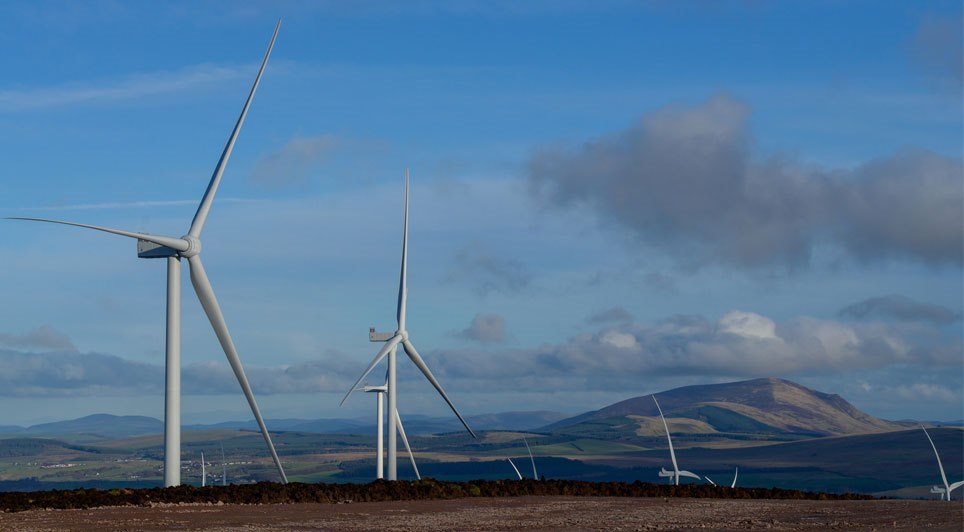
A new report on the decommissioning of Hagshaw Hill, Scotland's first commercial windfarm, shows that 99.9% of materials were recycled or reused, with contracts awarded to at least 10 supply-chain companies in Scotland and elsewhere in the UK.
Commissioned by ScottishPower Renewables and produced by engineering and management consultancy Mott MacDonald, the study examined the dismantling of the South Lanarkshire site and the ripple effects across the economy and supply chain.
Mott MacDonald's decarbonisation lead, Mark Crouch, who led the study, said: "Through reviewing the project decommissioning data and interviewing project stakeholders, we have been able to evidence that the continued evolution of the wind energy sector maximises the value of resources, minimises carbon emissions and supports jobs in the local economy. All while delivering more clean energy for the future.
"The energy sector and companies in the supply chain can invest with confidence when they can see windfarms being approved for repowering. This could mean jobs and opportunities for years to come as the first windfarms make way for the next generation."
Northern Ireland-based company Plaswire uniquely fully recycle the blades into materials for the construction and engineering industries.
Andrew Billingsley, CEO of Plaswire said: "This is a time of explosive growth for wind decommissioning, and this report is evidence that there are incredible opportunities for the future.

"As well as the work we have been doing with companies in the UK and here in Northern Ireland, we've now finally had approval to process blades from outside the UK, opening up a massive European and international market for us.
"Our output this year is 50% up on last year, which was 30% up on the year before.
"Over the next year our work force will double and we are now ready to partner with investors to back these growth plans."
Hagshaw Hill 1 began generating in 1995 and was dismantled in 2023 as part of a programme to repower early windfarms with fewer, more modern and efficient turbines. All 26 turbines have since been reused or recycled three decades after coming online.
Gillian Noble, managing director of onshore origination and development at ScottishPower Renewables, said: "I have got a gigawatt of turbines that are due to come down over the next ten years. I am looking for solutions to facilitate that happening. We want to invite competition because that ensures that we keep the cost as low as possible."
ScottishPower Renewables Onshore Construction and Operations Director Ross Galbraith said: "The decommissioning of Hagshaw has been a real flagship project as it proves we can commit wind power to being part of a circular economy, but also that we can support a whole new industry of the future.
"One of the ambitions for the project was to maximise the reuse and recycling of the 26 decommissioned wind turbines and their associated components, and we achieved a fantastic recycling outcome of 79.5% and reuse outcome of 20.4%.
"This is a great result for the project and demonstrates what is achievable with the support of the supply chain, the majority of which was within 30 miles of the site – another fantastic achievement of the project."
The site has been repowered with 14 higher-capacity machines, lifting Hagshaw's output to 80MW — enough electricity to supply the equivalent of 57,000 homes a year. Decommissioning fully removed the original turbines and blades, clearing the way for the upgrade.
All blades from the former windfarm have been turned by a specialist supplier into a polymer that replaces traditional materials such as concrete, timber and virgin plastics. The output is already being used for items including site fencing, marker posts, drainage components and other construction products. Some reused parts are supporting workforce training as more pioneering UK windfarms approach repowering.
Ross Galbraith added: "This project is a huge step forward for the wind energy sector, but it also shows the sustainability can continue beyond the initial benefits.
"We've reached a massive milestone in wind energy in that many of those early projects are now reaching the end of their natural life and are ready to be replaced and modernised with even more efficient turbines.
"That means huge opportunities for growth in the recycling sector."