Scotland
 UK
UK Ireland
 London

Operators across the UK are under growing pressure to execute projects faster, more safely and more cost‑effectively. Against that backdrop, offsite fabrication is becoming central to modern delivery strategies.
Pushed by compressed schedules, financial constraints and the need to cut on‑site risk in complex settings, more work is being shifted into controlled facilities. Pre‑assembled systems and factory‑style workflows are changing how infrastructure is designed, built and installed.
Industrial services provider Bilfinger has invested to meet this shift, notably through its Unit 31 fabrication facility in Ellesmere Port, Cheshire.
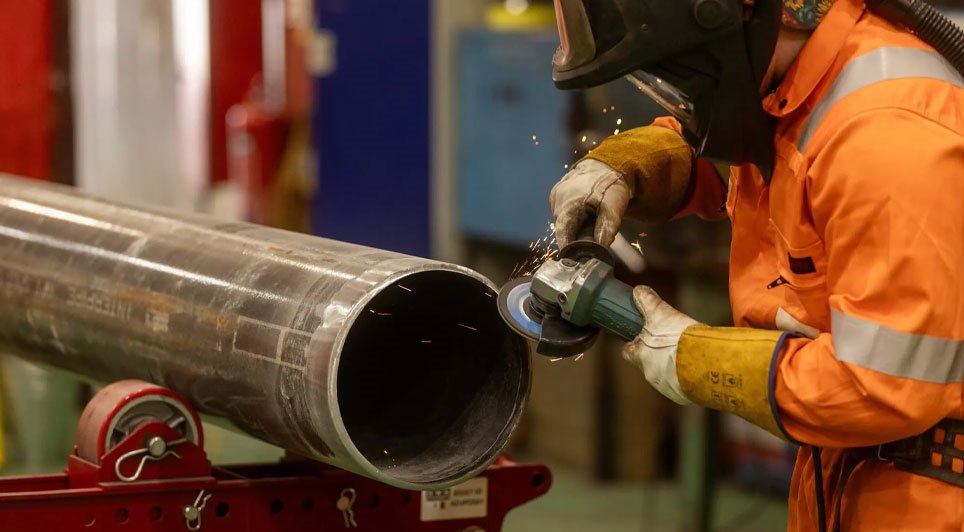
Operational since 2015, the 20,000 sq ft workshop is a core part of Bilfinger's integrated engineering and maintenance offer, producing pipework and pre‑assembled systems for oil and gas, chemicals, power, nuclear and utilities.
Configured for highly regulated environments, the site has three dedicated fabrication bays with full segregation of carbon steel and stainless steel activities, supporting stringent quality control and flexibility across materials. Overhead cranes rated up to 10 tonnes enable safe handling of large and complex assemblies as project scopes grow in size and complexity.
Delivery is underpinned by specialist skills. Coded welders qualified to ASME and EN ISO standards work across carbon steel, stainless steel and chrome‑based alloys for high‑specification applications. Governance is reinforced by ISO 9001, ISO 14001 and ISO 45001 certifications, maintaining consistent quality, environmental stewardship and safety performance as projects become more compliance‑driven.

"We're seeing a clear shift in how projects are being delivered across the sector," says Philip Harrison, Workshop Manager at Bilfinger's Unit 31.
"Clients are looking for greater certainty around quality, safety and programme — and that's where offsite fabrication is adding real value, particularly in more complex or regulated environments."
Digital technologies are further accelerating the trend. High‑definition 3D laser scanning captures millions of data points per second to create a precise digital twin of existing assets. By replacing slow, error‑prone manual measurements with accurate point clouds, teams can achieve millimetre‑level accuracy so prefabricated spools, valves and supports fit first time. The result is less costly field rework and sharply reduced installation downtime.
By maximising pre‑assembly and testing in a controlled workshop, contractors can cut back on one of the most challenging, risk‑intensive phases of any job: fabrication and fit‑up on site.
Among the key advantages are:
- Shorter schedules through parallel offsite and site activities
- Less on‑site congestion and lower associated safety risks
- Higher, more consistent quality from controlled conditions
- Greater predictability at installation and commissioning
For operators managing high‑hazard or tightly regulated facilities, these gains directly support safer operations and more efficient delivery.
"Offsite fabrication allows more work to be completed in a controlled setting, which ultimately reduces risk on site," adds Philip.
"It also gives greater confidence in installation, as systems are assembled, tested and quality‑assured before they reach site."
As the UK industrial landscape evolves, such fabrication capability is increasingly important for both traditional infrastructure and emerging energy transition projects. Facilities like Unit 31 are well placed to meet this need, combining technical depth with the safety and quality standards the sector demands.
Looking ahead, offsite fabrication's role is set to grow further, driven by safer working practices, tighter programmes and the push for predictable outcomes. Integrating engineering, fabrication and site execution from the outset is becoming a prerequisite for optimised performance across the full project lifecycle.