Scotland
 UK
 Ireland
 London


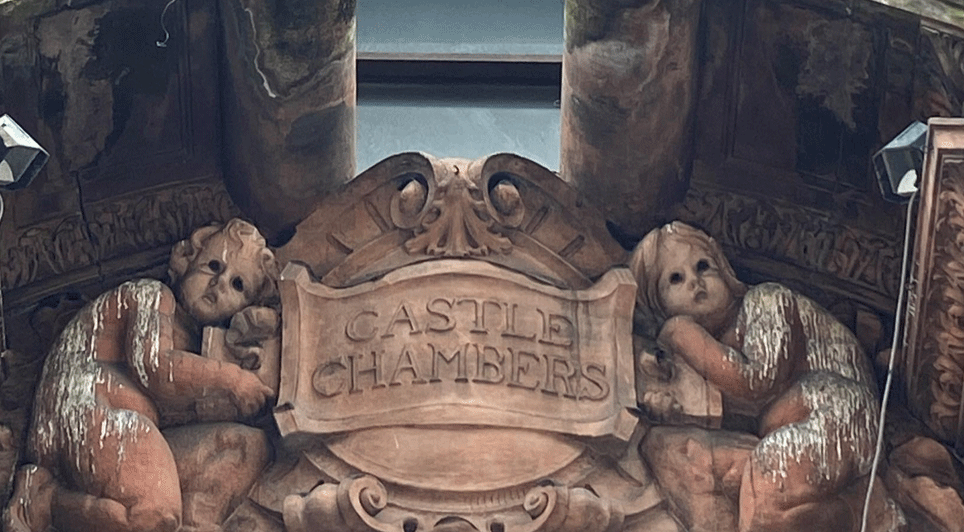
A new risk register is being developed to address the growing shortage of traditional heritage skills in Scotland, with concerns rising that vital crafts are at risk of disappearing. Historic Environment Scotland (HES), in collaboration with the Institute of Conservation (Icon) and other partners, is creating the ‘Heritage Skills At Risk Register' to identify and classify endangered skills such as thatching, stained glass making, architectural blacksmithing, and stonemasonry.
The initiative comes as demand for these skills surges, driven by the need to retrofit historic buildings for net-zero targets. However, a lack of training opportunities and awareness of these careers is exacerbating the problem. For example, Scotland currently has fewer than ten trained thatchers, only five Icon-registered stained-glass conservators, 20 architectural blacksmiths with traditional forge skills, and fewer than 300 trained stonemasons.
The risk register aims to initiate a national conversation about the issue and encourage organisations to highlight similar skills shortages. This was announced during Scottish Apprenticeship Week (3-7 March), and also highlights the lack of training facilities.
A YouGov poll commissioned by HES revealed that 78 per cent of Scots believe it is important to increase the number of people learning heritage skills, and 82 per cent support increased training provision. Notably, 47 per cent expressed interest in learning historic stained glass making, 33 per cent in stonemasonry, 32 per cent in blacksmithing, and 20 per cent in thatching.

HES will work with Icon and partners through the heritage sector's Skills Investment Plan to identify at-risk skills, building on the UK-wide Heritage Crafts Red List. HES is currently Scotland's largest stonemasonry trainer, with City of Glasgow College being the only other provider. However, of 49 key traditional building skills, only 6 per cent have formal training, 50 per cent have no informal training, and an estimated 49 per cent are at high risk of being lost.
Dr David Mitchell, Director of Cultural Assets at HES, stated: "We have been sounding the alarm on Scotland's heritage skills shortage for some time and it is now reaching a critical point. The Heritage Skills At Risk Register is a proactive measure to help address this crisis, and we urge other organisations to contribute to it so we can collaboratively build a comprehensive national picture of where skills are needed."
He emphasised the urgent need to increase training opportunities, particularly to attract young people and career changers. "Traditional skills are not just about conserving the past; they are crucial to Scotland's future, particularly in our efforts to achieve net zero. With approximately one in five homes in Scotland being built before 1919, these skills will play a pivotal role in our journey towards a sustainable future," Dr Mitchell added.
Emma Jhita, Chief Executive at the Institute of Conservation, said: "The conservation profession relies on a relatively small pool of highly skilled conservator-restorers. While Icon's membership represents expertise across more than 150 material practices, challenges within the education sector and a vanishingly small number of professionals in some areas of practice mean that skills-many of which have taken years to develop-exist on a knife edge. Urgent action is needed to address these challenges."
The development of the risk register is seen as a crucial step in safeguarding Scotland's heritage and ensuring the maintenance and adaptation of its historic buildings.
Image: Rob McDougall