Scotland
 UK
UK Ireland
 London

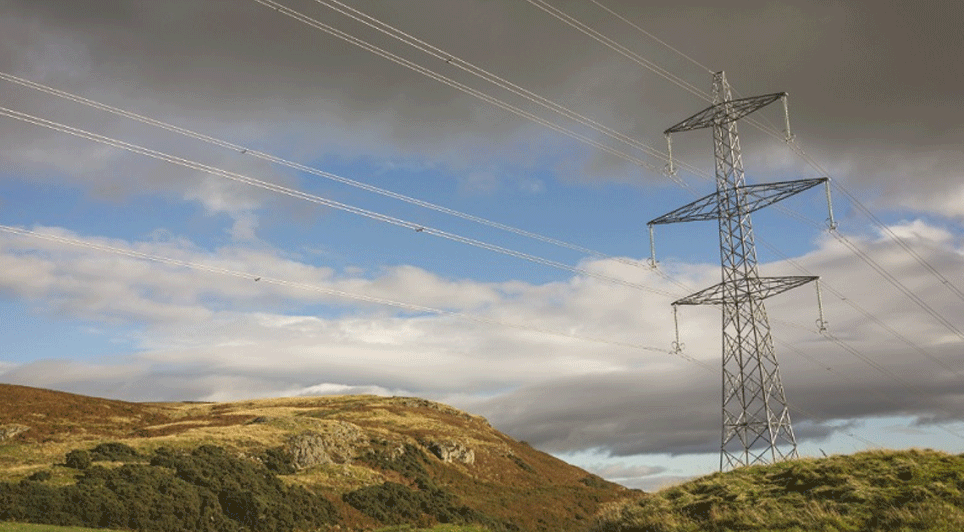
SSEN Distribution is leading the development of an innovative assessment tool to determine, in new ways, where flexibility can be most effectively deployed to run networks efficiently and support the UK's shift to electrification.
The initiative aligns with Ofgem's emerging "Build and Flex" model for the forthcoming ED3 price control period, which foresees greater use of flexibility to right‑size networks, improve cost efficiency and facilitate customer connections alongside the delivery of new power system infrastructure.
With households and businesses under ongoing pressure from high energy bills, SSEN says maximising the value of existing assets can help manage costs while supporting electrification, which can decouple energy prices from volatile fossil fuel markets.
Developed with Baringa, the new cost–benefit analysis (CBA) tool integrates network assessment data across multiple use cases to weigh the costs and benefits of using flexibility. It aims to provide greater confidence in identifying when flexibility is the most efficient option, enabling more robust assessments and fresh insight across scenarios such as:

- Speeding up generation and demand connections to support economic growth and electrification
- Improving network access through earlier connections and curtailment management
- Enhancing planned outage management by reducing reliance on mobile diesel generation, lowering the risk of customer interruptions, and improving workforce efficiency
- Enabling essential works requiring outages to be carried out at more times of the year
To encourage widespread adoption and a consistent approach, SSEN has shared the tool with fellow Energy Networks Association (ENA) members operating distribution networks across Great Britain.
Paul Fitzgerald, SSEN Distribution's Flexibility Markets Manager, said: "We're key enablers of electrification, but we need to deliver it in an affordable, efficient and sustainable way. The smart, judicious, growing use of flexibility is key to making this happen.
"Whether it's accelerating connections or improving how we carry out planned outages for essential maintenance, new uses for flexibility will deliver greater value across the network, the wider energy system, and for society.
"Here at SSEN, we're playing a leading role in this space, sharing our progress and learnings through the ENA working group and directly with our fellow network operators. This openness will aid the development of a consistent, industry-wide framework for evaluating new uses for flexibility.
"Through our approach, we're providing leadership in our sector, setting new benchmarks for how flexibility can be used across the energy system. This will help enable all of us to move forward together with confidence as new opportunities for using flexibility emerge."