Scotland
 UK
 Ireland
 London


A national training programme developed in Scotland to upskill construction educators in retrofit and sustainable building has been launched in England for the first time.
Built Environment – Smarter Transformation (BE-ST), which hosts Scotland's National Retrofit Centre and the Mass Timber Centre of Excellence, delivered the initiative in partnership with the social housing consortium Efficiency North.
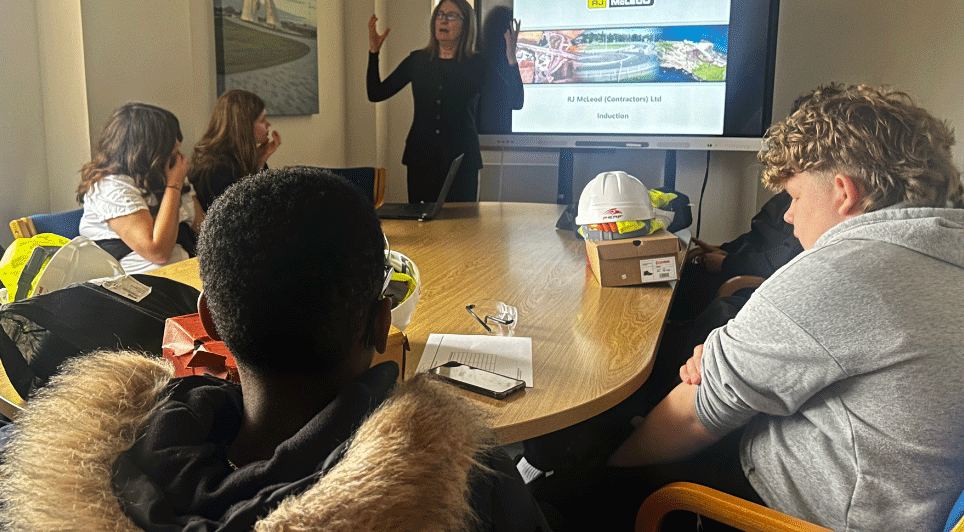
The expansion builds on two years of development and delivery by BE-ST across Scotland. The leadership-focused course was initially rolled out to further education (FE) tutors and managers from six colleges across Yorkshire and the Humber at Barnsley College's Clean Energy Training Centre, with enrolment now extended to colleges across England and Wales.
The programme utilises a "whole-house" approach to retrofit, focusing on building physics and the critical interplay between insulation, ventilation, and moisture control. By training the trainers, BE-ST is helping to address a significant skills imbalance in the sector, preparing educators to teach modern methods of construction (MMC) and the use of emerging digital tools like artificial intelligence.

Hanna Lundstrom, impact manager at BE-ST, said: "It has been great partnering with Efficiency North to deliver this programme in England. All attendees have brought great enthusiasm in both the practical exercises and the educator-to-educator discussions. From experience delivering the course in both Scotland and England, it is key for educators to get the time and space to identify and share resources on how to embed their learnings into the curriculum."
Simeon Perry, head of ESG at EN:Procure, the procurement arm of Efficiency North, highlighted the importance of the partnership: "By partnering with BE-ST, Efficiency North has chosen to invest at the very start of the skills pipeline, equipping educators with the expertise to prepare the next generation of retrofit-ready construction professionals."
The course prioritises hands-on learning through live demonstrations and practical activities. Learners, such as carpentry and joinery lecturer Richard Favell, noted that the BE-ST curriculum provided "in-depth awareness" and "practical ideas" regarding new materials and technology in construction.
With the CITB projecting a need for tens of thousands of new recruits to meet demand by 2028, the export of BE-ST's Scottish-developed expertise is expected to play a vital role in meeting the growing requirement for sustainable construction training throughout the UK.
For more information on BE-ST and its skills programmes, visit: www.be-st.build/skills-training.
For more information on Efficiency North and its skills and sustainability initiatives, visit: www.efficiencynorth.org.