Scotland
 UK
 Ireland
 London


Plans to restore Rothesay Pavilion to its former glory and establish it as a leading cultural tourist attraction in Scotland have moved closer to fruition as the project enters its next stage.
Significant work has already been undertaken over the past few years to revitalise the iconic island building. A temporary structure protected the pavilion while crucial repairs were carried out on its twenty-two roof areas, pre-cast stone facades, and the caretaker's building.
With this initial phase now complete, the project is advancing to structural works on the lower ground floor, along with the refurbishment of the main hall and the installation of new sound and lighting systems. This stage will also see the restoration of the original box office and main staircase to their historical appearance, as well as the renovation of the café area, which offers striking views from the first floor.
Beyond its role as a major tourist draw, Rothesay Pavilion is envisioned as a dynamic centre for leisure, culture, and entertainment, acting as a catalyst for the local and wider economy. The reopened pavilion is projected to create at least 14 direct local jobs, in addition to those generated during the construction phase, and inject millions into the local economy. Upon reopening, it will feature an events space, office and workspace facilities, a caretaker's house, flexible exhibition space, a craft retail/café area, dressing rooms, a young people's studio, and outdoor areas.

Argyll and Bute Council Leader, Councillor Jim Lynch, commented: "These are exciting times for the people of Rothesay, as well as Scotland's cultural and architectural heritage. Rothesay Pavilion is an iconic building steeped in rich history. Situated at the heart of the town, it greets visitors arriving by ferry from Wemyss Bay and, once complete, it will be a valuable resource for day-to-day life in Rothesay, for visitors and residents alike. This project is about giving the building a modern-day role and creating opportunities for regeneration, cultural enrichment, and high-value job creation in Rothesay. Its reopening will drive the local economy and enhance daily life on Bute. Advancing to the next stage marks a significant milestone, and I am excited to see it progress."
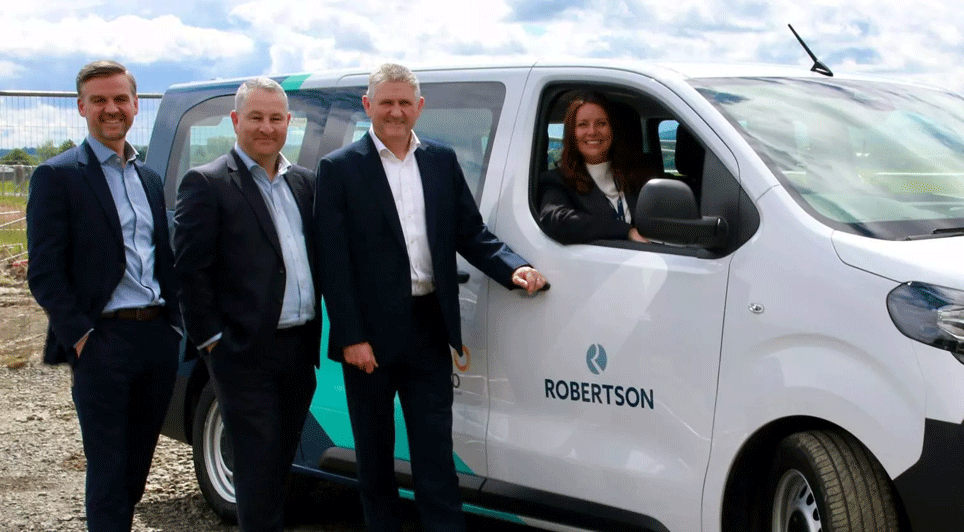
The project's initial stage received funding from the council, Historic Environment Scotland, the Regional Capital Grants Fund, Highlands and Islands Enterprise, The National Lottery Heritage Fund, and the Coastal Communities Fund. The final stages have attracted further support from the Argyll and Bute Rural Growth Deal and will be delivered by Robertson Construction Central West (RCCW), the same company that successfully completed the first phase of works.
Elliot Robertson, Chief Executive Officer of Robertson Group, said: "Having completed the works to make the Pavilion wind and water tight, the project enters the second phase which will really see this historic building come back to life. The commitment shown by the council and funding partners, including support through the Rural Growth Deal, reflects a bold and forward-thinking vision for what the Pavilion can become, while preserving a significant piece of Scotland's architectural heritage. Reimagined for contemporary audiences and users, it will not only serve as a vibrant tourist destination but also as a creative hub that brings long-term benefits to the local economy."
Construction work is estimated to be completed by Autumn 2026. Upon completion, the building will be managed by the Rothesay Pavilion Charity, a registered Scottish Charitable Incorporated Organisation (SCIO).