Scotland
 UK
UK Ireland
 London

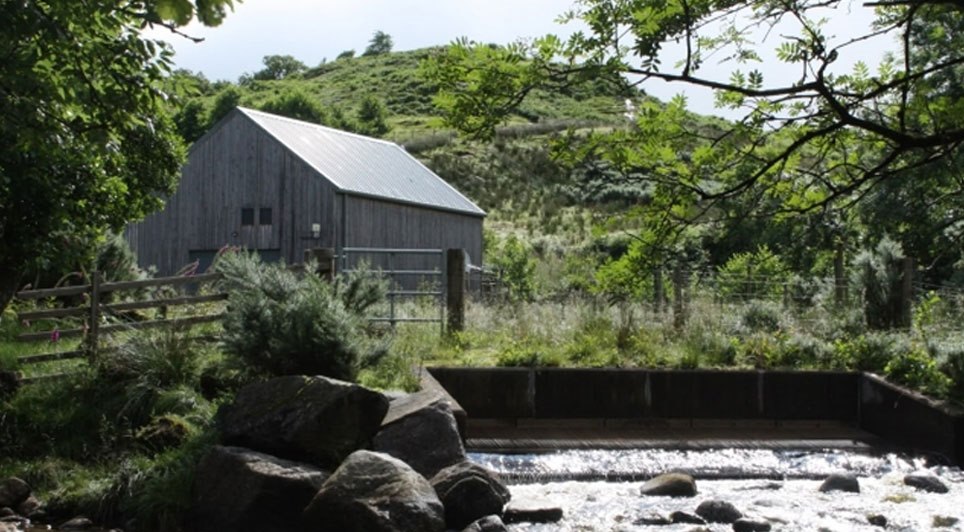
The Upper Tribunal for Scotland has handed down a significant judgment in Connell Renewables Ltd v Assessor for Highland & Western Isles Valuation Joint Board, prompting Alba Energy to lodge an appeal at the Lands Valuation Appeal Court.
Brought as a test case by Alba Energy, which represents Scotland's independent hydro operators, the dispute centres on how small hydro schemes are rated for non-domestic rates. The Allt Mor run-of-river scheme near Inverness was used as the sample to answer a question affecting every hydro project in Scotland: whether the penstock — the pressurised pipe integral to generation — is exempt plant and machinery or rateable under the Valuation for Rating (Plant and Machinery) (Scotland) Regulations 2000. The outcome will determine 252 hydro appeals sisted behind the case.
The issue has its roots in the Assessor's 2010 valuations, which became far more acute when certain reliefs were removed in 2016 and the 2017 revaluation drove up liabilities. Some individual schemes saw rateable values increase by as much as 622% compared with 2010. Independent analysis of the 2017 figures suggested average rateable values equated to around 10% of gross turnover for onshore wind, 6% for stand-alone solar and 9% across the wider business base, while small hydro faced about 24% — a gap of roughly 140% above the nearest comparable technology. The disparity has widened since: hydro RVs rose to 28% at the 2023 revaluation and now exceed 30% following further uplifts, a disproportionality that helped persuade ministers to introduce 60% hydro relief in 2018.
The impact at scheme level is stark. Inver Hydro, a 2MW plant on Jura, has a 2026 rateable value of £829,500 — higher than every other non-domestic property on Islay and Jura, and almost eight times its 2016 figure despite no physical changes. Its annual rates bill has climbed from around £53,000 to more than £450,000. Assessed per megawatt, its valuation is thirteen times that of the neighbouring Cour Wind Farm.

In its decision, the Tribunal accepted a substantial part of the appellant's case. It agreed the buried headrace (the term the court adopted) is properly a penstock within Class 1 of the Regulations and is excepted plant, because it is used to generate power for sale to consumers. It also dismissed the Assessor's preliminary contention that rateability could be decided by common-law concepts of heritable property, confirming the Regulations remain central to assessment. The Tribunal noted that "penstock" and "pipeline" are used interchangeably within the industry. However, applying the sequential approach, it went on to find that the same item is also a "pipe-line" under Class 3 and a conduit in the nature of a structure under Class 4, and is therefore rateable together with its foundations and associated civil works. As a result, the agreed net annual value remained £25,000 rather than the £6,700 that would have applied had the penstock been found non-rateable.
Alba Energy has now appealed to the Lands Valuation Appeal Court. Its grounds argue that once an item is found to be a penstock under Class 1, it cannot simultaneously be a pipe-line under Class 3 or a conduit under Class 4; that the Tribunal misunderstood the penstock's function (the expert evidence being that its purpose is to create pressure energy rather than simply to convey water); that insufficient regard was paid to the structure of the Regulations and the Wood Committee reports — under which "tools of the trade" are exempt unless expressly brought back into rating, as with turbines, generators and conduits (penstocks were not) — and that inadequate weight was afforded to expert evidence on the component's role in hydro engineering.
The stakes are considerable. A successful appeal could require large numbers of hydro appeals, dating back to the 2017 Revaluation, to be revisited and could give rise to significant rebate claims. Equally, the Scottish Government has an opportunity to act: legislation could clarify how hydro infrastructure should be treated, reducing uncertainty for operators, investors and Assessors while limiting the risk of substantial retrospective liabilities.
ore broadly, the dispute highlights questions that have lingered since Alba Energy first challenged the Assessor's valuations in 2013 over concerns that hydro bears a disproportionately high rates burden compared with other renewables. While the courts will determine how the current law should be interpreted, the policy question is whether the resulting valuations align with Scotland's economic, energy and environmental goals. Against repeated government commitments to create a non-domestic rates system that supports growth, investment and jobs, the Connell appeal may be a timely moment to consider whether the present treatment of hydro-electric infrastructure is delivering those aims — and whether clarity is better achieved through policy rather than left solely to litigation.