Scotland
 UK
UK Ireland
 London

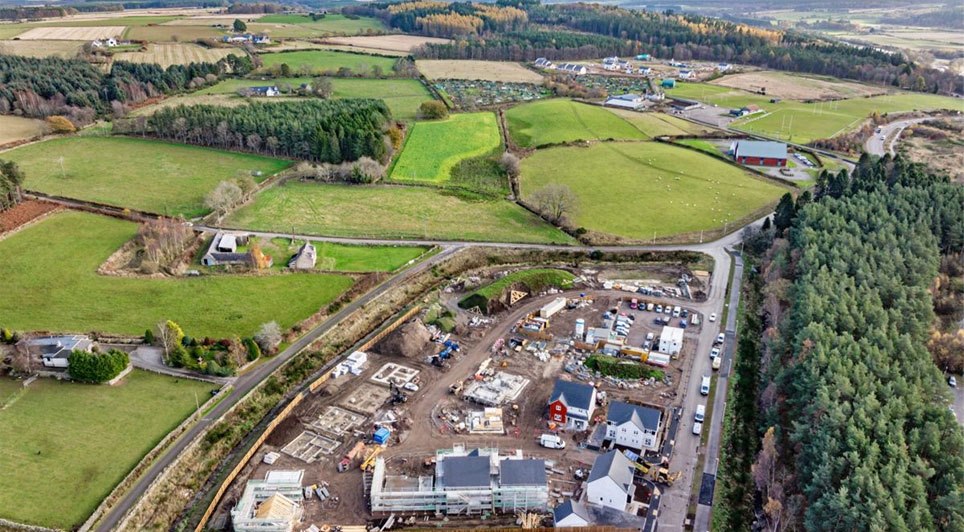
Three decades after the demolition of Ravenscraig's iconic cooling towers signalled the closure of an industrial era for North Lanarkshire, the site has evolved into one of Europe's most substantial brownfield regeneration initiatives. Over one thousand houses have been completed with thousands more in the pipeline, key employers are moving in, and a completely fresh community is establishing itself.
This anniversary serves to highlight both the progress made and the developments still to come. The goal of the project has never been to replace the area's industrial heritage, but rather to build upon that legacy to establish a self-sufficient, future-ready community.
Spanning over 1,200 acres—roughly double the geographic size of Monaco—the transformation is a long-term undertaking. Though extensive plots are still awaiting regeneration, the momentum across the site is clear, delivering expanding economic and community advantages.
A foundational element of this progress was the formation of the Ravenscraig joint venture involving Barratt Redrow, Scottish Enterprise, and Tata Steel. Together with the approved masterplan, this partnership set out a long-term strategy that has since materialized through projects such as New Craig Road, more than 1,000 houses, the Ravenscraig Regional Sports Facility, New College Lanarkshire, The Craig community park, active travel pathways, and the Raven's Cliff hotel and pub. A number of these schemes were delivered via collaboration with North Lanarkshire Council, a vital partnership that continues to support the site's evolution.

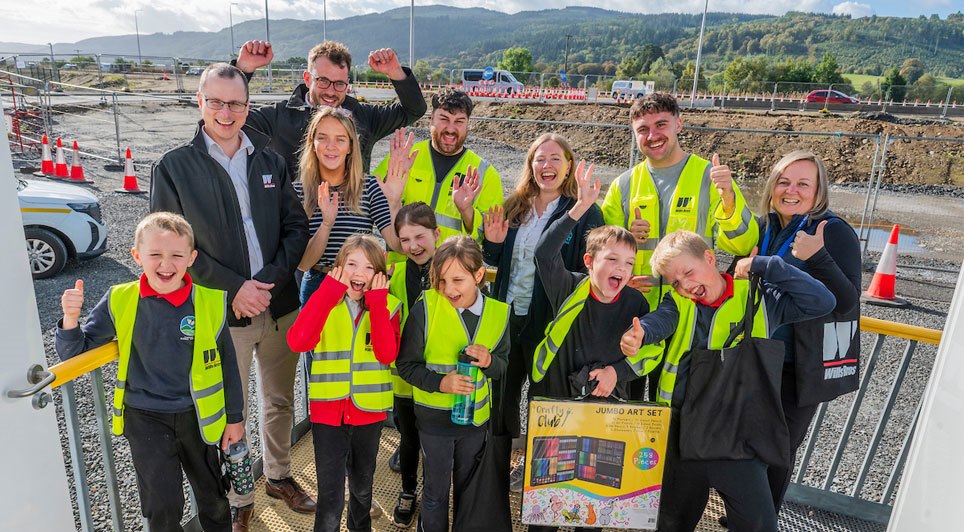
Community engagement remains central to the ongoing work. Regular dialogue with the Ravenscraig Community Action Group, alongside broader consultations with local residents and political stakeholders, ensures that the future of the site is shaped collectively.
The overarching vision has shifted alongside modern requirements. While the original masterplan allocated significant space for commercial retail to match past consumer habits, the strategy has adapted to meet Scotland's growing housing demands. Today, Ravenscraig is a mixed-use development balancing residential properties with employment sectors, education, retail, leisure, and open green spaces.
Commercial progress is accelerating at the SevenFourEight employment land, where Motus Commercials is already up and running, and construction is advancing at Fusion Assets' Ravenscraig Enterprise Park. These hubs are designed to secure long-term, sustainable jobs and encourage business investment in North Lanarkshire.
Looking toward future industries, proposals alongside Apatura for a green data centre and energy campus highlight how the site is adapting to attract investment from emerging sectors and support modern infrastructure.
Environmental sustainability is also a key priority. Work is underway to boost biodiversity by safeguarding ancient woodland, establishing habitats such as newt ponds, butterfly mounds, and plover fields for nesting birds, and planting a new 13-acre woodland in partnership with the Sustainable Woodland Company. This is complemented by an extensive network of active travel routes.
The heritage of the former steelworks is intentionally preserved across the landscape. The Steel Man sculpture stands as a tribute to past workers, while the circular layouts within The Craig community park reference the historic gas holders and cooling towers. Discussions are also underway regarding a potential new public monument or artwork situated where the cooling towers once stood.
Looking ahead, planning permission has been granted for widespread remediation works that will clear hundreds of acres for upcoming projects, including further affordable housing, a neighbourhood retail hub, and extra commercial spaces. Discussions remain ongoing with investors and developers aligned with the long-term project goals.
Where industrial infrastructure once filled the skyline, the location now hosts residential areas, businesses, public parks, and incoming investment. This decades-long transformation demonstrates that large-scale regeneration requires patience, partnership, and perseverance to create a prosperous future that still respects its past.