Scotland
 UK
UK Ireland
 London

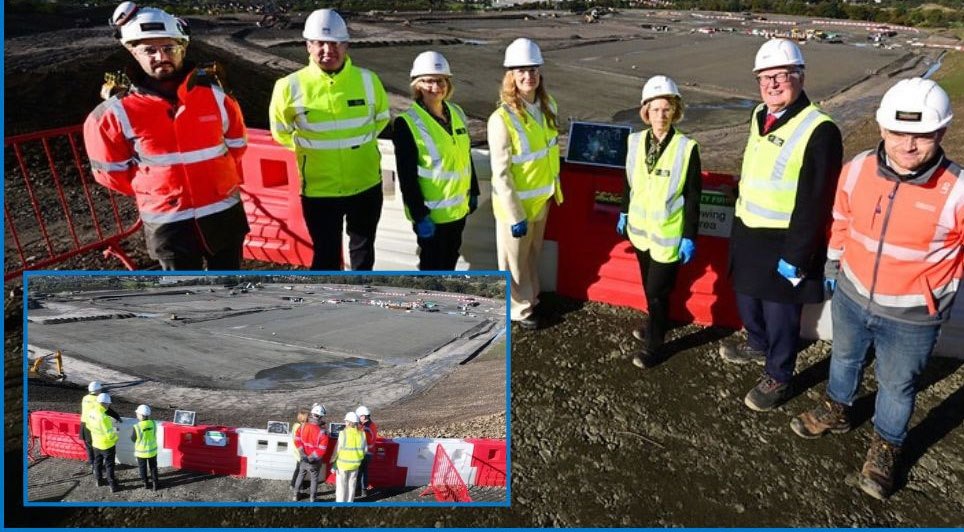
Scottish Water has reached a significant milestone in its environmental strategy with the planting of nearly 80,000 trees near Barcraigs Reservoir in Renfrewshire. The initiative is designed to bolster biodiversity, shield water catchments from the effects of climate change, and sequester carbon.
The project spans two distinct areas: 16.5 hectares immediately surrounding the reservoir and a further 26 hectares situated up the catchment at Springside. The new woodlands consist primarily of native broadleaf species alongside a small number of productive conifers.
Strategically, the new planting will help stabilise local soil. This prevents organic matter from being washed into the reservoir during the heavy rainfall associated with climate change, ultimately making the water treatment process more efficient and less energy-intensive. Furthermore, the woodlands act as a natural sponge, holding water in the ground to provide resilience during drought periods while capturing an estimated 25,000 tonnes of carbon dioxide over the next 60 years.

Karlene Doherty, Senior Project Manager at Scottish Water, said: "The two sites in the catchment of Barcraigs Reservoir form a significant part of our woodland creation programme this year and it is great to see these being delivered after over two years of careful planning and consultation with key agencies and stakeholders. This work will provide multiple benefits in terms of protecting water quality at the reservoir, improving biodiversity at these sites and also helping to store large amounts of carbon."
A notable aspect of the Springside site is the presence of Walls Hill Fort, which is believed to be Scotland's largest Iron Age fort. Scottish Water and its delivery partner, Bell Ingram, worked in conjunction with Historic Environment Scotland to preserve sight lines and public access to the monument. Feedback from Renfrewshire Council's biodiversity team was also integrated into the final planting plan.
Tony Wilson, a Forester at Bell Ingram, commented: "This was a really interesting project to be involved in, given the significance of the hill fort here - we have worked hard to ensure this was at the heart of the scheme, reducing the size of the woodland we'd initially proposed at Springside, moving it well back from the fort itself and choosing lower growing species of trees in key areas to maintain sight lines and public access."
He added: "A lot of this area was historically grazing pasture for cattle and sheep and there isn't really any continuous broadleaf woodlands here. One of the key things for me was to try and design a scheme that could bring that back to this part of the world and hopefully in the next 50 to 60 years, we will see a really native, natural woodland established here again."
In the 2025/26 financial year, Scottish Water has established approximately 140 hectares of new woodland across the country. This involves more than 228,000 trees, which have the potential to capture 84,000 tonnes of carbon dioxide equivalent over the coming six decades.