Scotland
 UK
UK Ireland
 London

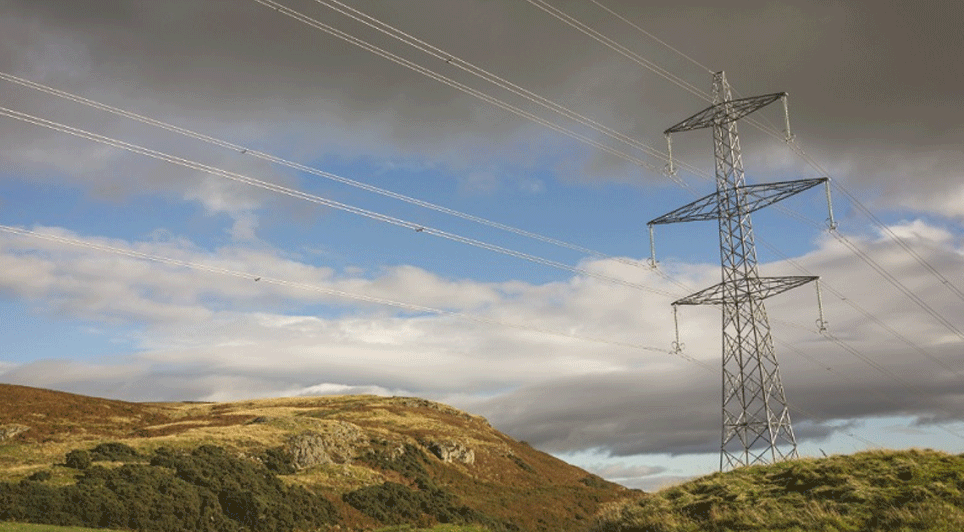
In a move that combines clean energy development with environmental stewardship, SSEN Transmission has published two reports in collaboration with SAMS Enterprise, the commercial arm of the Scottish Association for Marine Science (SAMS).
The reports outline the state of Scotland's threatened seagrass meadows and native oyster reefs, identifying opportunities for future restoration efforts.
The company, which is planning to expand its offshore network with major subsea projects to connect the Western Isles, Orkney, and Shetland, acknowledged that these developments can have an impact on the marine environment. In response, SSEN Transmission has set a bold ambition to lead the energy industry in marine habitat restoration by 2030 and is backing targeted scientific research to help shape future conservation efforts.

Pete Watson, Lead Marine Consents and Environment Manager at SSEN Transmission, said: "Our partnership with SAMS isn't just collaboration; it's recognition of the problem and our potential to help redress it. These reports are proof that science and industry can drive marine restoration together."
The reports highlight the crucial roles of these keystone species, with seagrass meadows acting as natural coastal defenders by storing carbon and protecting shorelines. Native oysters, which have suffered a 95% decline over the past century, create reef structures that purify surrounding waters and enhance biodiversity.
SSEN Transmission has committed to investing at least £100 million in nature restoration and delivering biodiversity net gain across its sites, making it one of the biggest investors in nature restoration in the country. Professor Nick Owens, Director of SAMS, praised the company for showing "real leadership" in recognising the pressures faced by the marine environment.