Scotland
 UK
UK Ireland
 London

Construction work on the M8/M73/M74 Motorway Improvements Project has uncovered an ancient medieval settlement as well as other artefacts.
Work was halted as archaeologists uncovered the 1000-year-old 'Lost' Village of Cadzow near Junction 6 Hamilton.
A collection of medieval coins believed to date back to the 10th or 11th century were also discovered, as well as fragments of animal bone, clay smoking-pipe fragments and more than 200 shards of glazed medieval pottery that could date to the 1400's or earlier.
The team also found a lead pistol shot in the floor of one of the structures, possible evidence that an officer involved in the Battle of Bothwell Bridge (1679) may have taken cover in the, then ruins, of the buildings at Netherton.
A specialist team form Guard Archaeology are now investigating the site to safeguard anything of historical interest.

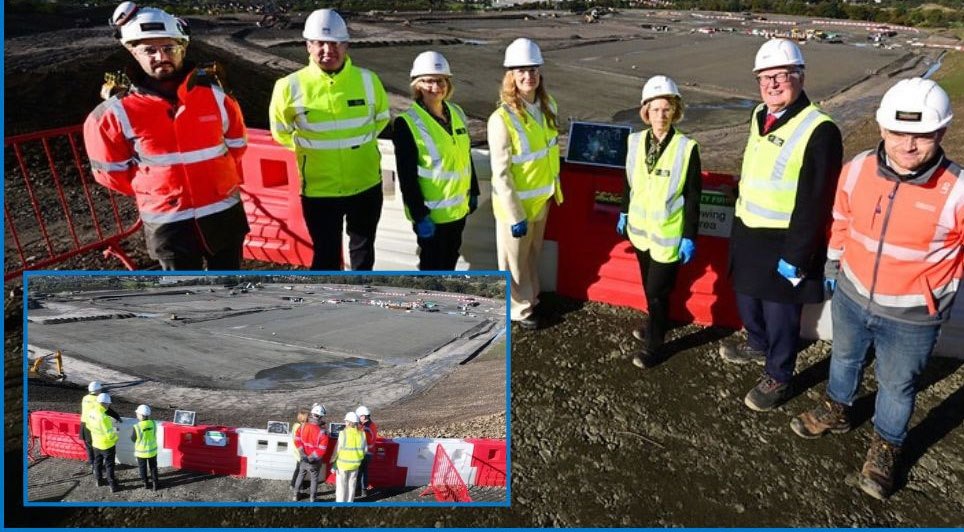
Scottish Roads Partnership (SRP), the contractor delivering the upgrade to the motorway network on behalf of Transport Scotland, made the discovery while preparing the ground for construction of the new lane, uncovering two ancient stone structures beneath the surface.
The M74 is being widened as part of the £500 million Motorway Improvements Project.
Infrastructure Minister Keith Brown said: "When complete, the upgrade of the M8, M73 and M74 motorways will greatly improve journey time reliability and provide opportunities for business, leisure and tourism industries throughout the central belt and beyond – not only that, these works are helping uncover Scotland's ancient past.
“This dig has unearthed two medieval structures, nine mediaeval coins, gaming pieces, shards of pottery and a lead pistol shot, possibly from the Battle of Bothwell Bridge (1679) – collectively, they provide a rare insight into life in Scotland in the Middle Ages.
“The discoveries on the M74 near Hamilton, which could have remained uncovered had works not started, are truly remarkable and underline the importance of the value we place on meeting our environmental obligations as we plan and construct essential new infrastructure."
Warren Bailie, Project Manager for Guard Archaeology, added: "We've been on site for 18 months now and this is the most significant discovery to date.
"Medieval remains rarely survive in industrial centres such as Glasgow due to widespread industrialisation of the nineteenth century, including mining, road and housing construction.
"Very few mediaeval settlements have survived, so we're delighted to recover and record such a rare and interesting piece of Scottish history."
(LM)