Scotland
 UK
 Ireland
 London


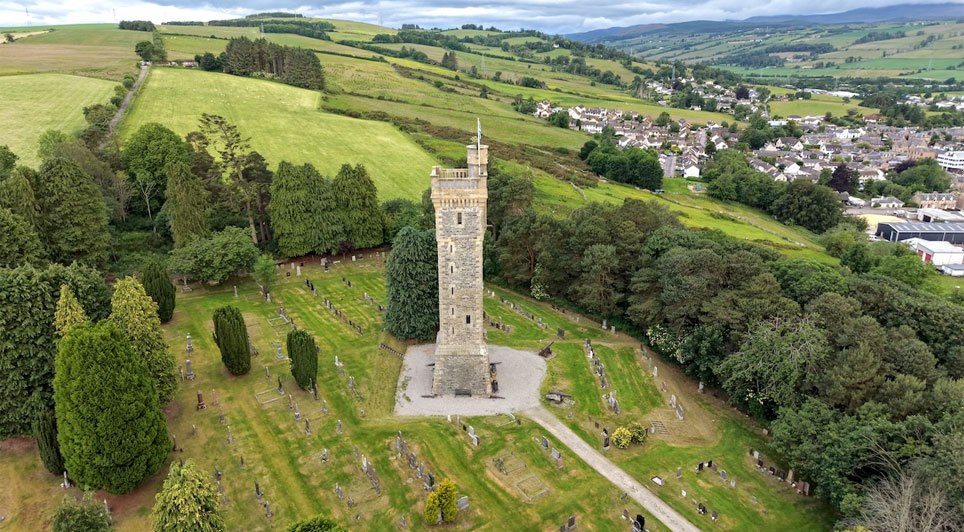
Sir Hector MacDonald Memorial Tower in Dingwall is to be reclassified as a Common Good asset after Highland Council's Dingwall and Seaforth Area Committee considered a historical title investigation.
Councillors also reviewed a financial update projecting more than £430,000 in local Common Good reserves and agreed not to introduce a short-term let control area in the ward for now.
The investigation examined title deeds, burgh minutes and historical archives. It confirmed that the tower, surrounding woodland and six historic cannons at Mitchell Hill form part of the Dingwall Common Good Fund.
The land was originally among the former Royal Burgh of Dingwall's property under the Royal Charter of James VI. Records show that it was used as a public park, pleasure ground and bowling green before part was appropriated for burial and developed as a cemetery.
The council will update the Dingwall Common Good Asset Register and transfer the relevant assets from the General Fund to the Dingwall Common Good Fund. Operational areas of Mitchell Hill Cemetery, including land acquired for an extension in 2011, are not Common Good property and are excluded.
Committee chair Cllr Graham MacKenzie said: "The Sir Hector MacDonald Memorial Tower, the surrounding woodland at Mitchell Hill and the heritage features, including the historic cannons are cherished landmarks at the heart of Dingwall. I welcome the findings of this thorough title investigation, which gives us clear, definitive confirmation of their Common Good status. Updating the Asset Register ensures these historic assets are properly recorded and managed for the benefit of our community for generations to come."

Members also considered the fund's second-quarter monitoring statement for April to September 2026, which confirmed that its finances remain stable.
Cllr MacKenzie said: "It is encouraging to see the Dingwall Common Good Fund in a stable financial position. Careful stewardship of the fund ensures we have the resources to maintain our Common Good assets and continue supporting valuable local community projects."
Following a 12-month review requested in November 2025, the committee agreed not to progress a short-term let control area in Dingwall and Seaforth at this stage.
Updated figures from the mandatory Short Term Let Public Register and Registers of Scotland showed no material change in the prevalence of short-term lets or their effect on the local housing market, according to the council.
The number of short-term lets in the ward rose from 97 in July 2025 to 106 in July 2026, with detached houses accounting for most. Over the previous six years, one of 305 newly completed homes in Dingwall and Seaforth, or 0.3%, became a short-term let, compared with a Highland average of 4.7%.
Of the 1,068 residential properties sold in the ward between 2019/20 and 2023/24, 10, or 0.9%, subsequently received secondary letting short-term licences. The Highland-wide rate was 4.7%, rising to more than 10% in some wards.
The committee agreed to keep the evidence under review and receive a further report if monitoring shows a material increase in housing market pressures.
Cllr MacKenzie said: "Any decision to introduce a Short Term Let Control Area must be firmly grounded in local evidence. The latest figures show that Dingwall and Seaforth are not experiencing the levels h of short-term let prevalence or associated housing market pressures seen elsewhere in the Highlands. While we have agreed not to progress a control area at this stage, we will continue to monitor the data closely and will revisit the matter if local circumstances change."