Scotland
 UK
 Ireland
 London


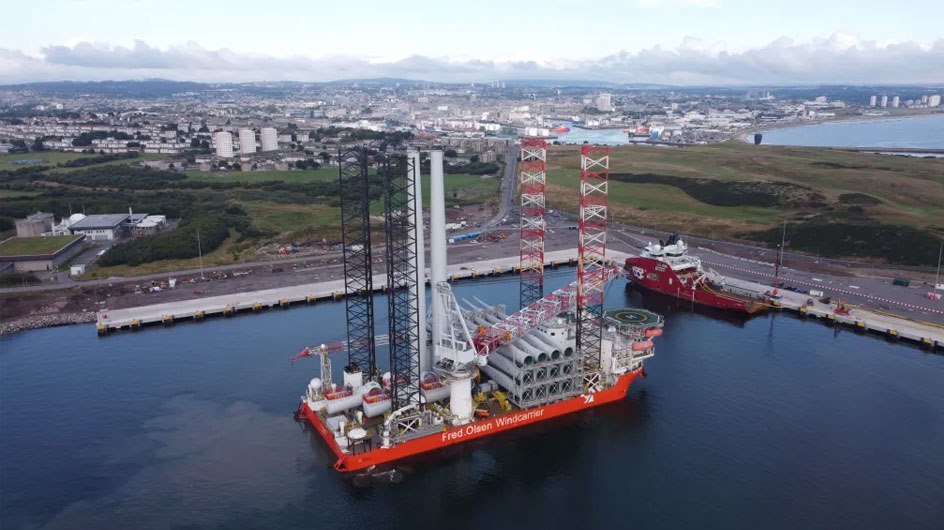
Port of Aberdeen, which has linked Scotland to the North Sea since 1136, says the nation's next energy chapter lies offshore, with floating wind in deeper waters offering a significant opportunity as the UK accelerates renewables.
The port highlights the Kincardine Floating Offshore Wind Farm off Aberdeen—the world's largest grid-connected floating wind project—as an early signal of what's possible. It says Crown Estate Scotland's ScotWind and INTOG leasing rounds in 2022 and 2023 have together unlocked 23.5GW of floating potential, with INTOG aimed at innovative schemes and supplying green power directly to North Sea infrastructure to cut oil and gas operational emissions.
By the Scottish Government's Renewable Electricity Output Calculator, 1GW can power nearly 700,000 homes, meaning Scotland's floating pipeline could ultimately supply more than 16 million UK households. The port's £420m South Harbour, opened in September 2023, is said to be around 90% ready to support the build-out, drawing on over five decades of offshore energy expertise.
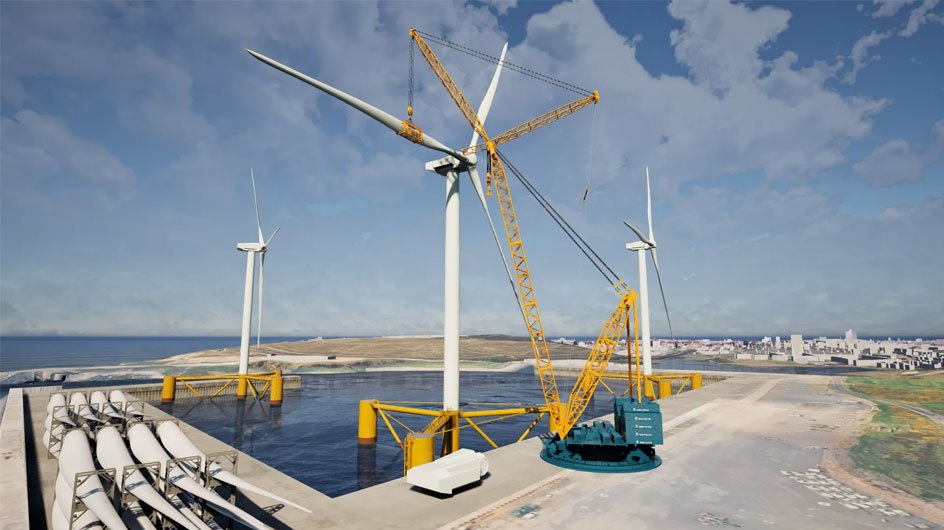
To underpin long-term operations, the port is exploring a shared major component replacement (MCR) hub. Under the model, turbines would be disconnected at sea, towed into Aberdeen, maintained quayside using reserved crane capacity for planned and unplanned work, and then returned to site. Given Aberdeen is the closest major port to 80% of the ScotWind and INTOG floating pipeline, it argues the city is the natural location—provided policy enables projects to proceed.

The UK Government is finalising its Strategic Spatial Energy Plan (SSEP), a long-term blueprint for where offshore wind is built and connected. In the coming months, the National Energy System Operator (NESO) will present six strategic pathways to the UK's Energy Secretary, Miatta Fahnbulleh. According to the port, only two pathways properly support Scotland's pipeline and associated grid connections—and even those may fall short of unlocking floating wind's full potential.
Selecting a different route could see a substantial slice of Scotland's offshore wind pipeline delayed, reduced or abandoned, the port warns, with trade bodies and unions estimating the stakes at more than 21,000 potential jobs annually and tens of billions of pounds of investment.
While Great British Energy is examining how a shared MCR facility could be delivered, the port cautions that any failure to advance floating wind will carry real costs for UK suppliers. Thus far, most floating structures in Scottish waters have been integrated or repaired in Denmark, the Netherlands and Norway.
Collaboration with European neighbours will remain important, it says, but the UK must also compete and capture value at home. With an established offshore workforce and supply chain, Scotland should be able to service its own floating wind sector domestically.
Ports from Lerwick to Leith are calling for an SSEP pathway that encompasses all ScotWind and INTOG projects, alongside the necessary grid connections. The port urges backing Aberdeen as Europe's Capital of Energy Excellence by hosting a shared MCR hub and working with developers to turn individual schemes into a coherent industry.
After serving the North Sea since 1136, the port concludes that floating wind is the next chapter—and decisions on where it is built are imminent. It calls for the national plan to recognise the ports and skills ready to deliver.
This article was originally published in The Scotsman.