Scotland
 UK
UK Ireland
 London

Deeside Timberframe has said that bringing the next generation into modern construction is essential if the UK is to meet its housing ambitions.
Debate over housing delivery has largely centred on planning reform, funding and speeding up build programmes. Yet a persistent hurdle remains: the availability of skilled workers.
Across the country, the industry is contending with shortages in key trades—particularly bricklaying—an ageing workforce, and mounting pressure to deliver more homes more quickly. With government targets in place, affordable housing providers, developers and contractors are under growing scrutiny to improve programme certainty, productivity and build quality.
For Deeside Timberframe, these headwinds also represent an opening to do things differently.
As offsite timber frame construction accelerates, the capabilities needed to deliver homes are changing. Modern methods of construction blend traditional skills with digital design, advanced manufacturing, engineering and precision assembly—creating fresh career routes and widening the appeal of construction for young people.
Rather than simply talking about the sector's skills gap, Deeside Timberframe is taking practical steps to help close it.
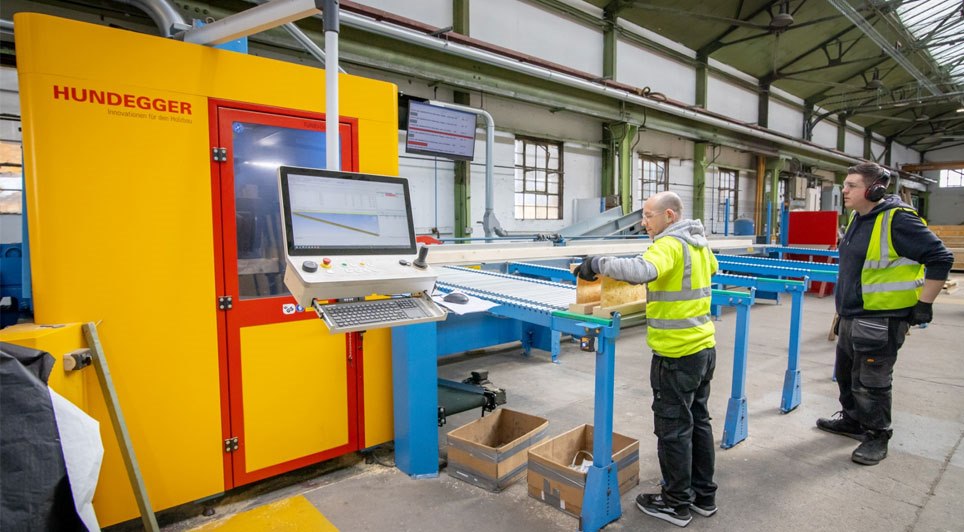
Earlier this year the firm hosted construction students and apprentices from Glasgow Clyde College at its Throsk manufacturing facility, giving them a first-hand look at contemporary timber frame production.
The visit walked students through each stage of delivery—from digital design and 3D modelling to precision manufacturing, automated cutting, panel assembly and quality assurance—showing how today's construction extends well beyond activity on site.

Following the visit, one attendee commented: "Our visit to Deeside Timberframe was an outstanding learning experience for both our staff and apprentices. Seeing first-hand the digital design processes, 3D modelling technology and state-of-the-art manufacturing facilities gave us a much deeper appreciation of the precision and innovation behind modern timber frame construction. For apprentices who often only see the installation phase on site, this provided invaluable insight into the design, engineering and manufacturing work that underpins what they build. We are extremely grateful to the team for their time, insights, and hospitality."
Alongside outreach to colleges and training providers, the company is investing in its own people. Deeside Timberframe has launched structured four-year development plans for Trainee Fabricators in its manufacturing operations, giving employees a clear route to build the technical knowledge and hands-on skills needed to produce high-performance timber frame systems. The initiative sits within a broader, long-term commitment to skills, with training evolving in line with modern manufacturing needs.
Mark Robertson, Technical Director at Deeside Timberframe, said: "The industry needs to think differently about how it develops people. Modern timber frame manufacturing combines engineering, digital technology and precision production, so it's important that we're creating structured development pathways that equip people with the skills they'll need not only today, but throughout their careers. Investing in our people is essential if we're going to build the capacity the industry needs for the future."
For the company, partnering with education while nurturing internal talent is about showcasing the breadth of opportunity within modern construction. Offsite manufacturing brings together designers, engineers, manufacturing technicians, project managers, logistics specialists and skilled installation teams to deliver high-quality homes more efficiently.
This collaborative, factory-led approach can also ease some of the labour pressures facing the sector. By shifting much of the build process into a controlled environment, timber frame lessens dependence on trades in short supply while improving consistency, quality and programme certainty.
As demand for both affordable and private housing continues to rise across the UK, these advantages are growing in importance. Faster build programmes, reduced site labour and predictable manufacturing schedules help developers and housing providers increase output without sacrificing standards.
David Crawford, Managing Director of Deeside Timberframe, added: "If the industry is serious about delivering the homes the UK needs, we have to be equally serious about developing the people who will build them. Offsite construction is helping address some of today's labour challenges, but continued investment in skills, training and modern manufacturing will be just as important if we're to increase housing delivery over the long term."
By opening its facilities to students, advancing the development of its workforce and continuing to invest in modern manufacturing, Deeside Timberframe aims to help build the skilled pipeline the industry will need in the years ahead.