Scotland
 UK
 Ireland
 London


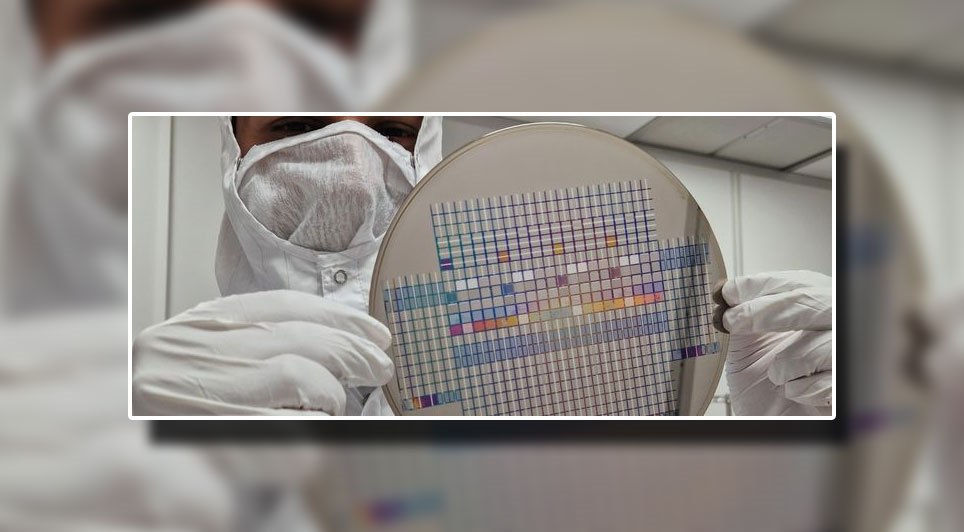
Glasgow-based university spinout Neuranics has announced a £13.1 million project to manufacture advanced magnetic sensors with the University of Glasgow's James Watt Nanofabrication Centre (JWNC) and Kelvin Nanotechnology (KNT).
It is the first project to enter delivery under the £190 million Glasgow City Region Investment Zone, following approval of its full business case by the region's Chief Executives' Group.
The investment includes £5.2 million from the Investment Zone and Scottish Enterprise support for equipment costs. Neuranics, the University of Glasgow and KNT will contribute the remaining project value. KNT will operate the facility.
A specialist ion beam etch system will be installed at JWNC, establishing a new capability for advanced magnetic sensor fabrication in Scotland. The wider project is expected to create more than 100 jobs, bring specialist skills to Glasgow, strengthen local supply chains and give businesses and researchers access to advanced nanofabrication.
Neuranics chief executive Noel McKenna said: "Moving into delivery is an important milestone because it turns years of technical development and partnership work into a manufacturing capability that can scale. For Neuranics, it means faster iteration, stronger control of our IP and a clearer route to commercial production from Glasgow. It also helps build the specialist infrastructure needed to support the next generation of semiconductor innovation in Scotland."
Ricky Bell, chair of the Glasgow City Region Cabinet and leader of Glasgow City Council, said: "This is exactly the kind of innovation-led growth the Glasgow City Region Investment Zone was designed to support. By combining business ambition with decades of research excellence and specialist manufacturing capability, this project strengthens the Region's position in one of the world's most strategically important areas of technology – semiconductors."

Scottish Enterprise has supported Neuranics over several years. Its director of scaling innovation, Nicola Anderson, said: "We've supported Neuranics from its early research and development through to exploring international opportunities, and this investment marks an important next step. It will strengthen Glasgow's wider semiconductor cluster while supporting an ambitious Scottish technology company to scale, create high-value jobs and compete in global markets."
UK Government Minister for Local Government, Devolution and Regional Growth Jim McMahon OBE MP said: "This is the technology of the future being built in Glasgow, creating over 100 skilled jobs and real careers for local people in an industry that will shape our economy for decades. The Investment Zone is about giving great ideas the room to grow. That's exactly what it's doing and we're going to keep backing the people and businesses who are making it happen."
Business and Fair Work Minister Tom Arthur said: "Scotland has all the ingredients to be a leading destination for innovative companies to start, grow and succeed. By bringing together government, industry and our world-class research base, the Glasgow City Region Investment Zone can help turn that potential into lasting economic growth and opportunity, and the Scottish Government is committed to supporting that."
Neuranics acknowledged the support of Glasgow City Region, Scottish Enterprise, the University of Glasgow and KNT. The new ion mill will be available to other users under JWNC's open-access model, and the project will also provide staff resources to promote the facility.
Uzma Khan, the University of Glasgow's vice-principal for economic development and innovation, said: "Turning research excellence into manufacturing capability requires both specialist infrastructure and close collaboration with industry. This investment in Neuranics - our joint spinout with the University of Edinburgh - and the James Watt Nanofabrication Centre does just that, combining expert support with state-of-the-art facilities. It will drive Neuranics' continued growth whilst opening up new opportunities for academics, spinouts and other businesses.
"By strengthening access to advanced fabrication, it will help more research progress from the laboratory to commercial application, boosting Glasgow City Region's economy, furthering our reputation as a world-leading institution for research and innovation, and building lasting strength in Scotland's semiconductor sector."
Neuranics was established in 2021 as the first joint spinout of the universities of Glasgow and Edinburgh. It was co-founded by Professor Hadi Heidari, Professor Kia Nazarpour and Dr Siming Zuo to commercialise tunnelling magnetoresistance magnetic sensing technology for human-machine interaction, wearables, extended reality and digital health.
The company combines sensitive magnetic sensing technology with circuit design, hardware and software to develop applications including extended reality, human-machine interfaces and wearable health monitoring.