Scotland
 UK
 Ireland
 London



SSE invested a record £2.6bn in the first half of its financial year, an increase of 63%, as it accelerated its five-year £33bn infrastructure programme. About 70% of the spending went into regulated electricity networks.
The company said expanding and upgrading the electricity system would help connect more domestically generated power and meet rising demand as the economy electrifies. It said the investment could also reduce Britain's exposure over time to volatile international fossil fuel prices.
Adjusted operating profit rose 68% to £1.1bn, largely reflecting increased investment in electricity networks. SSE expects investment and capital expenditure to exceed £5bn in 2026/27, while maintaining a balance sheet consistent with strong investment-grade credit ratings.
Chief executive Martin Pibworth said: "A year ago we set out our five-year £33bn investment plan, to transform SSE for growth. Today, from the Highlands to the North Sea, that plan is translating into infrastructure on the ground, supporting lower bills and providing greater energy security.
"We've invested a record £2.6bn in the first half, around 70% of it in regulated electricity networks, alongside strong progress in Renewables and Flexible generation. That's new infrastructure connecting more homegrown power, supporting economic growth and, ultimately, helping build a more affordable energy system.

"Deliver lasting value for customers and we can deliver lasting value for shareholders too. That's the straightforward equation behind our investment plan. Our investment is delivering high-quality, regulated earnings, giving us confidence in the plan's targets."
SSE said its distribution business, SSEN Distribution, would shortly submit investment plans for its local networks covering 2028 to 2033. Subject to regulatory approval, the proposals would increase capacity and help connect more electric vehicle chargers and low-carbon technology.
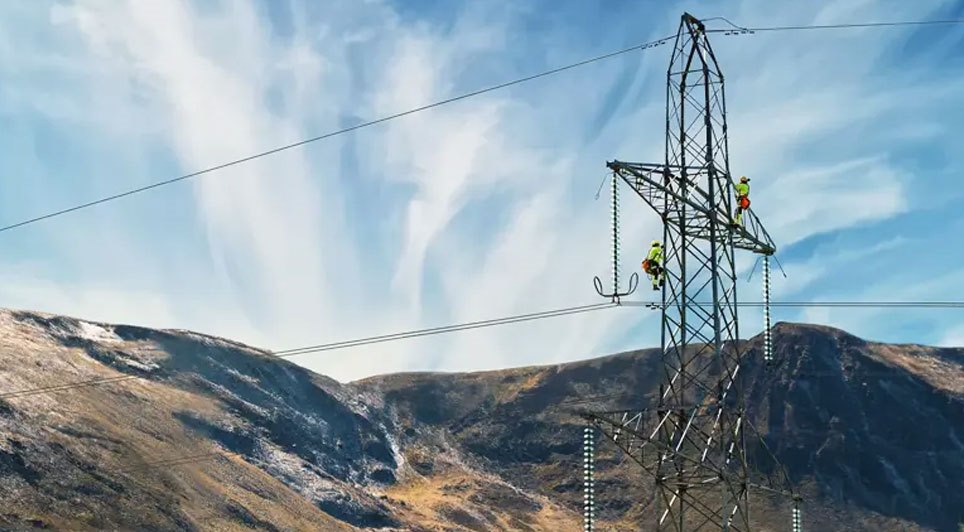
Construction has begun in full or in part on all 11 major SSEN Transmission projects. The transmission business is pursuing a £29bn investment programme to 2030, intended to increase network capacity and move electricity from generators to homes and businesses.
At the Dogger Bank offshore wind farm, turbine installation has passed the halfway stage, with about 150 turbines installed across the project and around 100 commissioned. SSE expects Dogger Bank A's 1.2GW capacity to be substantially available by the end of the first quarter of 2027, with the remainder available during final commissioning by the end of the third quarter.
Dogger Bank B is expected to be substantially available during the first half of 2027. At Dogger Bank C, turbine foundations are in place, while testing and commissioning of completed inter-array cables are under way.
SSE is also developing other renewable projects, including Berwick Bank, and investing in flexible generation and storage to help maintain security of supply as more renewable electricity enters the system.
Electricity networks accounted for around two-thirds of adjusted operating profit, which rose from £655m in the comparable period. SSE said investment was expanding its regulated asset base and supporting grid capacity. Reported operating profit increased to £947m from £634m a year earlier.
With winter still ahead, SSE maintained its adjusted earnings per share guidance for 2026/27 at 168–193p. It also reaffirmed its 2029/30 target of 225–250p.