Scotland
 UK
UK Ireland
 London

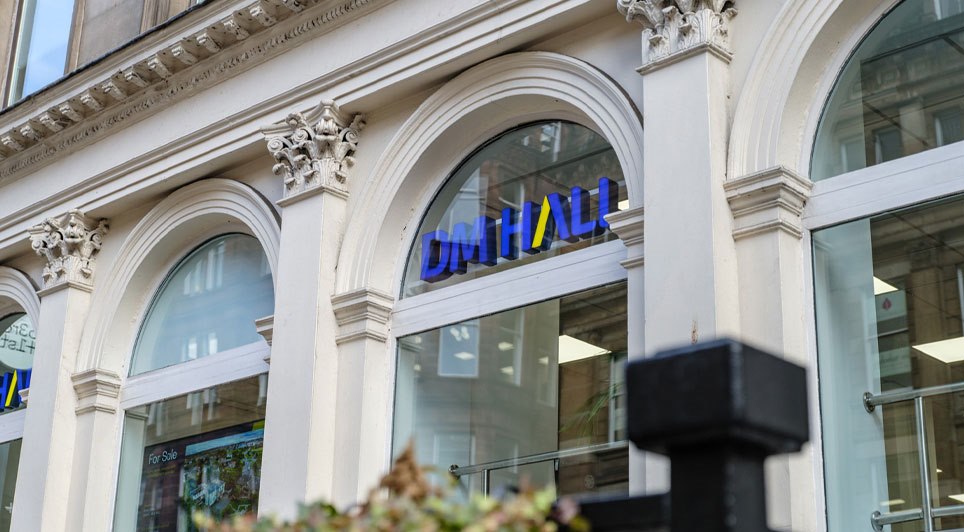
The opening quarter of 2026 indicates that, while the West of Scotland's commercial property market is not surging, it is moving forward at a measured pace. For well‑prepared participants, a broad mix of credible opportunities remains available.
Although it would be premature to describe conditions as buoyant, recent activity at DM Hall suggests a market that is operating effectively, evolving with circumstances and, in many respects, quietly resilient.
Across Q1 2026, DM Hall's Glasgow commercial team completed 30 purchase and sale deals — averaging roughly one transaction every three days. This level of throughput points to continued engagement from both buyers and sellers despite wider economic headwinds.
Set against the broader backdrop, momentum is being capped chiefly by the ongoing impact of interest rates. Higher borrowing costs are shaping investor choices, dampening exuberance and sharpening the focus on fundamentals.

What is emerging is a pragmatic marketplace in which participants are reacting rationally to shifting conditions.
A notable pattern is the increasing readiness of owners to bring assets to market. For some, the capital receipts achievable from a sale are currently more compelling than holding for long‑term rental income.
With yields under pressure and the path of future rate movements uncertain, crystallising value now can be an attractive option.
At the same time, the volume of properties coming to the sales market remains relatively limited. This tighter supply, coupled with steady purchaser interest, helped underpin the number of completions recorded in the first quarter.
Investors are active but discerning, competing for assets that meet clear criteria on location, covenant strength and pricing.
The region retains a compelling value proposition in a UK context. Compared with much of the south of England, West of Scotland commercial stock is still seen as good value, a differential that is sustaining investor appetite.
Both local and external purchasers are identifying opportunities where pricing better reflects occupational markets and long‑term growth potential.
Deals concluded in the period spanned a wide spectrum, from sub‑£100k to just under £2m, and covered varied locations, asset classes and investment profiles.
What remains consistent is that transaction flow is being supported by realistic pricing and informed expectations on both sides of the table.
Looking ahead, conditions are likely to stay cautious but active. Interest rates will continue to influence behaviour, but the fundamentals of supply and demand — alongside Scotland's comparative value — suggest opportunities will endure.