Scotland
 UK
UK Ireland
 London


Civil Water Management Ltd

Address
Unit A, Riffa Business Park
Harrogate Road, Leathley
Harrogate Road, Leathley
Otley
LS21 2RZ
Opening Hours
Today
08:00-20:00
View All Hours
Sunday
Closed
Monday
08:00-20:00
Tuesday
08:00-20:00
Wednesday
08:00-20:00
Thursday
08:00-20:00
Friday
08:00-20:00
Saturday
Closed
Modular drainage systems and water management solutions
About Civil Water Management Ltd
Civil Water Management are specialists in whole system approaches to integrated drainage engineering solutions.
Our unique modular drainage systems have been developed, engineered, tested and trialled with rigor to deliver exceptional performance and reliability.
We strive to set the gold standard in robust and sustainable drainage engineering practices –
bringing together the specialist expertise of our supply chain partners, polymeric scientists,
transport authorities, distinguished engineers, principal designers, environmental specialists and contractors from countries across the world.
For over two decades, Civil Water Management Ltd has advanced the engineering of stormwater management and infrastructure resilience by giving recycled polymers a valuable new purpose as modular drainage systems.
Recognised as leaders in this field – our systems and methods are now deployed across the UK and internationally, within civil engineering, roads, rail and major infrastructure projects.
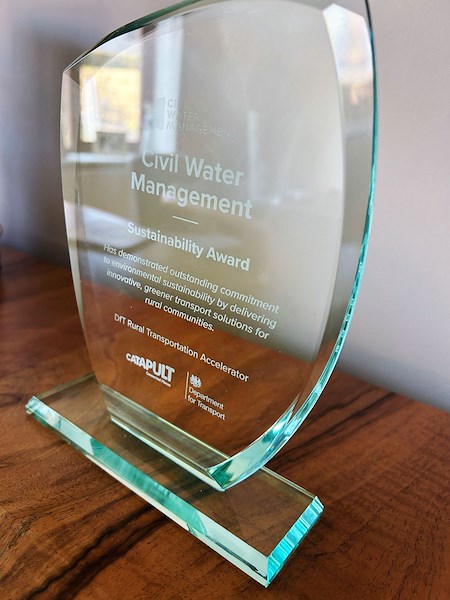
Through award-winning engineering specifically focused on integrated designs, robust materials and greener construction methods, we are able to unlock whole system approaches to water management.
CWM deliver trusted solutions for planners, architects, drainage designers, contractors, civil engineers, environmental specialists, transport, government and local authorities.
Drainage Systems
Civil Engineering
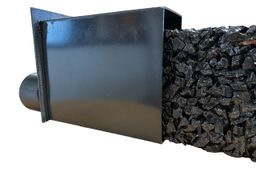
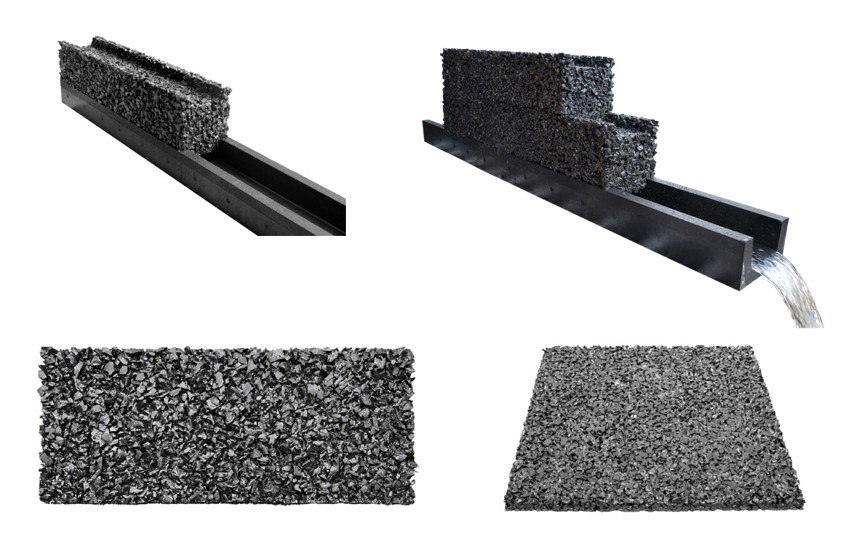
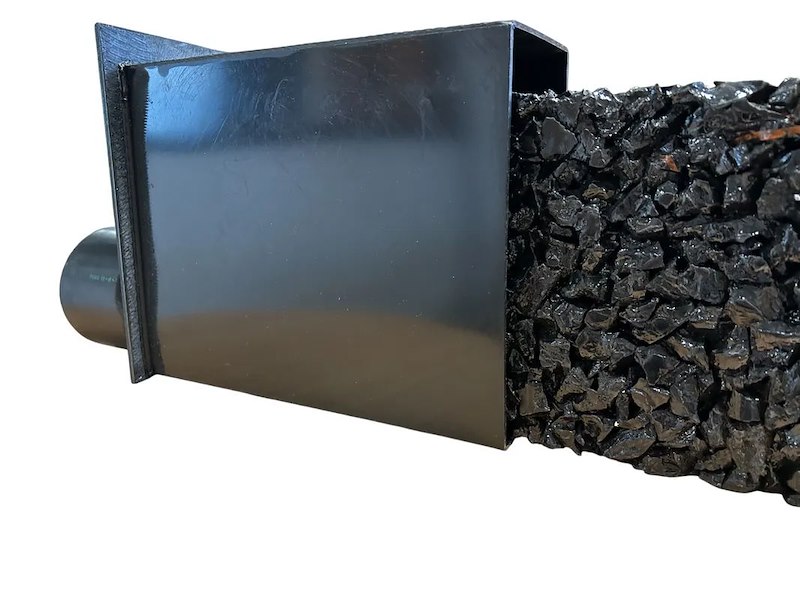
Using recycled tyre rubber formed into advanced drainage units as a replacement for perforated pipe, concrete channels and loose granular stone.
Modular drainage systems are designed to meet the unique demands of civil engineering, the transport sector and climate change resilience.
Civil Water Management have a range of highly effective and proven solutions for Civil Engineering, Active Travel and Cycle Paths, House Builders and Developers, Golf Courses, and many other construction environments.
They integrate with ease into both existing drainage networks and new water management projects, providing superior control, attenuation and compliance in the drive to Net Zero and greener infrastructure goals.
Roads
Using recycled tyre rubber formed into advanced drainage units as a replacement for perforated pipe, concrete channels and loose granular stone within road environments.
Providing sustained high permeability across its entire installation due to its avg. 45% void space, effectively reducing and preventing trapped water along roadways, crucial for maintaining safe driving conditions.
Rail
Using recycled tyre rubber formed into advanced drainage units as a replacement for perforated pipe, concrete channels and loose granular stone within rail environments.
Providing sustained high permeability across its entire installation due to its avg. 45% void space, effectively reducing and preventing surface and trapped water within the track ballast and formation.
Unlike perforated pipes and channels, which are prone to blockages and structural failures, the increased resilience and permanent voids within the porous drainage unit material and structure, significantly de-risks failure modes associated with poor or minimal maintenance, providing mitigation against the rapid deterioration and premature end of service life for rail assets.
Additionally, the system will self-correct installation misalignments, ensuring consistent, long-lasting drainage performance.
Technical Resources
Product overviews, drainage unit technical specifications and case studies to support your drainage planning, design and build.
Gallery


News
What are Modular Drainage Systems?
Modular Drainage Systems (MDS) are engineered drainage solutions designed to manage surface and sub-surface water across transport infrastructure and civil engineering projects . They provide an alternative to conventional drainage methods and can be designed around specific site requirements.
Where can Modular Drainage Systems be used?
MDS can be used across highways, roads, rail infrastructure, civil engineering, cycle paths, footpaths, public spaces, housing developments and other projects where effective and resilient surface or sub-surface water management is required.
What are the benefits of Modular Drainage Systems?
Modular Drainage Systems are designed to improve drainage performance and infrastructure resilience while reducing excavation, material use, installation disruption and future maintenance intervention. Their modular construction supports flexible integration across constrained, shallow-depth, retrofit and new-build environments, helping improve drainage connectivity while supporting lower-carbon, longer-life and more sustainable infrastructure.
Can Modular Drainage Systems help with surface water management?
Yes. MDS can form part of an integrated drainage strategy designed to intercept, manage and control surface and sub-surface water, helping drainage designers address water-management requirements across a wide range of infrastructure projects.
Can Modular Drainage Systems help with surface and sub-surface water management?
Can MDS be used for highways and roads?
Yes. Modular Drainage Systems can be incorporated into highway and road drainage schemes, including projects where excavation, construction disruption and available space need to be carefully considered.
Are Modular Drainage Systems suitable for rail projects?
MDS can be used in rail infrastructure and associated drainage applications.
MDS overcomes the limitations of conventional drainage methods by significantly improving the immediacy of how water is taken in and conveyed, while reducing excavation, material use, installation impact and future maintenance interventions.
Can MDS be used for cycle paths and active travel routes?
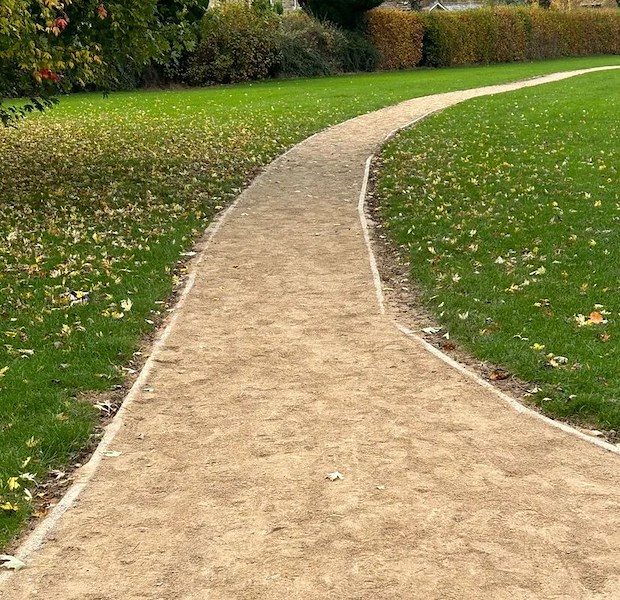
Yes. Modular Drainage Systems can be particularly effective for cycle routes, footpaths and active travel corridors where project approvals, shallow installation, reduced excavation and minimising disruption to the environment and surrounding areas are important considerations.
Are Modular Drainage Systems sustainable?
Sustainability is an important consideration in modern drainage design. MDS is made from encapsulated recycled tyre rubber can and reduces excavation requirements compared to conventional methods, helping to support lower-impact construction and infrastructure solutions.
Can Modular Drainage Systems be used in retrofit projects?
Yes. MDS can be considered for retrofit and constrained environments where conventional drainage installation may require extensive excavation or disruption. Modular drainage designs can be engineered to meet specific site requirements and solve water management challenges.
Does Civil Water Management provide technical support?
Yes. Civil Water Management provides technical information, product specifications and application information to help engineers, contractors, developers and infrastructure professionals understand Modular Drainage Systems and consider their potential use, with responsibility for design decisions, specification and assessment of suitability remaining with the appropriately qualified project professional.
Modular Drainage Systems (MDS) are engineered drainage solutions designed to manage surface and sub-surface water across transport infrastructure and civil engineering projects . They provide an alternative to conventional drainage methods and can be designed around specific site requirements.
Where can Modular Drainage Systems be used?
MDS can be used across highways, roads, rail infrastructure, civil engineering, cycle paths, footpaths, public spaces, housing developments and other projects where effective and resilient surface or sub-surface water management is required.
What are the benefits of Modular Drainage Systems?
Modular Drainage Systems are designed to improve drainage performance and infrastructure resilience while reducing excavation, material use, installation disruption and future maintenance intervention. Their modular construction supports flexible integration across constrained, shallow-depth, retrofit and new-build environments, helping improve drainage connectivity while supporting lower-carbon, longer-life and more sustainable infrastructure.
Can Modular Drainage Systems help with surface water management?
Yes. MDS can form part of an integrated drainage strategy designed to intercept, manage and control surface and sub-surface water, helping drainage designers address water-management requirements across a wide range of infrastructure projects.
Can Modular Drainage Systems help with surface and sub-surface water management?
Can MDS be used for highways and roads?
Yes. Modular Drainage Systems can be incorporated into highway and road drainage schemes, including projects where excavation, construction disruption and available space need to be carefully considered.
Are Modular Drainage Systems suitable for rail projects?
MDS can be used in rail infrastructure and associated drainage applications.
MDS overcomes the limitations of conventional drainage methods by significantly improving the immediacy of how water is taken in and conveyed, while reducing excavation, material use, installation impact and future maintenance interventions.
Can MDS be used for cycle paths and active travel routes?
Yes. Modular Drainage Systems can be particularly effective for cycle routes, footpaths and active travel corridors where project approvals, shallow installation, reduced excavation and minimising disruption to the environment and surrounding areas are important considerations.
Are Modular Drainage Systems sustainable?
Sustainability is an important consideration in modern drainage design. MDS is made from encapsulated recycled tyre rubber can and reduces excavation requirements compared to conventional methods, helping to support lower-impact construction and infrastructure solutions.
Can Modular Drainage Systems be used in retrofit projects?
Yes. MDS can be considered for retrofit and constrained environments where conventional drainage installation may require extensive excavation or disruption. Modular drainage designs can be engineered to meet specific site requirements and solve water management challenges.
Does Civil Water Management provide technical support?
Yes. Civil Water Management provides technical information, product specifications and application information to help engineers, contractors, developers and infrastructure professionals understand Modular Drainage Systems and consider their potential use, with responsibility for design decisions, specification and assessment of suitability remaining with the appropriately qualified project professional.
Transport for Greater Manchester:
Newton Heath Metrolink
Project Overview
As part of Transport for Greater Manchester's £150 million network improvement programme,
modular drainage system units manufactured by Rosehill Group formed the drainage core of AQUA
Fabrications' Track Enhancement Drainage System (TED) during a major drainage renewal at Newton
Heath Depot.
Working alongside Story Rail and InoRail Design, the project replaced ageing drainage infrastructure
beneath one of the busiest sections of the Metrolink network. A modular drainage system approach was
selected to provide high-capacity water storage, rapid installation during limited possession windows, and
a more sustainable alternative to traditional drainage construction.
The installation demonstrates how modern drainage system engineering can improve network
resilience while reducing maintenance requirements and embodied carbon.
The Challenge
• Insufficient capacity - existing drainage infrastructure was no longer providing the performance
required
• Tightly controlled rail possessions meant water management had to be improved without
extending possession windows
• Repeated rail loading required a system that could withstand dynamic loads while maintaining
hydraulic performance
• Operational light rail environment demanded programme certainty throughout construction
• Long-term resilience - the solution needed to reduce maintenance while supporting future
climate resilience
Project Details:
Client: Transport for Greater Manchester
Principal Contractor: Story Rail
Drainage Partner: AQUA Fabrications Ltd
Design Partner: InoRail Design
Location: Newton Heath, Manchester
Application: Light Rail Infrastructure
Approved Design:
• 210lm of trough,
• 490lm full-height stackers
• 70lm of half-height stackers
Modular Drainage Systems
The Solution
• Modular drainage units incorporated into AQUA Fabrications' Track Enhancement Drainage System
• Approximately 210 metres of modular drainage installed
• Stackable drainage modules provided significant water storage within a compact footprint
• Lightweight recycled rubber components simplified handling and installation compared with
conventional materials
• Rapid modular installation during planned engineering possessions, integrating with the wider track
renewal works
Results
? Improved drainage capacity across a critical section of the Metrolink network
? Climate-resilient design: accommodates rainfall events up to 1-in-1000-year storms with 40% climate
change allowance
? More than 20 tonnes of waste diverted from landfill through the use of recycled rubber
? Approximately 14 tonnes of CO2 emissions avoided compared with equivalent concrete drainage
construction
? Reduced maintenance requirements through a durable, modular drainage system
? Successful integration within one of the largest rail infrastructure programmes currently underway in
Greater Manchester
Copyright ©2026 Civil Water Management Ltd. All rights reserved. Modular Drainage Units manufactured by Rosehill Group.
Constructability
The modular design of the system allows for simple installation in various locations, whether it is CESS, 6ft
or Toe/Crest drainage. Requiring only a minimum 50 mm surround, the system maximises space without
sacrificing performance or rigidity. The units have a male and female profile, allowing them to be stacked to
the height required - typically dictated by the volume of water that will pass through the system.
Combinations of different heights & lengths of porous units allow for greater flexibility and support manual
handling procedures, particularly on more remote sites. The system is also compatible with all AQUA
prefabricated catch-pits.
Why It Matters
Rail drainage is often constrained by limited construction windows, restricted access and the need to
minimise disruption to passengers.
By combining Modular Drainage Systems with AQUA Fabrications' TED system, the Newton Heath project
demonstrates how modular drainage technology can deliver greater hydraulic capacity, faster installation
and lower embodied carbon without compromising long-term performance.
As rail and light rail operators continue to adapt infrastructure for increasingly intense rainfall, modular
drainage solutions provide a practical approach to improving network resilience while reducing whole-life
costs.
Hartlepool Borough Council:
Burn Valley Gardens
Project Overview
Burn Valley Gardens is a historic Edwardian park following the course of a channelised burn through
residential Hartlepool. As part of Hartlepool Borough Council's Town Centre to Catcote Road cycle route -
one of the Tees Valley Combined Authority (TVCA) cycle schemes - the park's terraced paths off Colwyn
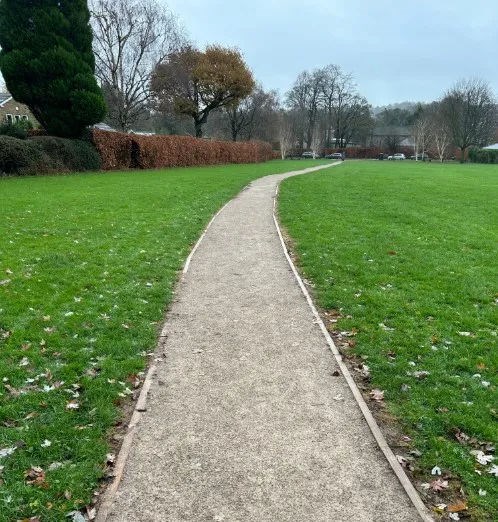
Road were renewed, and 600m of Grip Strip drainage units were installed to solve a long-standing runoff
problem that was eroding the embankment and undermining the park's original stone retaining walls.
Working with contractor BCE Northern Ltd, the terraces were resurfaced in porous asphalt laid to falls, so
that rainwater passing through and across the surface is directed to flush Grip Strip drainage lines at each
terrace edge. The strips collect the water and carry it to discreet outlets cut through the existing walls,
taking it safely down the slope to Burn Valley Beck.
The result is a fully draining path network with no gullies or gratings to maintain, no standing water, and
controlled outfalls in place of the uncontrolled runoff that was washing out the banks - delivered without
deep trenches, without heavy excavation plant, and without disturbing the roots of the mature trees that line
the paths.
The Challenge
• Uncontrolled runoff from the terraced paths was scouring the grass embankment and washing out
material from behind the park's historic stone retaining walls
• Heritage structures - deep excavation for conventional piped drainage alongside the old walls risked
disturbing their foundations
• Mature tree roots spread beneath the path edges throughout the park - traditional drainage
trenches would have cut straight through them, and the large excavation plant needed to dig them
would have compacted root zones and torn up the surrounding parkland
• Heavy leaf litter beneath the park's mature trees would quickly block conventional gullies and
gratings
• Public open space demanded a flush, trip-free finish safe for pedestrians, buggies, bikes and
mowers
• Steep terraced site - water needed collecting and conveying to the burn at the valley floor in a
controlled way
Project Details:
Client: Hartlepool Borough Council
Contractor: BCE Northern Ltd
Location: Burn Valley Gardens, Hartlepool
Scheme: TVCA Town Centre to
Catcote Road Cycle Route
Application: Cycle Route & Park Path Drainage
System Used: Grip Strip 100mm
Modular Drainage Systems
Copyright ©2026 Civil Water Management Ltd. All rights reserved. Modular Drainage Units manufactured by Rosehill Group.
The Solution
• Full-depth porous construction laid to falls - 30 mm porous asphalt surface course and 70 mm
porous binder over an open-graded sub-base, directing rainwater through and across the surface
towards the drainage lines
• 600m of flush Grip Strip drainage units - slimline 100 × 200 mm recycled rubber blocks installed
directly into shallow gravel-filled trenches, typically just 250 mm deep, staying above the tree roots
that conventional drainage trenches would have severed
• Compact plant, minimal damage - the shallow trenches were excavated with small machinery
rather than the heavy construction plant deep piped drainage demands, keeping disturbance to root
zones, lawns and established planting to a minimum
• Interceptor lines at every terrace edge, capturing runoff before it reaches the embankment
• Discreet outfalls to Burn Valley Beck - Stakkabox catchpits set beneath the Grip Strip runs, with
100 mm pipes down the embankment and vitrified clay outlets mortared through the beck wall
• Gravel and cobble dressed finishes blending the drainage lines into the park landscape
Results
? Runoff captured at source on every terrace, ending the scour and washout that was damaging the
embankment and walls
? Heritage retaining walls protected - the shallow 250 mm trenches avoided disturbing wall foundations
? Mature trees unharmed - shallow trenching stayed above the root zones, avoiding the root severance
that deep drainage trenches would have caused along the tree-lined paths
? Flush, trip-free finish throughout - safe for all park users and maintenance machinery
? Nothing to block - the porous rubber strips have no gratings or slots for leaf litter to clog
? SuDS-friendly drainage using porous surfacing and recycled rubber, discharging at a controlled rate to
the watercourse
? Rapid installation alongside the resurfacing works, with drainage lines trenched, laid and dressed in
the same visits using only compact plant
Copyright ©2026 Civil Water Management Ltd. All rights reserved. Modular Drainage Units manufactured by Rosehill Group.
Why It Matters
Parks and greenways are difficult places for conventional dra
Walk Wheel Cycle Trust: NCN Route 6
Milton Keynes City Council
Case Study
Project Overview
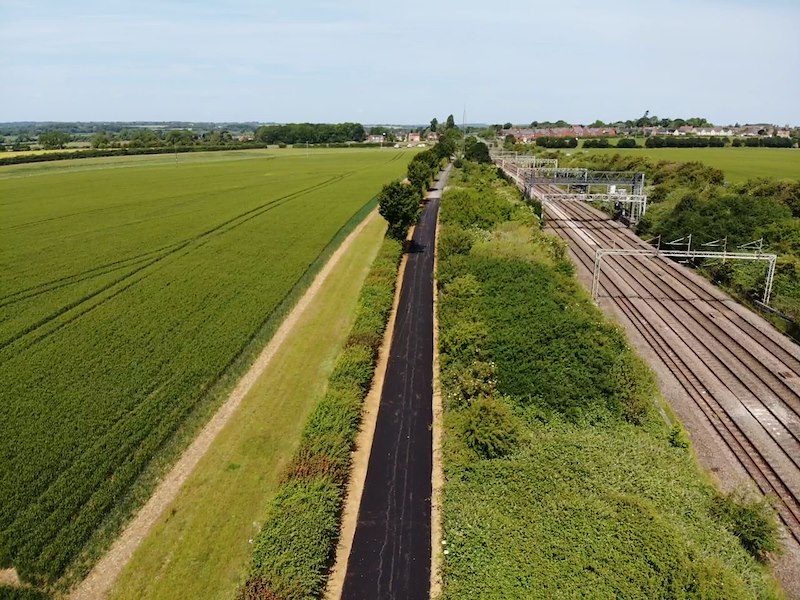
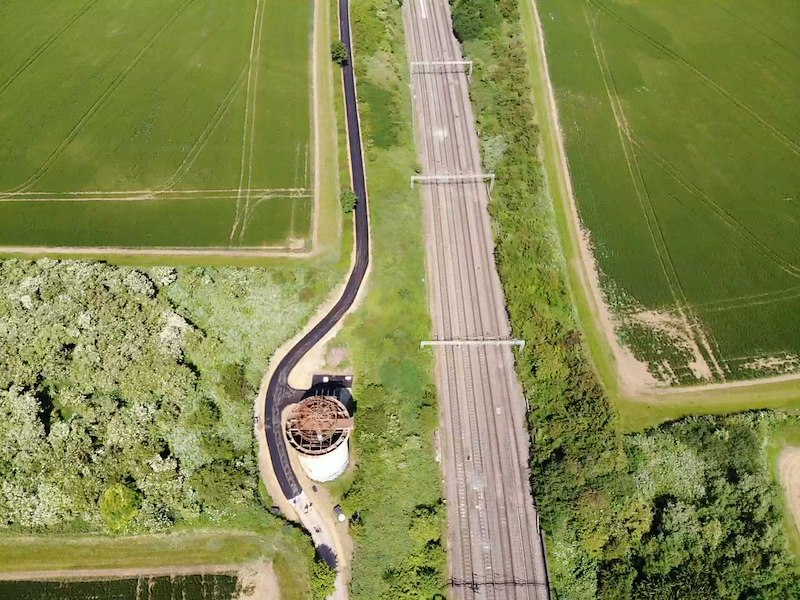
Working with the Walk Wheel Cycle Trust and Milton Keynes City Council, a 1km upgrade and widening scheme was
successfully delivered on National Cycle Network Route 6 between Castlethorpe and Wolverton.
Persistent flooding had rendered sections of the route inaccessible during wet weather and winter periods, creating
challenges for commuters, families and other users. Conventional drainage and excavation approaches were unable
to provide an acceptable solution to the site's planning and environmental requirements.
To address these challenges, a combined pathway construction and integrated surface water management solution
was developed using permeable Drainage Edges, Drainage Spurs and Drainage Mats. The resulting modular drainage
system enabled the route to be widened, resurfaced and drained using a reduced excavation methodology whilst
supporting accessibility, environmental stewardship and long-term route resilience.
The completed project demonstrates how integrated surface water management can help unlock active travel
infrastructure where flooding, drainage and environmental constraints might otherwise limit delivery.
Key Outcomes
1km extension completed in June 2025
Zero flooding recorded through camera
monitoring
Operational performance approaching two
years in service
Improved year-round accessibility and route
performance
Up to 50% reduction in carbon and estimated
19% cost reduction vs traditional methods
Forecast social value of £3.1 million over
10 years across the full route
Repeatable methodology capable of
supporting planning, drainage and
environmental objectives
Modular Drainage Systems
The Challenge
Persistent flooding issues made the 2.5km
route impassable in wet weather and winter
periods.
Families, commuters and disabled users were
unable or reluctant to use the path.
Conventional sustainable drainage plans and
excavation methods were unable to provide an
acceptable solution to planning approvals.
A sustainable drainage solution was required
to improve route resilience and support long-term
active travel use.
Planning and environmental considerations
required a solution capable of managing surface
water whilst minimising excavation and protecting
existing environmental assets.
Engineering Solution
Modular drainage system units installed to form
the path body construction, and simultaneously
manage surface water drainage.
Path widened and resurfaced with minimised
excavation to maintain environmental stewardship
best practice, and improve route accessibility and
user experience.
Sustainable drainage approach 2.5km approved
through environmental assessment and planning
processes.
Lower-carbon installation methodology
compared with traditional drainage alternatives.
Repeatable design suitable for wider deployment
across active travel networks.
Open-void drainage framework (avg. 45% void
ratio) enabling connected vertical, longitudinal
and lateral movement of water.
Reduced excavation construction methodology
supporting route widening, drainage performance
and tree root protection objectives.
Project Details
Client: Walk Wheel Cycle Trust,
Contractor: CIJO Ltd
Milton Keynes City Council, Rosehill Group
Integrated modular drainage path construction system with Drainage Edges/Grips/Spurs and Drainage Mats
Location: National Cycle Network Route 6, Milton Keynes
After: accessible, drained route
Why It Matters
National Cycle Network Route 6 demonstrates how integrated surface water management can help unlock active travel
projects where flooding, drainage and environmental constraints present barriers to delivery.
The project demonstrates how a single integrated construction methodology can simultaneously address route
accessibility, drainage performance, reduced excavation requirements and environmental stewardship objectives
whilst providing a repeatable model for future active travel infrastructure schemes.
Benefits for Route Owners, Local Authorities and Active Travel Teams
Flood resilience Eliminates persistent waterlogged pathway and supports year-round route performance.
Low impact construction No major trenching or pipework, reducing disruption in sensitive public spaces.
Sustainable materials Uses recycled rubber drainage components with a low-carbon design approach.
Scalable application A repeatable solution for local authority footpaths, cycleways, parks and public realm routes.
Discuss Your Project
Talk to our specialist drainage team.
E: [email protected] T: 0203 189 1468 W: www.civilwatermanagement.com
National Highways Test Centre:
Independent Performance Validation
Project Overview
National Highways selected the National Highways Development Centre (NHDC) at Moreton-in-Marsh
to independently evaluate the performance of Modular Drainage Systems within a dedicated highway drainage testing
environment.
The validation programme was designed to assess the system's hydraulic performance, structural
capability, installation practicality and suitability for highway drainage applications.
Delivered in collaboration with Civil Water Management Ltd, Rosehill Group and National Highways industry
partners, the programme forms part of National Highways' commitment to identifying innovative solutions
capable of improving drainage resilience, maintainability and whole-life asset performance across the
Strategic Road Network.
Validation Summary:
Independently evaluated at the
National Highways Test Centre
Validation programme
successfully completed
demonstrated alignment with
DMRB CD 529 & CD 530
requirements
Hydraulic and structural
performance validated
Installation practicality confirmed
Supports resilient highway
drainage infrastructure
Evidence generated to support
future deployment opportunities
Modular Drainage Systems
National Highways Testing Requirements
National Highways established a structured validation programme to determine whether Modular
Drainage Systems (MDS) could satisfy the performance requirements expected of modern highway
• Hydraulic Performance
• Structural Capability
• Long-Term Durability
• Installation Practicality
• Whole-Life Maintainability
• Infrastructure Resilience
• Compatibility with Highway Drainage Applications
• Alignment with DMRB CD 529 & CD 530 requirements
Testing Programme
The National Highways Test Centre validation project represents a critical milestone in establishing MDS
credentials for strategic road network applications.
Testing was undertaken within a recognised National Highways environment, providing independently
generated evidence supporting highway drainage applications.
This comprehensive testing programme provided independent verification of system performance under
extreme conditions.
Through rigorous full-scale testing protocols, the project demonstrated the system's capacity to meet and
exceed the demanding requirements of major highway infrastructure projects, validating both hydraulic
performance and structural resilience.
Testing Assessed
? Hydraulic Performance
? Water Conveyance Capability
? Infiltration Performance
? Open-Void Capacity
? Installation Practicality
? Long-Term Durability
? Highway Drainage Suitability
Copyright ©2026 Civil Water Management Ltd. All rights reserved. Modular Drainage Units manufactured by Rosehill Group.
Testing Protocol
• Full-scale test installation replicating real-world highway conditions
• Simulated extreme rainfall events exceeding design storm intensities
• Comprehensive flow measurement validating hydraulic performance claims
• Structural stress analysis under representative loading scenarios
• Extended monitoring period to assess performance consistency
Validation Outcomes
Why It Matters
The comprehensive testing programme undertaken at the National Highways Test Centre provides
independent validation of the Modular Drainage System's performance capabilities.
The evaluation demonstrated that the system satisfied the performance criteria established for the validation
programme, including alignment with the requirements of DMRB CD 529 and CD 530.
The successful outcome provides asset owners, designers and framework contractors with independently
generated evidence supporting the application of Modular Drainage Systems within highway drainage
infrastructure.
The programme demonstrates a commitment to delivering proven, reliable drainage solutions capable of
supporting resilient and maintainable infrastructure assets.
Benefits for National Highways, Framework Contractors
and Design Consultants
• Independent validation to support a high-performance drainage and water management system.
• Tested within the National Highways Test Centre to provide confidence in MDS performance.
• Improving the resilience and long-term functioning of critical drainage assets.
• Enables maintainability, inspection and long-term serviceability objectives to be met.
• Provides independently generated evidence for future highway and infrastructure applications.
Liverpool City Council: Transpennine Trail
Case Study
Project Overview
Liverpool City Council's Live Labs 2 programme chose Castletown Close, an access point onto the Transpennine Trail,
for an integrated modular drainage system solution.
Delivered with DOWHIGH Limited, in collaboration with Civil Water Management Ltd and Rosehill Group, the scheme
combines modular drainage system Drainage Mat, Grip Strip/Spur and Stacker units replacing a persistently flooded
walkway and an adjacent waterlogged patch of ground. A recycled-material installation that routes two challenging
catchments and connects them into an adopted highways existing manhole and drainage system.
The Challenge
Chronic surface-water pooling on a key active-
travel route into the Transpennine Trail and
adjacent land, were making it unusable for local
residents and inaccessible to emergency services
in wet weather and winter periods.
Environmentally sensitive woodland setting that
ruled out deep trenching and new pipework.
An existing highway manhole was available but
needed to be connected into.
Project Details
Client: Liverpool City Council - Live Labs 2
Contractor: DOWHIGH Ltd
Partners:
System:
Rosehill Group
Integrated modular drainage to adopted highways
manhole and drainage system with Drainage Mats,
Drainage Stackers, Drainage Grips/Spurs
Location: Castletown Close, Liverpool
Key Outcomes
Modular drainage system
successfully connected to
adopted highways existing
manhole and drainage system
Walkway completely
waterlogging free on
commissioning, sustained post-
commissioning
Gravel grid continuing to drain
any residual water at the path-to-
verge apron
Previously flooded ground now a
stable, usable permeable surface
Modular Drainage Systems
Engineering Solution
5m × 6m Drainage Mat bed laid over the worst-
flooded ground, replacing standing water with a
permeable, trafficable surface.
Drainage Stacker units running from the mat
bed across to the existing manhole
arrangement, carrying collected water out and
bridging the depth between the mat level and
the drain invert
Radial Drain of Grip Strips/Spurs collecting
surface water off the new asphalt path and
feeding it into the same existing drain
Modular, recycled-material build installed
quickly on site with no deep trenching -
preserving the woodland setting
Sealed asphalt wearing course finished with a
visible gravel-filled mat apron at the path-to-
verge transition.
Before and After
Before: waterlogged conditions After: accessible, drained route
Why It Matters
Castletown Close shows how modular drainage systems can be adapted to connect into existing adopted highways
manholes and drainage systems. A practical approach for flood-prone paths in built-up and environmentally sensitive
settings. As a Liverpool Live Labs 2 location, the methodology is designed to replicate across Liverpool, and
demonstrates the effectiveness of integrated drainage designs to overcome difficult site conditions and acute
water management challenges.
Benefits for Highways, Parks and Active Travel Teams
Flood resilience Eliminates persistent waterlogged pathway and supports year-round route performance.
Low impact construction No major trenching or pipework, reducing disruption in sensitive public spaces.
Sustainable materials Uses recycled rubber drainage components with a low-carbon design approach.
Scalable application A repeatable solution for local authority footpaths, cycleways, parks and public
realm routes.
Discuss Your Project
Let our team help you find the right drainage solution for your project.
E: [email protected] T: 0203 189 1468 W: www.civilwatermanagement.com
Copyright ©2026 Civil Water Management Ltd. All rights reserved. Modular Drainage Units manufactured by Rosehill Group.
Southern Rail Systems Alliance:
Pembroke Rail Cutting
Project Overview
The Pembroke Rail Cutting project presented a complex drainage challenge that required innovative
solutions and precise execution. Located in South Wales, this trackside drainage installation demonstrated
the capability of modular drainage systems to overcome significant ground conditions and infrastructure
constraints while delivering exceptional performance.
Working as part of broader rail renewal works, the project required completion within tight rail possession
windows, making efficiency and reliability critical factors in the solution design and installation process.
The Challenge
• Shallow bedrock severely restricted excavation depth for traditional drainage solutions
• Telecoms infrastructure presence further limited layout options and routing possibilities
• Curved, uneven terrain required drainage route to follow complex topography
• Tight rail possession windows as part of broader renewal works demanded rapid, efficient
installation
• Performance requirements needed to achieve target discharge rate of 42 litres per second
Objectives
Project Details:
Client: Southern Rail Systems Alliance
Principal Contractor: Colas Rail
Location: Pembroke, South Wales
Application: Trackside Drainage
in Challenging Ground Conditions
System Used: Trough and Stacker Drainage Units
Modular Drainage Systems
.
The Solution
• Modular drainage system installation along the cutting with precise 1:20 longitudinal gradient
• On-site cutting and stepping of units while maintaining complete flow continuity
• 75mm compacted pea gravel bed provided stable, well-draining support base
• 50mm Drainage Mat units strategically positioned to protect trough from sediment build-up
• Modular system flexibility allowed adaptation to ground constraints without performance
compromise
Results
? Target discharge rate achieved: 42 litres per second flow capacity successfully delivered
? Constraint adaptation: Successfully navigated ground and infrastructure limitations
? Schedule compliance: Installation completed on time with no delays to broader renewal works
? Performance integrity: No compromise to hydraulic performance despite complex installation
requirements
? Operational success: System remained fully functional and effective post-installation
Southern Rail Systems Alliance:
Pembroke Rail Cutting
Project Overview
The Pembroke Rail Cutting project presented a complex drainage challenge that required innovative
solutions and precise execution. Located in South Wales, this trackside drainage installation demonstrated
the capability of modular drainage systems to overcome significant ground conditions and infrastructure
constraints while delivering exceptional performance.
Working as part of broader rail renewal works, the project required completion within tight rail possession
windows, making efficiency and reliability critical factors in the solution design and installation process.
The Challenge
• Shallow bedrock severely restricted excavation depth for traditional drainage solutions
• Telecoms infrastructure presence further limited layout options and routing possibilities
• Curved, uneven terrain required drainage route to follow complex topography
• Tight rail possession windows as part of broader renewal works demanded rapid, efficient
installation
• Performance requirements needed to achieve target discharge rate of 42 litres per second
Objectives
Project Details:
Client: Southern Rail Systems Alliance
Principal Contractor: Colas Rail
Location: Pembroke, South Wales
Application: Trackside Drainage
in Challenging Ground Conditions
System Used: Trough and Stacker Drainage Units
Modular Drainage Systems
.
The Solution
• Modular drainage system installation along the cutting with precise 1:20 longitudinal gradient
• On-site cutting and stepping of units while maintaining complete flow continuity
• 75mm compacted pea gravel bed provided stable, well-draining support base
• 50mm Drainage Mat units strategically positioned to protect trough from sediment build-up
• Modular system flexibility allowed adaptation to ground constraints without performance
compromise
Results
? Target discharge rate achieved: 42 litres per second flow capacity successfully delivered
? Constraint adaptation: Successfully navigated ground and infrastructure limitations
? Schedule compliance: Installation completed on time with no delays to broader renewal works
? Performance integrity: No compromise to hydraulic performance despite complex installation
requirements
? Operational success: System remained fully functional and effective post-installation
Products & Services
Team
| Name | Role | Telephone | |
|---|---|---|---|
| Carl Hopkins | Managing Director | [email protected] | 07970598007 |
| Patrick O'Neil | Technical Director | [email protected] | 07786396075 |
Location Map
Civil Water Management Ltd Serves The Following Areas
Civil Water Management Ltd Serves The Following Towns
Find Civil Water Management Ltd in