Scotland
 UK
UK Ireland
 London

MGF Trench Construction Ltd
Address
Letham Road
Houstoun Industrial Estate
Houstoun Industrial Estate
Livingston
West Lothian
Scotland
EH54 5BY
Scotland
Opening Hours
Today
Closed
View All Hours
Sunday
Closed
Monday
07:00-17:30
Tuesday
07:00-17:30
Wednesday
07:00-17:30
Thursday
07:00-17:30
Friday
07:00-17:30
Saturday
Closed
Other Dates
Saturday & Sunday: Closed
Bank Holidays: Closed
Please note that there is someone available to contact during out of office hours for emergencies.
About MGF Trench Construction Ltd
MGF is a long-standing , trusted provider of comprehensive temporary works solutions in the industry. With a commitment to excellence and customer satisfaction, we go above and beyond to provide a complete solution, for a multitude of projects. We work with you at every level, whether it's excavations, above-ground structural support, or lifting and safety needs, our team is equipped to support your requirements.
We specialise in offering an extensive range of excavation, structural and lifting & safety equipment for both hire and sale. We pride ourselves on our in-house capability to provide a complete solution, from design and development to manufacturing and delivery. This allows us to provide in-depth product knowledge and flexibility to meet diverse demands.
Innovation and sustainability are at the core of our business. From 3D capabilities and prop load monitoring to providing comprehensive product life cycle reports within design documents, our experienced team collaborates closely with our customers to develop solutions that enhance efficiency.
At MGF, we go beyond providing temporary work solutions; we build lasting partnerships, ensuring that our customers receive exceptional service and tailored solutions that meet the evolving needs of the construction industry.
Our core values are engrained within our culture and give MGF its unique identity. They have made us successful in the past, and we believe they will continue to make us successful in the future:
Collaborative - building a partnership through teamwork, open communication, and a shared passion
Responsible - excellent engineering through high quality products that you can rely on to put safety first
Dedicated - Our customer centric approach allows us to help the environment, people and their wellbeing
Groundbreaking - We are industry leaders through providing solutions that meet our innovative ways of work, evolving to incorporate an ever changing world
MGF places health and safety at the forefront of everything we do and are committed to the promotion of best practices in the industry. Our awards, accreditations, and memberships demonstrate our commitment to innovation in our products and services, as well as our comprehensive approach to ensuring the health and safety of our customers, employees, and the communities in which we operate.
Our Service
Our network of strategically located depots and our in-house transport fleet allows us the flexibility to meet the needs of our customers, supported by our team of qualified engineers, experienced technical sales, friendly hire desk, and efficient operational staff.
Our depot network is the focal point for our service delivery. We can offer support with al aspects of your requirements, including:
Site visits to provide advice and guidance
Assistance in the production of a design brief
Temporary Works Design solutions balancing practicality and safety
Safe Systems of Work guidance for the installation of our products
Provision of equipment demonstrations and training sessions
Efficient delivery and collection of our equipment
Shoring Capabilities
WE stock a wide range of shoring products which can be used for excavation requirement across the industry. These products include our variety of box systems, bracing, sheet piles and trench sheets.
Our excavation support range is designed, developed, manufactured, and maintained in-house by our engineering and fabrication teams. It is regularly inspected, ensuring it meets industry standards and is ready to be used on site.
Structural Capabilities
We offer solutions to structural support requirements across the building and civil engineering industries. Designed with safety and simplicity in mind. MGF's UniShore (r) range offers three interconnectable capabilities in Light, Medium, and Heavy duty, enabling a more efficient design.
Manufactured in-house using high-grade steels, the modular and versatile range is suitable as props, beams, frames, towers, and trusses. Offering load capacities of 20, 70, and 150 tonnes, UniShore is supported by MGF's excellence in engineering and customer service.
Lifting & Safety Capabilities
Continued success has enabled us to expand our existing lifting product range to encompass a wide selection of high-quality lifting equipment, from G8 and G10 Chain Slings, Webbing and Round Slings, Shackles, Chain Blocks to our Heavy Lifting range consisting of our T33 Lifting Tray, F55 Spreader Frame and a variety of lifting beams.
We specialise in offering an extensive range of excavation, structural and lifting & safety equipment for both hire and sale. We pride ourselves on our in-house capability to provide a complete solution, from design and development to manufacturing and delivery. This allows us to provide in-depth product knowledge and flexibility to meet diverse demands.
Innovation and sustainability are at the core of our business. From 3D capabilities and prop load monitoring to providing comprehensive product life cycle reports within design documents, our experienced team collaborates closely with our customers to develop solutions that enhance efficiency.
At MGF, we go beyond providing temporary work solutions; we build lasting partnerships, ensuring that our customers receive exceptional service and tailored solutions that meet the evolving needs of the construction industry.
Our core values are engrained within our culture and give MGF its unique identity. They have made us successful in the past, and we believe they will continue to make us successful in the future:
Collaborative - building a partnership through teamwork, open communication, and a shared passion
Responsible - excellent engineering through high quality products that you can rely on to put safety first
Dedicated - Our customer centric approach allows us to help the environment, people and their wellbeing
Groundbreaking - We are industry leaders through providing solutions that meet our innovative ways of work, evolving to incorporate an ever changing world
MGF places health and safety at the forefront of everything we do and are committed to the promotion of best practices in the industry. Our awards, accreditations, and memberships demonstrate our commitment to innovation in our products and services, as well as our comprehensive approach to ensuring the health and safety of our customers, employees, and the communities in which we operate.
Our Service
Our network of strategically located depots and our in-house transport fleet allows us the flexibility to meet the needs of our customers, supported by our team of qualified engineers, experienced technical sales, friendly hire desk, and efficient operational staff.
Our depot network is the focal point for our service delivery. We can offer support with al aspects of your requirements, including:
Site visits to provide advice and guidance
Assistance in the production of a design brief
Temporary Works Design solutions balancing practicality and safety
Safe Systems of Work guidance for the installation of our products
Provision of equipment demonstrations and training sessions
Efficient delivery and collection of our equipment
Shoring Capabilities
WE stock a wide range of shoring products which can be used for excavation requirement across the industry. These products include our variety of box systems, bracing, sheet piles and trench sheets.
Our excavation support range is designed, developed, manufactured, and maintained in-house by our engineering and fabrication teams. It is regularly inspected, ensuring it meets industry standards and is ready to be used on site.
Structural Capabilities
We offer solutions to structural support requirements across the building and civil engineering industries. Designed with safety and simplicity in mind. MGF's UniShore (r) range offers three interconnectable capabilities in Light, Medium, and Heavy duty, enabling a more efficient design.
Manufactured in-house using high-grade steels, the modular and versatile range is suitable as props, beams, frames, towers, and trusses. Offering load capacities of 20, 70, and 150 tonnes, UniShore is supported by MGF's excellence in engineering and customer service.
Lifting & Safety Capabilities
Continued success has enabled us to expand our existing lifting product range to encompass a wide selection of high-quality lifting equipment, from G8 and G10 Chain Slings, Webbing and Round Slings, Shackles, Chain Blocks to our Heavy Lifting range consisting of our T33 Lifting Tray, F55 Spreader Frame and a variety of lifting beams.
Gallery
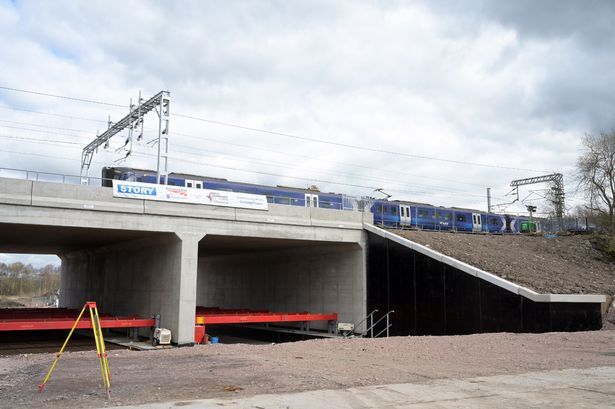
A cross divisional job as we help move the Ravenscraig bridge into position.
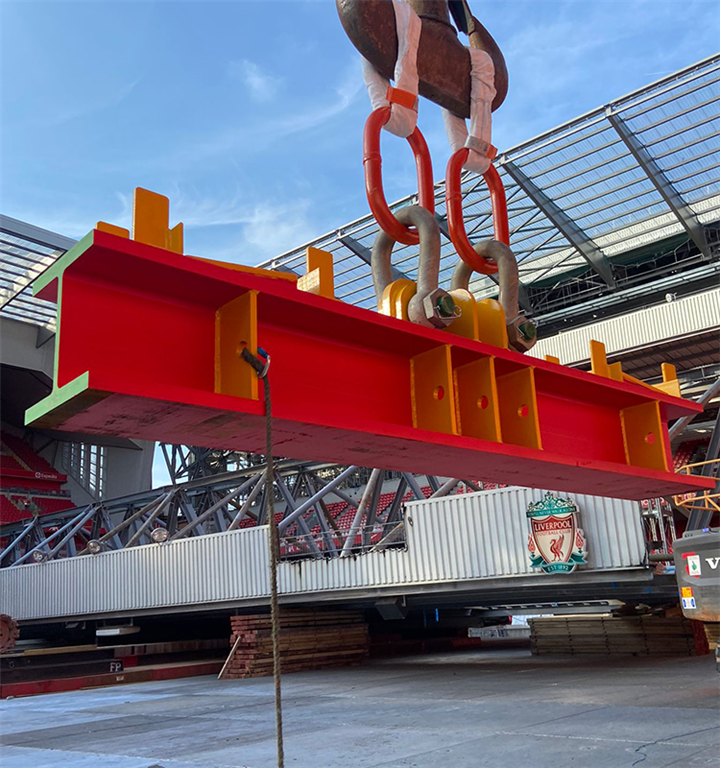
Our Lifting Beam being used to lift the roof at Anfield Stadium.
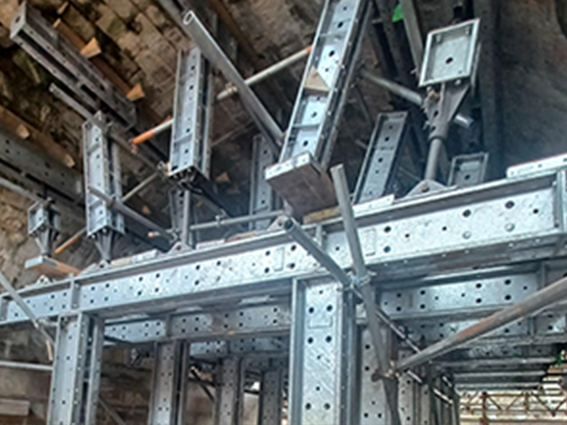
Our Structural Support Solution, UniShore been used at Adam Bridge.
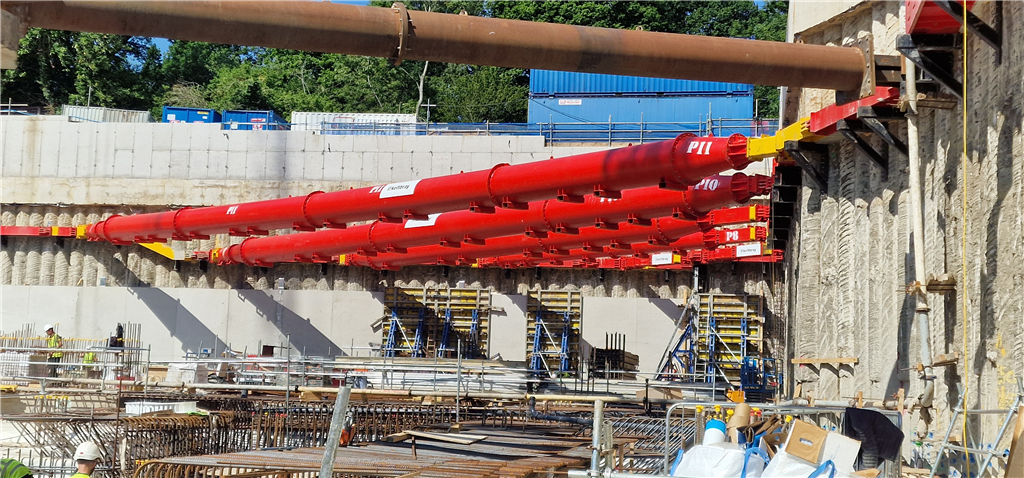
Our T700 Tank Brace in use at Bishop's Avenue.
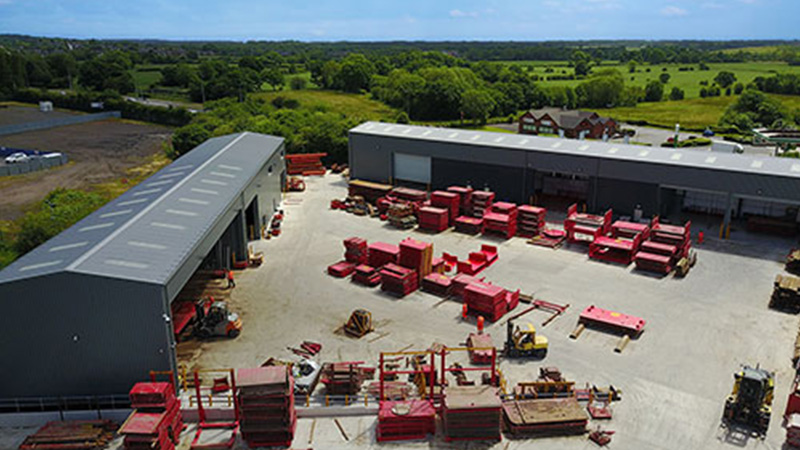
Our strategically located depots are able to provide Shoring, Structural and Lifting & Safety support.
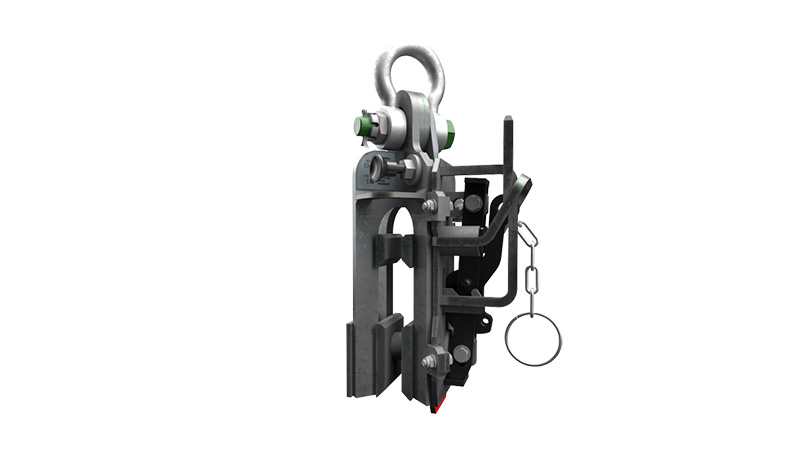
The MGF Pitch and Pull featuring our Lift Lock Mechanism.
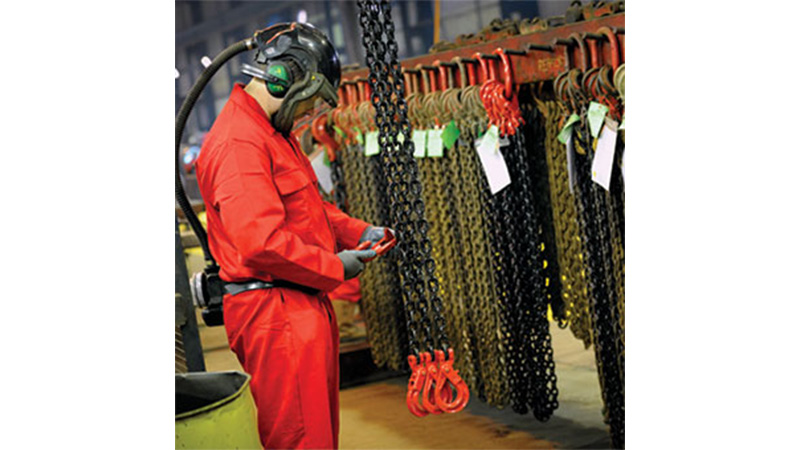
Our Lifting & Safety division offer a testing and inspection service.
Videos
News
MGF, a leading provider of excavation support, shoring and temporary works solutions, has announced a new strategic partnership with terra infrastructure, expanding the availability of specialist excavation support systems across terra infrastructure’s European operations.
The partnership, which commenced in December 2025, sees MGF appoint terra infrastructure as its exclusive distribution partner for a defined range of excavation support and shoring systems. Under the agreement, MGF will supply engineered shoring solutions directly to terra infrastructure, who will distribute them to customers across its established European markets.
This collaboration places a strong emphasis on excavation safety and engineering excellence, with terra infrastructure integrating MGF’s engineered shoring systems into its offering to support safe, compliant and efficient delivery of groundworks and infrastructure projects.
The first project delivered through the partnership demonstrates the capability of the combined offering, featuring an octagonal excavation pit utilising MGF’s bespoke 305UC Tank Brace and 400 Series Struts. Supplied as part of terra infrastructure’s initial order, the equipment showcases the flexibility and performance of MGF’s modular shoring systems on complex excavation applications.
Through the partnership, terra infrastructure’s customers gain access to proven excavation support technology, backed by engineering expertise, technical design capability and on-project support. This strengthens terra infrastructure’s ability to enhance safety, reduce risk and improve performance on site, while maintaining compliance with local and project-specific requirements.
Chris Whitworth, Director at MGF, commented:
“We are proud to be entering into this strategic partnership as we expand our presence in international markets. This agreement marks an exciting milestone in our export strategy, enabling us to combine MGF’s engineering expertise with terra infrastructure’s established regional presence. We look forward to building a strong and successful partnership that delivers real value to customers across Europe.”
Commenting on the partnership, terra infrastructure highlighted the strong alignment between the two businesses and the added value the collaboration delivers for customers operating in demanding infrastructure and civil engineering environments.
Johannes Weber, Managing Director, at terra infrastructure, said:
“We are excited about the opportunities this partnership creates. MGF has built an excellent reputation for delivering high-quality shoring support, making them a natural partner for terra infrastructure. Both companies share a strong commitment to safety, engineering excellence and customer-service. By combining MGF’s specialist expertise with our extensive market presence and infrastructure capabilities across Europe, we can offer customers an even broader range of tailored solutions for complex civil engineering and infrastructure projects. We are looking forward to a long-term successful partnership.”
While initially focused on Germany, the distribution agreement also supports terra infrastructure’s wider European operations, with coverage extending into Poland and the Czech Republic.
The partnership represents a significant strategic step for both organisations, combining terra infrastructure’s established European market presence with MGF’s specialist expertise of excavation support and engineered shoring systems to deliver safe, effective and reliable solutions for complex excavation challenges.
About terra infrastructure
terra infrastructure is a global project and solutions partner for foundation, shoring, infrastructure, and civil engineering. The company specialises in customised solutions in the areas of sheet piles and anchor equipment, machinery, and trench shoring, enabling the safe, efficient, and sustainable execution of work for a wide range of infrastructure projects worldwide.
About MGF
MGF is a leading provider of excavation support, shoring and temporary works solutions for the civil engineering, infrastructure and utilities sectors. The business specialises in the design, supply and support of engineered shoring systems, helping contractors deliver safe, compliant and efficient excavation works across a wide range of project environments.
The partnership, which commenced in December 2025, sees MGF appoint terra infrastructure as its exclusive distribution partner for a defined range of excavation support and shoring systems. Under the agreement, MGF will supply engineered shoring solutions directly to terra infrastructure, who will distribute them to customers across its established European markets.
This collaboration places a strong emphasis on excavation safety and engineering excellence, with terra infrastructure integrating MGF’s engineered shoring systems into its offering to support safe, compliant and efficient delivery of groundworks and infrastructure projects.
The first project delivered through the partnership demonstrates the capability of the combined offering, featuring an octagonal excavation pit utilising MGF’s bespoke 305UC Tank Brace and 400 Series Struts. Supplied as part of terra infrastructure’s initial order, the equipment showcases the flexibility and performance of MGF’s modular shoring systems on complex excavation applications.
Through the partnership, terra infrastructure’s customers gain access to proven excavation support technology, backed by engineering expertise, technical design capability and on-project support. This strengthens terra infrastructure’s ability to enhance safety, reduce risk and improve performance on site, while maintaining compliance with local and project-specific requirements.
Chris Whitworth, Director at MGF, commented:
“We are proud to be entering into this strategic partnership as we expand our presence in international markets. This agreement marks an exciting milestone in our export strategy, enabling us to combine MGF’s engineering expertise with terra infrastructure’s established regional presence. We look forward to building a strong and successful partnership that delivers real value to customers across Europe.”
Commenting on the partnership, terra infrastructure highlighted the strong alignment between the two businesses and the added value the collaboration delivers for customers operating in demanding infrastructure and civil engineering environments.
Johannes Weber, Managing Director, at terra infrastructure, said:
“We are excited about the opportunities this partnership creates. MGF has built an excellent reputation for delivering high-quality shoring support, making them a natural partner for terra infrastructure. Both companies share a strong commitment to safety, engineering excellence and customer-service. By combining MGF’s specialist expertise with our extensive market presence and infrastructure capabilities across Europe, we can offer customers an even broader range of tailored solutions for complex civil engineering and infrastructure projects. We are looking forward to a long-term successful partnership.”
While initially focused on Germany, the distribution agreement also supports terra infrastructure’s wider European operations, with coverage extending into Poland and the Czech Republic.
The partnership represents a significant strategic step for both organisations, combining terra infrastructure’s established European market presence with MGF’s specialist expertise of excavation support and engineered shoring systems to deliver safe, effective and reliable solutions for complex excavation challenges.
About terra infrastructure
terra infrastructure is a global project and solutions partner for foundation, shoring, infrastructure, and civil engineering. The company specialises in customised solutions in the areas of sheet piles and anchor equipment, machinery, and trench shoring, enabling the safe, efficient, and sustainable execution of work for a wide range of infrastructure projects worldwide.
About MGF
MGF is a leading provider of excavation support, shoring and temporary works solutions for the civil engineering, infrastructure and utilities sectors. The business specialises in the design, supply and support of engineered shoring systems, helping contractors deliver safe, compliant and efficient excavation works across a wide range of project environments.
MGF, a leading provider of excavation, structural support and lifting solutions, is proud to announce a strategic investment in a new manufacturing facility that will significantly enhance its operational capabilities and reinforce its long-term commitment to innovation, sustainability and local employment.
Scheduled to become fully operational by early 2027, the new facility will deliver a circa 300% increase in manufacturing capacity, marking a major milestone in MGF’s continued growth and evolution. The facility will be located just around the corner from MGF’s head office, demonstrating a clear commitment to investing locally and strengthening the area where the business has been operating for the last 23 years.
The new site will be named O’Hara House, in memory of Michael O’Hara, who founded the business and whose values of betterment, quality, innovation and investment in people continue to shape MGF today. The naming of the facility reflects both the company’s history and its ambition for the future.
This strategic investment will enable MGF to make further innovative investments in manufacturing, including the adoption of modern manufacturing techniques, improved efficiencies and enhanced quality control processes. Sustainability has also been a key consideration in the development plans, with the new facility designed to deliver long-term environmental benefits through smarter use of space and energy-efficient operations.
In addition to increasing output, the expansion will create a significant increase in the workforce, supporting new jobs across manufacturing and operational roles. MGF remains committed to investing in local people, providing long-term career opportunities, training and development, and contributing positively to the regional economy.
The investment represents more than just additional space; it reflects MGF’s ambition to future-proof its operations and continue delivering the high standards of service and product availability. Increased capacity will allow MGF to support growing demand, strengthen support for its global customer base, and maintain flexibility, reliability and speed of delivery without compromising on quality.
Marc Lord, Operations Director at MGF, commented:
“This investment is a hugely important step for MGF. Increasing our manufacturing capacity by this scale allows us to invest in innovation, sustainability and, most importantly, our people. Keeping the new facility close to our head office shows our commitment to the local area and to the values the business was founded on. Naming it O’Hara House is a fitting tribute to Michael O’Hara and the legacy he created.”
As MGF continues to grow, the development of O’Hara House underlines its long-term confidence in UK manufacturing and its dedication to supporting customers, employees and the communities in which it operates.
For more information or media enquiries, please email [email protected].
Scheduled to become fully operational by early 2027, the new facility will deliver a circa 300% increase in manufacturing capacity, marking a major milestone in MGF’s continued growth and evolution. The facility will be located just around the corner from MGF’s head office, demonstrating a clear commitment to investing locally and strengthening the area where the business has been operating for the last 23 years.
The new site will be named O’Hara House, in memory of Michael O’Hara, who founded the business and whose values of betterment, quality, innovation and investment in people continue to shape MGF today. The naming of the facility reflects both the company’s history and its ambition for the future.
This strategic investment will enable MGF to make further innovative investments in manufacturing, including the adoption of modern manufacturing techniques, improved efficiencies and enhanced quality control processes. Sustainability has also been a key consideration in the development plans, with the new facility designed to deliver long-term environmental benefits through smarter use of space and energy-efficient operations.
In addition to increasing output, the expansion will create a significant increase in the workforce, supporting new jobs across manufacturing and operational roles. MGF remains committed to investing in local people, providing long-term career opportunities, training and development, and contributing positively to the regional economy.
The investment represents more than just additional space; it reflects MGF’s ambition to future-proof its operations and continue delivering the high standards of service and product availability. Increased capacity will allow MGF to support growing demand, strengthen support for its global customer base, and maintain flexibility, reliability and speed of delivery without compromising on quality.
Marc Lord, Operations Director at MGF, commented:
“This investment is a hugely important step for MGF. Increasing our manufacturing capacity by this scale allows us to invest in innovation, sustainability and, most importantly, our people. Keeping the new facility close to our head office shows our commitment to the local area and to the values the business was founded on. Naming it O’Hara House is a fitting tribute to Michael O’Hara and the legacy he created.”
As MGF continues to grow, the development of O’Hara House underlines its long-term confidence in UK manufacturing and its dedication to supporting customers, employees and the communities in which it operates.
For more information or media enquiries, please email [email protected].
EXCAVATION SUPPORT FOR ST MICHAEL'S
The St Michael’s development is an ambitious joint venture between Relentless and Salboy, led by Gary Neville and Simon Ismail. This landmark project aims to create one of Manchester’s largest buildings and one of the most distinctive and recognisable high-rises in the UK. A crucial component of this vision involved constructing a circa 12.50m deep three-storey basement structure.
Given the site’s location in Manchester City Centre, surrounded by historically significant heritage buildings, maintaining safety and structural integrity for neighbouring properties was paramount.
MGF was selected to support this £400 million development, contributing to the design and implementation of excavation support solutions.
Collaborating closely with Mayo Civils, the project’s subcontractor, MGF developed a detailed, structurally sound, and efficient propping system to facilitate the construction of the basement.
PROJECT CHALLENGES
The St Michael’s project presented several complex challenges during the design phase:
Positioning of Tower Cranes
The design for St Michael’s required strategic placement of tower cranes to maintain a sufficient working radius while avoiding oversailing into adjacent properties, which would incur additional costs. The crane locations were fixed, necessitating an innovative design to avoid clashing with the tower cranes.
Core Wall Construction
The project plan involved jump-forming the core walls past the propping system before the props were removed. This required the integration of large-span walers with a propping arrangement to keep clear of the building cores whilst maintaining structural integrity and minimising lateral wall movements.
Proximity to Heritage Structures
The excavation site was situated close to the Sir Ralph Abercromby pub on the south-east elevation, a heritage building of historical significance. A ground movement assessment was conducted to evaluate potential impacts on surrounding assets, ensuring that MGF’s propping solution would mitigate risks of settlement or structural movement.
Design Adaptations and Tight Timelines
During the mobilisation of MGF’s equipment, there was an amendment to the basement’s design requirements. This demanded rapid design adjustments and the customisation of equipment to accommodate the new footprint. This needed to be done without compromising on safety or project timelines.
PROJECT REQUIREMENTS
The St Michael’s project was uniquely challenging due to its location in one of the busiest and most densely populated areas of Manchester. Surrounded by culturally significant heritage structures, precision and care were crucial to avoid disruptions to the local community and infrastructure.
Innovative Propping Strategy
To maximise working space and accommodate the fixed positions of tower cranes, MGF’s engineering team devised a minimalistic propping design. This approach enhanced operational efficiency while maintaining structural stability. The strategy also enabled seamless core wall construction without interference from the propping system.
Advanced Propping Equipment and Logistics
MGF deployed a sophisticated combination of equipment to meet the project’s requirements:
406UC Tank Brace: Utilised for wider propping spans required by the three-tiered basement design.
400, 600 & 1000 Series Extensions: Provided the necessary flexibility and adaptability for the changing excavation footprint.
Bespoke Waler Sections: Custom design, detailed and fabricated in-house by MGF to address the project’s unique demands and ensure seamless integration with the newly constructed structural elements.
This solution required meticulous logistical coordination among MGF’s Transport, Operations, and Engineering teams to deliver and install multiple 11.50m tank brace sections and prop components within the confined city-centre site.
ST MICHAEL'S - RESULTS AND IMPACT
MGF’s innovative propping solution facilitated the successful excavation for the 12.50m deep three-storey basement structure. The project was delivered efficiently, adhering to tight deadlines and maintaining the safety and stability of surrounding heritage structures.
MGF’s involvement in this high-profile St Michael’s project underscores its capacity to handle large-scale, complex urban developments. The collaboration with Mayo Civils and strategic problem-solving set a benchmark for engineering excellence. MGF is proud to contribute to the realisation of one of Manchester’s most iconic buildings and provide a solution for such a large-scale project.
The St Michael’s project showcases MGF’s expertise in excavation support and its ability to overcome complex urban construction challenges. By leveraging innovative design solutions, bespoke equipment, and seamless logis
The St Michael’s development is an ambitious joint venture between Relentless and Salboy, led by Gary Neville and Simon Ismail. This landmark project aims to create one of Manchester’s largest buildings and one of the most distinctive and recognisable high-rises in the UK. A crucial component of this vision involved constructing a circa 12.50m deep three-storey basement structure.
Given the site’s location in Manchester City Centre, surrounded by historically significant heritage buildings, maintaining safety and structural integrity for neighbouring properties was paramount.
MGF was selected to support this £400 million development, contributing to the design and implementation of excavation support solutions.
Collaborating closely with Mayo Civils, the project’s subcontractor, MGF developed a detailed, structurally sound, and efficient propping system to facilitate the construction of the basement.
PROJECT CHALLENGES
The St Michael’s project presented several complex challenges during the design phase:
Positioning of Tower Cranes
The design for St Michael’s required strategic placement of tower cranes to maintain a sufficient working radius while avoiding oversailing into adjacent properties, which would incur additional costs. The crane locations were fixed, necessitating an innovative design to avoid clashing with the tower cranes.
Core Wall Construction
The project plan involved jump-forming the core walls past the propping system before the props were removed. This required the integration of large-span walers with a propping arrangement to keep clear of the building cores whilst maintaining structural integrity and minimising lateral wall movements.
Proximity to Heritage Structures
The excavation site was situated close to the Sir Ralph Abercromby pub on the south-east elevation, a heritage building of historical significance. A ground movement assessment was conducted to evaluate potential impacts on surrounding assets, ensuring that MGF’s propping solution would mitigate risks of settlement or structural movement.
Design Adaptations and Tight Timelines
During the mobilisation of MGF’s equipment, there was an amendment to the basement’s design requirements. This demanded rapid design adjustments and the customisation of equipment to accommodate the new footprint. This needed to be done without compromising on safety or project timelines.
PROJECT REQUIREMENTS
The St Michael’s project was uniquely challenging due to its location in one of the busiest and most densely populated areas of Manchester. Surrounded by culturally significant heritage structures, precision and care were crucial to avoid disruptions to the local community and infrastructure.
Innovative Propping Strategy
To maximise working space and accommodate the fixed positions of tower cranes, MGF’s engineering team devised a minimalistic propping design. This approach enhanced operational efficiency while maintaining structural stability. The strategy also enabled seamless core wall construction without interference from the propping system.
Advanced Propping Equipment and Logistics
MGF deployed a sophisticated combination of equipment to meet the project’s requirements:
406UC Tank Brace: Utilised for wider propping spans required by the three-tiered basement design.
400, 600 & 1000 Series Extensions: Provided the necessary flexibility and adaptability for the changing excavation footprint.
Bespoke Waler Sections: Custom design, detailed and fabricated in-house by MGF to address the project’s unique demands and ensure seamless integration with the newly constructed structural elements.
This solution required meticulous logistical coordination among MGF’s Transport, Operations, and Engineering teams to deliver and install multiple 11.50m tank brace sections and prop components within the confined city-centre site.
ST MICHAEL'S - RESULTS AND IMPACT
MGF’s innovative propping solution facilitated the successful excavation for the 12.50m deep three-storey basement structure. The project was delivered efficiently, adhering to tight deadlines and maintaining the safety and stability of surrounding heritage structures.
MGF’s involvement in this high-profile St Michael’s project underscores its capacity to handle large-scale, complex urban developments. The collaboration with Mayo Civils and strategic problem-solving set a benchmark for engineering excellence. MGF is proud to contribute to the realisation of one of Manchester’s most iconic buildings and provide a solution for such a large-scale project.
The St Michael’s project showcases MGF’s expertise in excavation support and its ability to overcome complex urban construction challenges. By leveraging innovative design solutions, bespoke equipment, and seamless logis
INNOVATIVE 32-TONNE PCS UNIT LIFT
In 2024, MGF were tasked with providing a PCS unit lift solution for what posed to be a unique challenge.
Located at Richborough Energy Park, the project was to lift PCS units (Power Conversion System Units) that had been transported to the site into place at the energy park.
The operation complexities (uneven weight and centre of gravity) required a bespoke solution to complete the PCS unit lift.
Prior involvement with MGF’s Lifting By Design team meant Keltbray Lifting knew MGF provided bespoke lifting solutions.
THE SOLUTION
This project provided MGF with the opportunity to use our newly formed Lifting by Design service.
Close collaboration between MGF Engineers and the Lifting By Design team allowed us to calculate the forces needed and create a bespoke lifting frame that matched the exact requirements of the lift.
The size of the spreader frame needed to be 12m x 3m and have the capability to lift 32t. It also needed to factor in the unbalanced centre of gravity.
Due to the critical importance of crane selection and the limited lifting capacities available at the required working radii, it was essential to minimise the self-weight of all lifting accessories.
The selected lifting solution was therefore specifically engineered with a focus on weight optimisation. This ensured compatibility with the crane’s load chart while maintaining structural integrity and operational safety.
This approach enabled the execution of the lift within the available capacity margins whilst considering the inconsistent COG considerations without compromising on performance or compliance.
"From the start, MGF demonstrated a proactive and solution-driven approach that was instrumental in the successful delivery of this project. Faced with the requirement for an oversized lifting frame that could not be met with a standard, off-the-shelf product, MGF’s engineering team collaborated closely with us to develop a fully bespoke lifting solution through their Lifting By Design service. The result was a tailored system that enabled the safe and efficient installation of the PCS units, meeting both our technical requirements and programme deadlines. Throughout the process, the partnership between Keltbray Lifting and MGF was marked by open communication, engineering excellence, and a shared commitment to innovation, allowing us to execute the lifts with confidence and precision." - Director of Lifting Services, Keltbray.
THE VERDICT
MGF created a successful lifting solution that provided the bespoke requirements that Keltbray Lifting required from this lift. Close collaboration between the client and our various internal departments created a rapid response time and tailored solution that enabled a safe and effective PCS unit lift.
From showing our capabilities and adaptability to create bespoke solutions, Keltbray Lifting have already chosen MGF as a trusted provider. Our Lifting By Design solution will help them complete complex lifts again in the future.
In 2024, MGF were tasked with providing a PCS unit lift solution for what posed to be a unique challenge.
Located at Richborough Energy Park, the project was to lift PCS units (Power Conversion System Units) that had been transported to the site into place at the energy park.
The operation complexities (uneven weight and centre of gravity) required a bespoke solution to complete the PCS unit lift.
Prior involvement with MGF’s Lifting By Design team meant Keltbray Lifting knew MGF provided bespoke lifting solutions.
THE SOLUTION
This project provided MGF with the opportunity to use our newly formed Lifting by Design service.
Close collaboration between MGF Engineers and the Lifting By Design team allowed us to calculate the forces needed and create a bespoke lifting frame that matched the exact requirements of the lift.
The size of the spreader frame needed to be 12m x 3m and have the capability to lift 32t. It also needed to factor in the unbalanced centre of gravity.
Due to the critical importance of crane selection and the limited lifting capacities available at the required working radii, it was essential to minimise the self-weight of all lifting accessories.
The selected lifting solution was therefore specifically engineered with a focus on weight optimisation. This ensured compatibility with the crane’s load chart while maintaining structural integrity and operational safety.
This approach enabled the execution of the lift within the available capacity margins whilst considering the inconsistent COG considerations without compromising on performance or compliance.
"From the start, MGF demonstrated a proactive and solution-driven approach that was instrumental in the successful delivery of this project. Faced with the requirement for an oversized lifting frame that could not be met with a standard, off-the-shelf product, MGF’s engineering team collaborated closely with us to develop a fully bespoke lifting solution through their Lifting By Design service. The result was a tailored system that enabled the safe and efficient installation of the PCS units, meeting both our technical requirements and programme deadlines. Throughout the process, the partnership between Keltbray Lifting and MGF was marked by open communication, engineering excellence, and a shared commitment to innovation, allowing us to execute the lifts with confidence and precision." - Director of Lifting Services, Keltbray.
THE VERDICT
MGF created a successful lifting solution that provided the bespoke requirements that Keltbray Lifting required from this lift. Close collaboration between the client and our various internal departments created a rapid response time and tailored solution that enabled a safe and effective PCS unit lift.
From showing our capabilities and adaptability to create bespoke solutions, Keltbray Lifting have already chosen MGF as a trusted provider. Our Lifting By Design solution will help them complete complex lifts again in the future.
MGF PROVIDES SOLUTION FOR INDOOR LIFTING OPERATION
Working on behalf of Budweiser Brewing Group, this project for an indoor lifting operation on the outskirts of Preston was one that needed to be actioned immediately.
Workers in the factory needed regulated temperatures to create a safe working environment. They needed to install a new 5m long air cooler unit in the factory.
However, T.E.P. Machinery faced a problem – they had limited headroom inside the factory.
The restriction of conducting a lifting operation indoors meant they required a unique solution with a single-point lifting attachment.
THE SOLUTION
Having seen MGF’s lifting capabilities online, T.E.P. Machinery knew that our capabilities could help them quickly complete this project.
When approached to provide a proposition for the project, MGF immediately started exploring the best solution from our heavy lifting range.
We discussed the possible utilisation of each of our heavy lifting products before concluding that one of our lifting beams would be best suited to this project.
Having looked at the drawing of the 5m long AC unit provided by the client, we concluded that the AL15 would best be suited for this project, being attached via eight points.
The AL15 Adjustable Lifting Beam was chosen, as it is perfect for lifting operations where there is limited headroom.
THE VERDICT
Started in March 2025, this project is currently ongoing, with the lifting operation due to take place in April of the same year.
MGF quickly provided the necessary kit to conduct a quick, safe and efficient lifting operation without causing interruption inside the factory.
After a smooth and successful lifting operation, T.EP. Machinery are already looking forward to collaborating with MGF on their next lifting project.
Working on behalf of Budweiser Brewing Group, this project for an indoor lifting operation on the outskirts of Preston was one that needed to be actioned immediately.
Workers in the factory needed regulated temperatures to create a safe working environment. They needed to install a new 5m long air cooler unit in the factory.
However, T.E.P. Machinery faced a problem – they had limited headroom inside the factory.
The restriction of conducting a lifting operation indoors meant they required a unique solution with a single-point lifting attachment.
THE SOLUTION
Having seen MGF’s lifting capabilities online, T.E.P. Machinery knew that our capabilities could help them quickly complete this project.
When approached to provide a proposition for the project, MGF immediately started exploring the best solution from our heavy lifting range.
We discussed the possible utilisation of each of our heavy lifting products before concluding that one of our lifting beams would be best suited to this project.
Having looked at the drawing of the 5m long AC unit provided by the client, we concluded that the AL15 would best be suited for this project, being attached via eight points.
The AL15 Adjustable Lifting Beam was chosen, as it is perfect for lifting operations where there is limited headroom.
THE VERDICT
Started in March 2025, this project is currently ongoing, with the lifting operation due to take place in April of the same year.
MGF quickly provided the necessary kit to conduct a quick, safe and efficient lifting operation without causing interruption inside the factory.
After a smooth and successful lifting operation, T.EP. Machinery are already looking forward to collaborating with MGF on their next lifting project.
FAÇADE RETENTION: STRUCTURALLY SUPPORTING THE GEORGE HOTEL
The George Hotel in Stranraer dates from 1876 when it was first commissioned as a Coaching Inn. Having been derelict for many years, the hotel was purchased by the local Council in December 2017. The Council’s intent was to safeguard from further deterioration with a proposal to being restored and re-used. The building is category B listed and occupies a prominent corner site in the heart of Stranraer town centre.
Following consultation and a successful funding application, work began on the conversion of the site. The intention of the project was to transform the space into a mixed-use community centre for the local community.
The existing façade is in poor condition, housing a historic internal façade structure to keep it safe from collapse.
Due to the new proposal for the building, the existing internal bracing system needed to be replaced, as this would clash with the proposed internal structure.
Having collaborated on a number of successful projects, Clark Contracts contacted MGF during the tender stage, requesting a design and price for the replacement of the temporary façade propping system, to facilitate the conversion of the new community centre.
THE SOLUTION
To provide an unhindered internal workspace, MGF’s Engineers developed an external cantilever propping system, using three main proprietary tower structures, two along George Street and one on the adjacent Church Street. The towers were founded on concrete bases bearing onto the existing road surface. Holding down bolts were designed to connect the towers to the concrete base. Interlocking concrete kentledge blocks were specified to resist the sliding and overturning forces the bases were subjected to by the anticipated actions of the wind loading on the structure.
The towers comprised a combination of MGF’s Light and Medium duty Unishore, designed as a cantilever truss arrangement. Diagonal members using MGF’s Light Duty Unishore were provided at each waler level to help transfer the loads from the walers into the towers. This also helped reduce the need for more towers along George Street, resulting in more working room for the site team and less concrete in the bases. A fourth level of waling was specified to provide restraint to the existing chimney and gable façade along Church Street.
The existing masonry façade was tied to the TW’s structure using MGF’s Light Duty Unishore and tie plates. This made use of the existing window openings where possible. The light duty walers were ideal for lifting at heights. The benefit of designing with high grade steel means a significant reduction in the profile thickness can be achieved. This limits the weight of each member but maintains the strength needed to resist the forces as part of the design.
MGF’s Engineers collaborated with the steel frame designers and used the benefit of 3D modelling to ensure no clashes with the permanent steel structure and provide clear annotated details for erection of the temporary structure.
THE VERDICT
The use of MGF’s modular Unishore system enabled off site construction and flexibility. The external towers omitted disruption inside the existing structure which aided the site team during the demolition phase.
MGF’s approach to adopting 3D modelling, omitted the risk of clashes with the permanent works. By providing clear 3D details at each connection allowed the site team to ensure the towers were assembled as per the design.
The George Hotel in Stranraer dates from 1876 when it was first commissioned as a Coaching Inn. Having been derelict for many years, the hotel was purchased by the local Council in December 2017. The Council’s intent was to safeguard from further deterioration with a proposal to being restored and re-used. The building is category B listed and occupies a prominent corner site in the heart of Stranraer town centre.
Following consultation and a successful funding application, work began on the conversion of the site. The intention of the project was to transform the space into a mixed-use community centre for the local community.
The existing façade is in poor condition, housing a historic internal façade structure to keep it safe from collapse.
Due to the new proposal for the building, the existing internal bracing system needed to be replaced, as this would clash with the proposed internal structure.
Having collaborated on a number of successful projects, Clark Contracts contacted MGF during the tender stage, requesting a design and price for the replacement of the temporary façade propping system, to facilitate the conversion of the new community centre.
THE SOLUTION
To provide an unhindered internal workspace, MGF’s Engineers developed an external cantilever propping system, using three main proprietary tower structures, two along George Street and one on the adjacent Church Street. The towers were founded on concrete bases bearing onto the existing road surface. Holding down bolts were designed to connect the towers to the concrete base. Interlocking concrete kentledge blocks were specified to resist the sliding and overturning forces the bases were subjected to by the anticipated actions of the wind loading on the structure.
The towers comprised a combination of MGF’s Light and Medium duty Unishore, designed as a cantilever truss arrangement. Diagonal members using MGF’s Light Duty Unishore were provided at each waler level to help transfer the loads from the walers into the towers. This also helped reduce the need for more towers along George Street, resulting in more working room for the site team and less concrete in the bases. A fourth level of waling was specified to provide restraint to the existing chimney and gable façade along Church Street.
The existing masonry façade was tied to the TW’s structure using MGF’s Light Duty Unishore and tie plates. This made use of the existing window openings where possible. The light duty walers were ideal for lifting at heights. The benefit of designing with high grade steel means a significant reduction in the profile thickness can be achieved. This limits the weight of each member but maintains the strength needed to resist the forces as part of the design.
MGF’s Engineers collaborated with the steel frame designers and used the benefit of 3D modelling to ensure no clashes with the permanent steel structure and provide clear annotated details for erection of the temporary structure.
THE VERDICT
The use of MGF’s modular Unishore system enabled off site construction and flexibility. The external towers omitted disruption inside the existing structure which aided the site team during the demolition phase.
MGF’s approach to adopting 3D modelling, omitted the risk of clashes with the permanent works. By providing clear 3D details at each connection allowed the site team to ensure the towers were assembled as per the design.
MGF'S CONTINUED SUPPORT TO FLOOD DEFENCES
The Boxing Day floods of 2015 sent shockwaves around Rochdale, Greater Manchester and the country.
The fast-flowing water was four feet deep at the height of the flooding, leaving businesses and homes underwater.
The severe impact of the floods meant that drastic action needed to be taken.
The Environment Agency, in partnership with Rochdale Council, developed a scheme to improve flood defences and reduce the risk of flooding across Rochdale and Littleborough.
This plan included a flood storage area at Gale, as well as raised walls and improvements to culverts and bridges.
Volkerstevin were the appointed contractor for this project. They contacted MGF about providing a bespoke shoring solution, providing excavation support across a multi-phase project.
THE SOLUTION
Phase 1a commenced in 2020 and saw improvements in defences at various locations in Littleborough, the replacement of Riverstone Bridge and the widening of the river channel at the same location.
Phase 1b is currently in progress and will result in the removal of Charles Street Bridge and temporary access works into the Gale site to allow it to be turned into a flood storage reservoir, in addition to the permanent diversion of Greenvale Brook at Gale East and a culvert extension within the same site.
Over the next two years, the permanent works design was revised, with MGF collaborating with VolkerStevin and VolkerGround Engineering to develop further conceptual designs. The final design consisted of temporarily using AZ sheet piles in a cantilever for the cofferdam (then permanently installed elsewhere on site) in conjunction with MGF’s 305UC brace and 400 Series cross struts knee braces at the deeper end of the structure only.
However, additional site investigation revealed soft ground in the central area of the cofferdam that needed removing, therefore increasing the excavation depth resulting in further propping requirements. MGF reacted quickly to design and supply equipment to the central area of the cofferdam, using 406UC brace and 400 Series cross struts and knee braces.
Our in-house engineering and design team took the brief regarding the requirements and collaborated to create a bespoke design that precisely met the project requirements.
Based on the request provided by Volkerstevin decided that for both phases, we would use a combination of our 305 UC Brace, 400 Series Strut and 406 UC Brace to support the cofferdams and
The outlet structure from Gale West diverts water in an alternative way to prevent flooding, with plans to build a 70,000 cubic holding tank to store additional overflow.
"MGF’s support and adaptability has been critical to our response in providing new flood defences for the people of Rochdale and Littleborough. Their rapid response and prompt solution delivery enabled us to work efficiently and safely, even under challenging conditions. We greatly appreciate their proactive approach in this critical endeavour to safeguard communities for the future." - Senior Engineer, VolkerStevin LTD
THE VERDICT
Early and continued collaboration between VolkerStevin and MGF over the last four years has successfully delivered value-engineered excavation support systems to multiple excavations across Phase 1a & Phase 1b in Littleborough.
demonstrated their capabilities from the initial design phase to delivering equipment on site. We supported VolkerStevin through numerous remote and site-based meetings and reacting quickly to unforeseen changes on site.
The Boxing Day floods of 2015 sent shockwaves around Rochdale, Greater Manchester and the country.
The fast-flowing water was four feet deep at the height of the flooding, leaving businesses and homes underwater.
The severe impact of the floods meant that drastic action needed to be taken.
The Environment Agency, in partnership with Rochdale Council, developed a scheme to improve flood defences and reduce the risk of flooding across Rochdale and Littleborough.
This plan included a flood storage area at Gale, as well as raised walls and improvements to culverts and bridges.
Volkerstevin were the appointed contractor for this project. They contacted MGF about providing a bespoke shoring solution, providing excavation support across a multi-phase project.
THE SOLUTION
Phase 1a commenced in 2020 and saw improvements in defences at various locations in Littleborough, the replacement of Riverstone Bridge and the widening of the river channel at the same location.
Phase 1b is currently in progress and will result in the removal of Charles Street Bridge and temporary access works into the Gale site to allow it to be turned into a flood storage reservoir, in addition to the permanent diversion of Greenvale Brook at Gale East and a culvert extension within the same site.
Over the next two years, the permanent works design was revised, with MGF collaborating with VolkerStevin and VolkerGround Engineering to develop further conceptual designs. The final design consisted of temporarily using AZ sheet piles in a cantilever for the cofferdam (then permanently installed elsewhere on site) in conjunction with MGF’s 305UC brace and 400 Series cross struts knee braces at the deeper end of the structure only.
However, additional site investigation revealed soft ground in the central area of the cofferdam that needed removing, therefore increasing the excavation depth resulting in further propping requirements. MGF reacted quickly to design and supply equipment to the central area of the cofferdam, using 406UC brace and 400 Series cross struts and knee braces.
Our in-house engineering and design team took the brief regarding the requirements and collaborated to create a bespoke design that precisely met the project requirements.
Based on the request provided by Volkerstevin decided that for both phases, we would use a combination of our 305 UC Brace, 400 Series Strut and 406 UC Brace to support the cofferdams and
The outlet structure from Gale West diverts water in an alternative way to prevent flooding, with plans to build a 70,000 cubic holding tank to store additional overflow.
"MGF’s support and adaptability has been critical to our response in providing new flood defences for the people of Rochdale and Littleborough. Their rapid response and prompt solution delivery enabled us to work efficiently and safely, even under challenging conditions. We greatly appreciate their proactive approach in this critical endeavour to safeguard communities for the future." - Senior Engineer, VolkerStevin LTD
THE VERDICT
Early and continued collaboration between VolkerStevin and MGF over the last four years has successfully delivered value-engineered excavation support systems to multiple excavations across Phase 1a & Phase 1b in Littleborough.
demonstrated their capabilities from the initial design phase to delivering equipment on site. We supported VolkerStevin through numerous remote and site-based meetings and reacting quickly to unforeseen changes on site.
UPGRADING THE RIVER INTAKE AT WITCHES OAK WATER
Witches Oak Water is a series of gravel pit lakes south-east of Derby, near the River Trent.
Severn Trent were client for the recovery project which aims to safeguard future water supplies. The works include recommissioning of the existing infrastructure to increase the water supplies by around 90 million litres a day. Principal contractor Mott MacDonald Bentley (MMB) – the integrated design and build company between JN Bentley and Mott MacDonald – was appointed to remove the existing pipework that connected the inlet and outlet structures.
Through sustainable design they retained the existing headwalls and formed a new in-situ open channel that will connect the River Trent on one side to the lake on the other. The aim of the new channel is to increase flow capacity and promote biodiversity.
MGF were appointed to support MMB and Severn Trent with a design solution and supply the temporary works equipment.
THE SOLUTION
MGF had already worked on a similar scale cofferdam for Severn Trent. MMB called upon our expertise to assist with the project at Witches Oak.
An initial site meeting was undertaken in January 2023 to meet the project team and understand requirements to enable the construction of the permanent works. A limiting factor from this meeting was the access to the works location, which would influence the temporary works solution. Optioneering, identifying hazards, understanding the environment, and discussing the possible construction sequence, including the proposed dimensions, were elements of information taken from the meeting. This insight was then used by MGF to develop a highly informed conceptual design that incorporated all these key factors.
Collaborative working from the outset was crucial to reviewing and refining the design concepts and making sure they did not clash with any existing structures or proposed permanent work.
Using SketchUp, MGF proposed the temporary works sequence, which enabled MMB to clearly explain to the client (Severn Trent) their approach to carrying out the work. In addition, MGF created a short animation that detailed the installation sequence in 3D and provided a digital rehearsal of the construction. Proprietary shoring equipment was delivered by MGF in July 2023 to construct the cofferdam, which spanned 46.5 metres in length and was almost 13 metres wide. They included a combination of 9.5-metre and 11-metre-long GU16N sheet piles, BS20 corner piles, a 406UC perimeter frame and 400 series struts and knee braces.
MGF UniShore was used within the existing headwalls to transfer loadings from one side of the cofferdam to the other.
THE VERDICT
The temporary works were engineered and delivered by MGF from the local depot in Rugeley. MMB completed the installation to a high standard, meeting project timescales. MGF also leveraged its wealth of company-wide expertise to overcome several complex project challenges with ease.
The proposed cofferdam was part-installed within the River Trent to one side and an existing lake on the other. Therefore, there was a risk of flooding. MGF overcame this by designing for flood conditions with a weir wall at either end of the cofferdam. In keeping with sustainable construction, the existing inlet and outlet were to be reused as part of the permanent works. MGF designed the cofferdam to wrap around the structures to establish a safe and dry working environment. The cofferdam was constructed using clutched sheet and corner piles that were driven into the lower gravel layers. This was done to help maintain groundwater control.
MGF designed a lower frame that enabled the central section of the cofferdam to be removed once the base had been cast, permitting full-height pours for the concrete walls to take place. To prevent concrete being used in the footprint of the river or lake, MGF designed a shear wall with bespoke plates and a fixing detail into the headwalls to support either end of the cofferdam when the central section was removed.
Due to the existing structures being retained and reused, the propping needed to be positioned around or into the structures. MGF expertly overcame this issue by accurately modelling and checking the location of the props.
Witches Oak Water is a series of gravel pit lakes south-east of Derby, near the River Trent.
Severn Trent were client for the recovery project which aims to safeguard future water supplies. The works include recommissioning of the existing infrastructure to increase the water supplies by around 90 million litres a day. Principal contractor Mott MacDonald Bentley (MMB) – the integrated design and build company between JN Bentley and Mott MacDonald – was appointed to remove the existing pipework that connected the inlet and outlet structures.
Through sustainable design they retained the existing headwalls and formed a new in-situ open channel that will connect the River Trent on one side to the lake on the other. The aim of the new channel is to increase flow capacity and promote biodiversity.
MGF were appointed to support MMB and Severn Trent with a design solution and supply the temporary works equipment.
THE SOLUTION
MGF had already worked on a similar scale cofferdam for Severn Trent. MMB called upon our expertise to assist with the project at Witches Oak.
An initial site meeting was undertaken in January 2023 to meet the project team and understand requirements to enable the construction of the permanent works. A limiting factor from this meeting was the access to the works location, which would influence the temporary works solution. Optioneering, identifying hazards, understanding the environment, and discussing the possible construction sequence, including the proposed dimensions, were elements of information taken from the meeting. This insight was then used by MGF to develop a highly informed conceptual design that incorporated all these key factors.
Collaborative working from the outset was crucial to reviewing and refining the design concepts and making sure they did not clash with any existing structures or proposed permanent work.
Using SketchUp, MGF proposed the temporary works sequence, which enabled MMB to clearly explain to the client (Severn Trent) their approach to carrying out the work. In addition, MGF created a short animation that detailed the installation sequence in 3D and provided a digital rehearsal of the construction. Proprietary shoring equipment was delivered by MGF in July 2023 to construct the cofferdam, which spanned 46.5 metres in length and was almost 13 metres wide. They included a combination of 9.5-metre and 11-metre-long GU16N sheet piles, BS20 corner piles, a 406UC perimeter frame and 400 series struts and knee braces.
MGF UniShore was used within the existing headwalls to transfer loadings from one side of the cofferdam to the other.
THE VERDICT
The temporary works were engineered and delivered by MGF from the local depot in Rugeley. MMB completed the installation to a high standard, meeting project timescales. MGF also leveraged its wealth of company-wide expertise to overcome several complex project challenges with ease.
The proposed cofferdam was part-installed within the River Trent to one side and an existing lake on the other. Therefore, there was a risk of flooding. MGF overcame this by designing for flood conditions with a weir wall at either end of the cofferdam. In keeping with sustainable construction, the existing inlet and outlet were to be reused as part of the permanent works. MGF designed the cofferdam to wrap around the structures to establish a safe and dry working environment. The cofferdam was constructed using clutched sheet and corner piles that were driven into the lower gravel layers. This was done to help maintain groundwater control.
MGF designed a lower frame that enabled the central section of the cofferdam to be removed once the base had been cast, permitting full-height pours for the concrete walls to take place. To prevent concrete being used in the footprint of the river or lake, MGF designed a shear wall with bespoke plates and a fixing detail into the headwalls to support either end of the cofferdam when the central section was removed.
Due to the existing structures being retained and reused, the propping needed to be positioned around or into the structures. MGF expertly overcame this issue by accurately modelling and checking the location of the props.
Location Map
MGF Trench Construction Ltd Serves The Following Areas
Find MGF Trench Construction Ltd in
MGF Trench Construction Ltd Branches